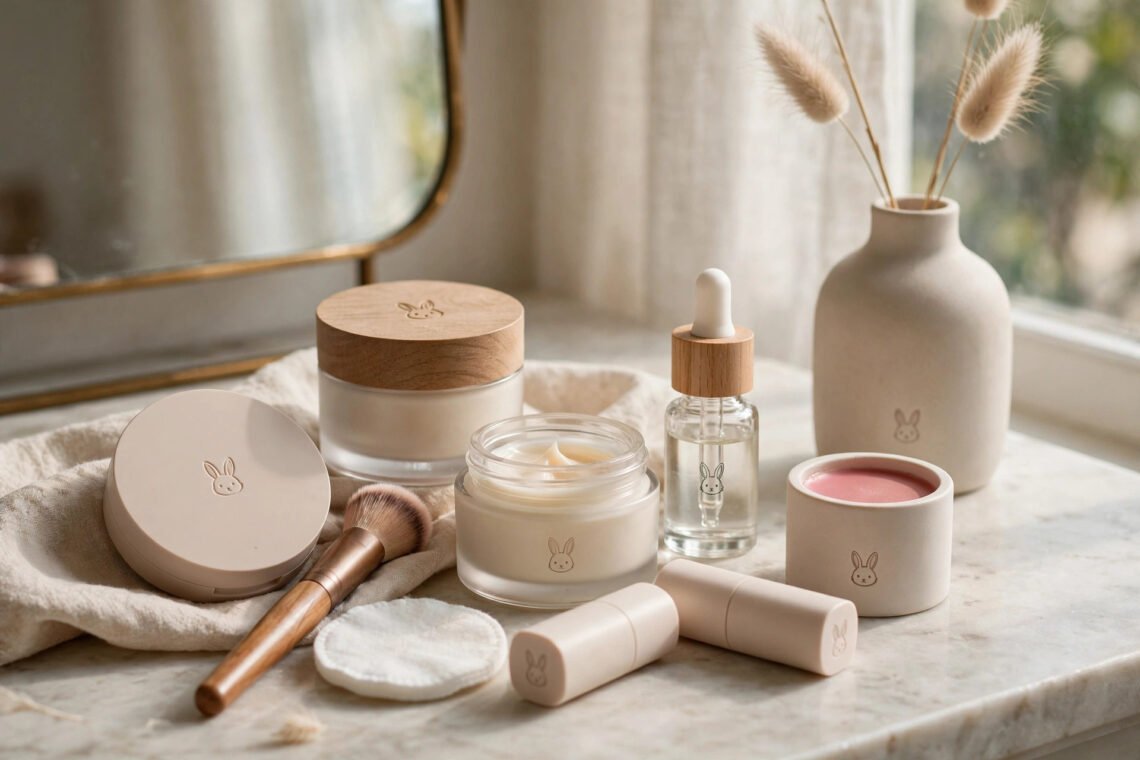
You want makeup that does not test on animals — but the bunny logos are confusing, brands say “cruelty-free” while selling in markets that require testing, and the cruelty-free options you have tried performed badly. So why is it so hard to choose cruelty-free makeup brands that perform in Cardiff — or anywhere? Because the cruelty-free landscape involves genuinely confusing certification, corporate ownership structures and a persistent myth that ethical means inferior. This guide clarifies what cruelty-free actually means, how to verify it, and which brands deliver both ethics and performance at UK prices.
Start with the legal baseline, which surprises many: animal testing for cosmetic products and ingredients has been banned in the UK since 1998, and across the EU since 2013. So why does cruelty-free certification still matter? Because brands can still commission animal testing for products sold in markets where it is required (notably China, though its rules have eased for general cosmetics), test ingredients under chemical regulations, or belong to parent companies that test other product lines. “Not tested on animals in the UK” is legally meaningless — everything sold here meets that bar.
What the Labels Actually Mean
The Leaping Bunny (administered in the UK by Cruelty Free International) is the gold standard: it requires no animal testing at any stage, independent auditing, and — crucially — applies to the brand’s entire supply chain including ingredient suppliers, with ongoing monitoring rather than a one-time claim. PETA’s Beauty Without Bunnies is a self-reported list — useful but less rigorous, as it relies on company statements. “Vegan” means no animal-derived ingredients — a different claim from cruelty-free, though they often overlap; a product can be vegan but tested on animals, or cruelty-free but contain beeswax.
Watch for the weasel words: “we do not test on animals” (but their suppliers might, or they sell where testing is required), “against animal testing” (a sentiment, not a policy), and the finished-product dodge (“this product was not tested on animals” — while its ingredients were). The reliable check is the Leaping Bunny database, searchable online — if the brand is certified, it is listed; if it is not listed, the claim is unverified. The Leaping Bunny programme explains its standards and auditing in full, and the UK government’s animal testing guidance sets out the legal framework.
Brands That Perform (UK-Available)
The performance myth is outdated — several cruelty-free brands now lead their categories. e.l.f. (Leaping Bunny certified, widely available in Superdrug and Boots): genuinely excellent at drugstore prices — their concealers, primers and brushes outperform products triple the price. NYX (certified): strong colour cosmetics with professional-level pigmentation. Urban Decay (certified): the Naked palettes remain eyeshadow benchmarks. The Body Shop (certified, and a pioneer): skincare and body products with long-standing ethical credentials.
Mid-range standouts: bareMinerals (certified), Too Faced (certified), and Charlotte Tilbury — certified cruelty-free (a common surprise, given the luxury positioning). Superdrug’s own B. range and Revolution (both certified) deliver remarkable value. For the “but my favourite brand isn’t certified” dilemma: check whether it is the brand or the parent company that is the issue, and decide your personal line — some shoppers avoid brands owned by animal-testing conglomerates, others focus on the brand’s own certification. Both positions are defensible; the key is making it an informed choice rather than an accidental one.
Building a Cruelty-Free Kit Without Compromising
Transition strategically rather than binning everything overnight (wasteful and expensive). Replace products as they run out, starting with the categories where cruelty-free excels: complexion (e.l.f., NYX), mascara (several certified options under £12 perform brilliantly — see our budget mascara thinking), and brushes (synthetic brushes are now superior to animal-hair for most applications, and all the affordable sets are synthetic).
Categories needing more research: long-wear foundation shade matching (fewer shade options in some cruelty-free ranges — test in store), and red lipstick precision (the undertone-matching principles in our lipstick guide apply identically; several certified brands offer excellent reds). Price reality: cruelty-free does not mean expensive — e.l.f., Revolution and Superdrug B. are among the cheapest products in their categories, full stop. The ethical choice and the budget choice increasingly coincide. And building the overall look matters as much as the products: our guide to finding your personal style in your 30s and looking put-together with minimal effort both apply identically whatever the bunny logo says.
The Parent-Company Question
The thorniest issue in cruelty-free shopping: beloved certified brands owned by conglomerates that test other brands on animals. Charlotte Tilbury (Puig), Urban Decay and NYX (L’Oréal), Too Faced (Estée Lauder) — all Leaping Bunny certified at brand level, all owned by companies with animal-testing histories elsewhere. There is no consensus answer, only positions: strict boycotters avoid any money flowing to testing companies; pragmatists argue that rewarding certified brands incentivises the whole industry toward certification, and that punishing the good actors slows progress. Both are principled. What matters is that you choose consciously — knowing the ownership, deciding your line, and applying it consistently — rather than discovering it accidentally years later. The Leaping Bunny lists brand-level certification regardless of ownership, so the database will not make this decision for you.
Cruelty-Free Beyond Makeup
The same principles extend naturally to skincare, haircare and fragrance — and the certified options are now excellent across all of them. The Body Shop remains the high-street anchor for certified skincare and body care; Superdrug’s B. range covers skincare affordably; and specialist certified brands (UpCircle, Q+A) deliver strong formulations at drugstore prices. Household products deserve the same scrutiny — cleaning and laundry brands test on animals too, with certified alternatives (Ecover, Method) widely available. Once you have built the verification habit for makeup, extending it takes minutes: check the Leaping Bunny database, favour certified, and let your whole bathroom cabinet reflect the same values.
The Bottom Line
Choosing cruelty-free makeup that performs is hard because certification is confusing and marketing is slippery — but the method is simple: trust the Leaping Bunny (independently audited), distrust unverified claims, and know that certified brands like e.l.f., NYX, Urban Decay and Charlotte Tilbury perform at the top of their categories. Replace as products run out, test shade-critical items in store, and enjoy the fact that the ethical choice is now routinely the best-performing and best-value choice too.
Frequently Asked Questions
What does Leaping Bunny certified mean?
It certifies no animal testing at any stage of product development, including by ingredient suppliers, with independent auditing and ongoing monitoring. It is the most rigorous cruelty-free standard available.
Is cruelty-free the same as vegan?
No. Cruelty-free means not tested on animals; vegan means containing no animal-derived ingredients. A product can be one without the other — check for both labels if both matter to you.
Do cruelty-free mascaras perform as well?
Yes — several Leaping Bunny certified mascaras under £12 rank among the best-tested in their price tier. The performance gap between cruelty-free and conventional makeup has essentially closed.
Are MAC and Maybelline cruelty-free?
Neither holds Leaping Bunny certification — both state they do not test on animals except where required by law, which means they sell in markets requiring testing. Check the current Leaping Bunny database for the definitive status of any brand.
Where can I buy cruelty-free makeup in Cardiff?
Superdrug and Boots in Cardiff city centre stock extensive certified ranges (e.l.f., NYX, Revolution, B.), and John Lewis carries mid-range certified brands. The Leaping Bunny website lists certified brands to look for.