You buy the mask everyone raves about; it does nothing. You try the oil that transformed your friend’s hair; yours looks greasy. The missing variable is hair porosity — your hair’s ability to absorb and retain moisture — and understanding it before buying products changes everything about how you shop for haircare. This guide explains hair porosity in plain terms: how to test yours at home, what each type needs, and which products are worth your money for your porosity.
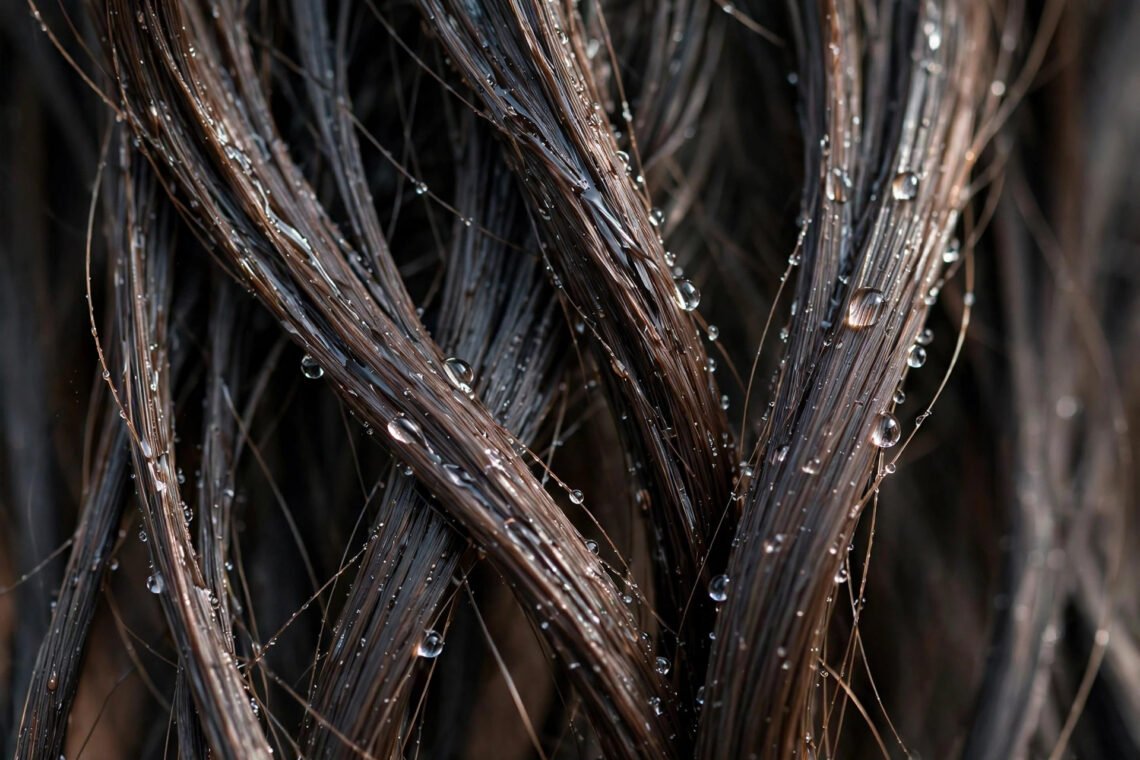
Porosity is determined by the hair cuticle — the overlapping scales covering each strand. Tight, flat cuticles mean low porosity (hard for moisture to enter, hard for it to leave); raised or damaged cuticles mean high porosity (moisture enters easily and escapes just as fast); medium porosity sits in the balanced middle. Genetics sets your baseline, but chemical treatments, heat styling and environmental damage raise porosity over time — which is why your hair’s needs change.
Testing Your Porosity at Home
The float test: drop a clean, product-free strand into a glass of water and wait 2–4 minutes. Floats on top — low porosity. Sinks slowly and hovers mid-glass — medium. Sinks quickly — high porosity. (Use clean hair: product residue skews results.) The spray test: mist water onto dry hair. Beads sitting on the surface — low porosity. Absorbs in seconds — high porosity. The slide test: run fingers up a strand toward the scalp. Smooth — low porosity; bumpy or rough — high porosity, the bumps being raised cuticles.
Cross-check with behaviour: does your hair take ages to get fully wet and ages to dry (low porosity)? Does it get wet instantly but frizz the moment humidity hits (high porosity)? Does deep conditioner seem to “sit” on your hair doing nothing (low), or vanish without effect (high)? No single test is definitive — combine two or three for a reliable picture. And reassess after major changes: bleach, keratin treatments and years of heat styling all shift porosity upward.
Low Porosity: Getting Moisture In
Low porosity hair’s challenge is absorption — products sit on the surface, buildup accumulates, and heavy butters just coat. Strategy: lightweight products, heat-assisted absorption, and clarifying. Use lightweight leave-ins and humectant-rich products rather than heavy butters; apply products to damp (not dripping) hair; use heat to open the cuticle — a warm towel or shower cap over deep conditioner for 15–20 minutes transforms absorption; and clarify monthly with a proper clarifying shampoo, because product buildup is low-porosity hair’s nemesis and makes everything worse.
Protein needs care: low porosity hair is often protein-sensitive — too much protein makes it stiff and straw-like. Use protein treatments sparingly (monthly at most) and favour moisture over protein in daily products. Avoid heavy oils (castor, shea butter) as sealants — lighter oils (argan, grapeseed) in small amounts work better. The payoff for getting this right is significant: low porosity hair, once properly hydrated, retains moisture brilliantly and can look exceptionally glossy — it is the hair type most rewarded by correct technique.
High Porosity: Keeping Moisture In
High porosity hair’s challenge is retention — moisture enters easily and evaporates just as fast, leaving dryness, frizz and breakage. Strategy: layering and sealing. The LOC/LCO method (Liquid, Oil, Cream — or Liquid, Cream, Oil) was designed for this: water-based leave-in, then oil to seal, then cream to lock — each layer slowing the escape of the last. Heavier products that overwhelm low-porosity hair are exactly right here: shea butter, castor oil and rich creams.
Protein is your friend: high porosity hair typically loves protein — regular protein treatments (every 1–2 weeks) temporarily fill the gaps in raised cuticles, improving strength and moisture retention. Apple cider vinegar or acidic rinses help flatten the cuticle slightly. Minimise further damage: reduce heat, handle wet hair gently (it is most fragile when wet), sleep on silk or satin to reduce friction, and get regular trims — split ends travel upward faster on porous hair. Colour-treated, bleached and heat-damaged hair is almost always high porosity, whatever its genetic baseline. Which? reviews haircare products with the ingredient analysis marketing skips.
Buying Products by Porosity (Not Hype)
Translate porosity into shopping decisions. Low porosity shopping list: clarifying shampoo (monthly), lightweight humectant conditioner, light leave-in, argan or grapeseed oil (sparingly), shower cap for deep conditioning. Avoid: heavy butters, protein-heavy lines, co-washing only (buildup accumulates). High porosity shopping list: moisturising (not clarifying) shampoo, rich conditioner, protein treatment (biweekly), leave-in, sealing oil or butter, cream styler. Avoid: harsh sulphates used frequently, protein-free everything, lightweight products that vanish.
Medium porosity — the lucky middle — needs balance: moderate products, occasional protein, regular but not obsessive sealing. And the universal truths regardless of porosity: heat protection before any hot styling (non-negotiable — heat damage is cumulative and irreversible), sulphate-free is a preference not a requirement (some scalps need sulphates; porosity is about the lengths, scalp health is separate), and expensive does not mean porosity-appropriate — a £5 conditioner matched to your porosity beats a £30 one fighting it. The NHS hair loss and scalp resources cover when hair problems need medical rather than cosmetic attention.
Porosity Meets Curl Pattern and Density
Porosity interacts with your other hair characteristics, and the combination determines your real routine. Fine + high porosity: the most fragile combination — lightweight protein treatments, gentle handling, minimal heat, because fine strands break fastest. Coarse + low porosity: product-resistant and slow to absorb — heat-assisted conditioning is essential, and patience with the process. Curly + high porosity (extremely common, as curls’ raised cuticles plus damage stack): the LOC method was essentially designed for this — layer generously, seal religiously, protect at night with silk or satin. Straight + low porosity: the glossiest potential of all hair types once hydrated correctly — lightweight products, clarifying when buildup dulls the shine.
Density (how much hair you have) modifies product amounts rather than types: dense hair needs more product and sectioned application to reach every strand; fine-density hair needs less to avoid weighing down. The practical method: determine porosity first (it drives product choice), then adjust amounts for density and techniques for curl pattern. Hair typing systems that ignore porosity miss the variable that matters most for product selection — which is exactly why two people with the “same” curl type can need opposite routines.
Building the right routine is part of a bigger picture — looking put-together with minimal effort covers the low-maintenance habits that keep hair healthy day to day, and finding your personal style in your 30s helps you choose styles that work with your hair’s natural behaviour rather than against it.
The Bottom Line
Hair porosity — low (resists moisture), medium (balanced) or high (loses moisture fast) — determines which products work for you more than any brand claim. Test with the float, spray and behaviour checks; feed low-porosity hair lightweight humectants with heat-assisted conditioning and monthly clarifying; layer and seal high-porosity hair with the LOC method plus regular protein. Buy for your porosity, protect from heat always, and stop buying products formulated for someone else’s hair.
Frequently Asked Questions
How do I know my hair porosity?
Combine the float test (strand in water: floats = low, sinks fast = high), the spray test (beading = low, instant absorption = high) and behaviour (slow to wet/dry = low, instant wet with frizz = high). Two or three agreeing tests give a reliable answer.
What products are best for low porosity hair?
Lightweight humectant-rich products, gentle clarifying shampoo monthly, light oils (argan, grapeseed) sparingly, and heat-assisted deep conditioning. Avoid heavy butters and frequent protein treatments.
What products are best for high porosity hair?
Rich moisturisers, the LOC/LCO layering method, regular protein treatments (every 1–2 weeks), sealing oils or butters, and silk/satin pillowcases. Avoid harsh frequent sulphates and heat without protection.
Can hair porosity change?
Yes — chemical treatments (bleach, relaxers, keratin), heat styling and environmental damage all raise porosity over time. Reassess after major treatments or if products stop working as they did.
Does porosity affect how hair dye works?
Significantly — high porosity hair absorbs dye fast (and fades fast), often going darker than expected; low porosity hair resists dye and may need longer processing. Tell your colourist your porosity for better results.