British heatwaves arrive like uninvited guests: sudden, intense, and completely indifferent to the fact that your garden was designed for drizzle. Lawns brown in days, containers wilt by lunchtime, and well-meaning gardeners waste enormous amounts of water doing the wrong things at the wrong times. Watering in a heatwave is not just “more water” — it is different water: timing, technique and triage all change when temperatures soar.
This guide explains heatwave watering from zero: when to water, how much, which plants to prioritise, and how to keep your garden alive through 35°C without drowning it or your water bill.
Why heatwaves change the rules
In normal British weather, occasional rain does most of the work. In a heatwave, three things happen simultaneously: evaporation soars (water leaves soil fast), transpiration soars (plants pump water out of their leaves to cool themselves, like sweating), and soil can become hydrophobic — very dry compost actually repels water, so it runs straight through. Watering the same way you do in May simply does not work in a 38°C week.
When to water: timing is everything
Water early morning — ideally before 8am. Overnight the soil is coolest, evaporation is minimal, and plants take up water efficiently before the day’s heat. Water sits on leaves briefly in morning sun, which is harmless.
Never water in the midday sun if you can avoid it. Most water evaporates before reaching roots, and cold water on sun-baked leaves can scorch them. The old myth that water droplets “burn” leaves like magnifying glasses is overstated, but midday watering is still hugely wasteful.
Evening watering is second-best: less evaporation than midday, but leaves stay damp overnight, which encourages fungal disease and slugs. If evenings are your only option, water the soil, not the foliage.
How much: deep and infrequent beats shallow and often
The golden rule: water deeply, less often. A thorough soaking that penetrates 15–20cm encourages roots to grow downward, where soil stays cooler and moister. Daily sprinkles wet only the surface, training roots to stay shallow — exactly where heat kills them.
How to tell you have watered enough: push a finger (or a trowel) into the soil after watering. Moist at depth? Good. Dry two inches down? You merely dampened the surface. For containers, water until it flows from the drainage holes, then — critically — wait and water again: the first watering often channels through dry compost without absorbing (that hydrophobic effect), and the second actually soaks in.
Triage: which plants get priority
In a severe heatwave with limited water (or a hosepipe ban), triage ruthlessly:
- Containers and hanging baskets — dry out fastest, often needing daily water. Move them into shade if possible; it halves their water needs.
- New plantings (this season) — roots have not established; they die first.
- Vegetables, especially fruiting ones — tomatoes, courgettes and beans abort fruit under drought stress.
- Established borders — surprisingly resilient; most perennials bounce back from a brown spell.
- Lawns — last priority. Grass goes dormant and brown but recovers with autumn rain. Watering lawns in heatwaves is the single biggest domestic water waste.
The RHS drought guidance has plant-by-plant advice, and Waterwise offers UK-specific water-efficiency tips for gardeners.
Techniques that save water and plants
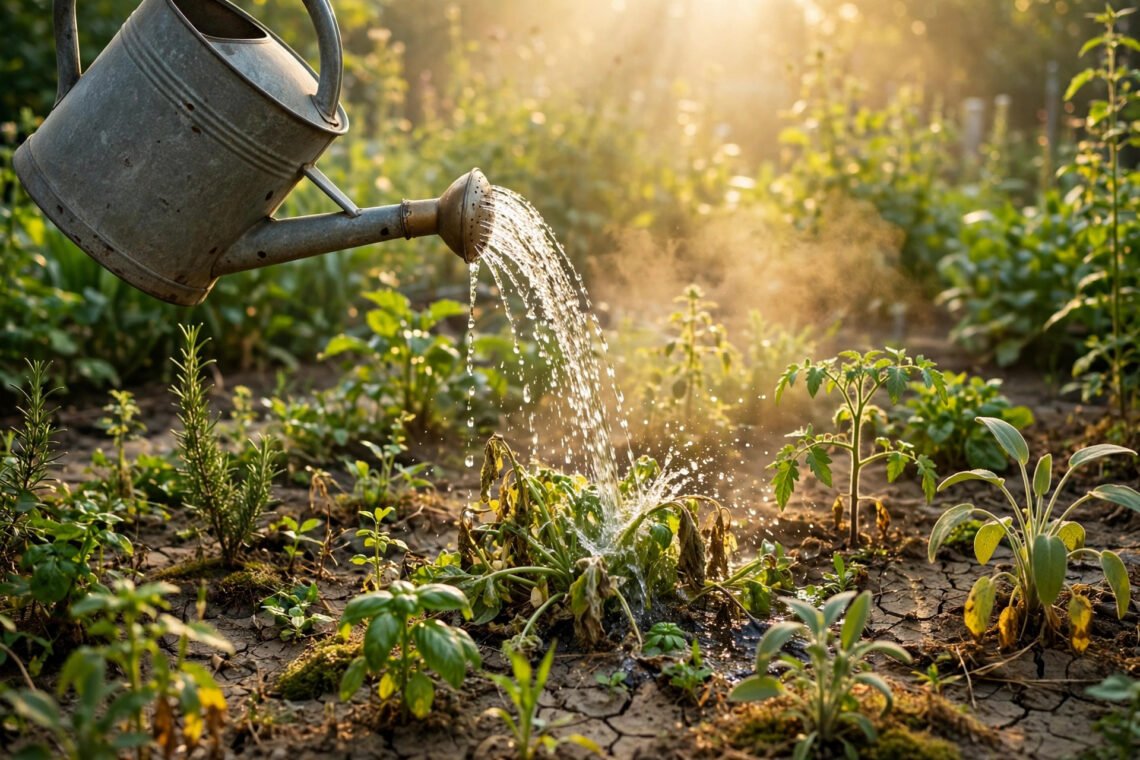
Mulch everything. A 7–10cm mulch layer cuts soil evaporation dramatically — the single highest-impact heatwave measure. Water the soil, not the plant — use a watering can rose or seep hose at the base. Greywater counts: bath, shower and washing-up water (no bleach, no harsh chemicals) is fine for ornamentals. Shade cloth over vulnerable crops during peak heat prevents scorch. And raise mower height — longer grass shades soil and survives drought; a brown lawn in August is a green lawn in October.
Heatwaves stress people too, not just plants — our guide to how much water to drink every day in summer covers your own hydration, and the signs of dehydration you should not ignore are worth knowing when you are working in the garden heat.
What NOT to do
Do not feed plants during extreme heat — fertiliser + drought stress burns roots. Do not plant anything new in a heatwave. Do not prune heavily (exposed inner growth scorches). And do not assume wilted plants are dead: many perennials wilt dramatically at midday as a protective response and recover by evening. Check them in the morning before pronouncing them dead.
Reading your plants: the stress signals
Plants tell you they are thirsty before damage occurs — learn the language. Wilting in midday heat that recovers by evening is normal protective behaviour, not an emergency; check again in the morning. Wilting that persists into the cool morning means genuine water stress — water deeply immediately. Yellowing lower leaves often signals overwatering (yes, even in heatwaves — daily sprinkles waterlog the surface while roots stay dry). Crispy brown leaf edges indicate chronic underwatering or sun scorch. And dropping flower buds is the plant abandoning reproduction to survive — increase water and mulch without delay.
Preparing the garden before the heatwave hits
Forecasts usually give several days’ warning — use them. Mulch every bare patch before temperatures peak; mulch applied during the heatwave helps, but pre-mulched soil starts cooler and moister. Water deeply the evening before the hottest days so plants enter the heat fully hydrated. Move vulnerable containers into shade — even a north-facing wall is dramatically cooler than a south-facing patio. Fill water butts if rain is forecast before the heat (or now, from the tap, if a ban is not yet in force). And harvest what is ready — stressed vegetables harvested slightly early beat perfect vegetables lost to bolting.
Conclusion
Heatwave watering is a different discipline: water early morning, soak deeply but infrequently, prioritise containers and new plantings over lawns, mulch everything, and use greywater without guilt. British gardens evolved for rain, but with the right technique they survive — and quickly recover from — even the fiercest heatwave. The brown lawn is not a failure; it is a strategy.
Frequently Asked Questions
Should I water my garden every day in a heatwave?
Containers and baskets: usually yes. Beds and borders: deep watering every 2–3 days is better than daily sprinkles. Lawns: no — let them go dormant. Always check soil moisture first rather than watering on autopilot.
Can I use bath water on my garden?
Yes — greywater from baths, showers and washing-up is fine for ornamental plants and lawns, provided it contains no bleach or harsh chemicals. Avoid using it on edible crops as a precaution, and apply it to soil rather than foliage.
Why is water running straight through my pots?
The compost has become hydrophobic from drying out completely. Stand the pot in a bucket of water for 20–30 minutes to rehydrate it fully, then mulch the surface. Watering twice in succession (water, wait ten minutes, water again) also works.
Will my brown lawn recover?
Almost certainly. Established lawns go dormant in drought — the crowns survive even when blades brown. It greens up within weeks of autumn rain. Only newly laid turf (first season) is at real risk and needs watering.
Are hosepipe bans common in the UK now?
Increasingly, yes — several water companies imposed them during recent hot summers, particularly in the South East. Check your supplier’s website during heatwaves, and treat every heatwave as a potential ban: the habits are the same either way.