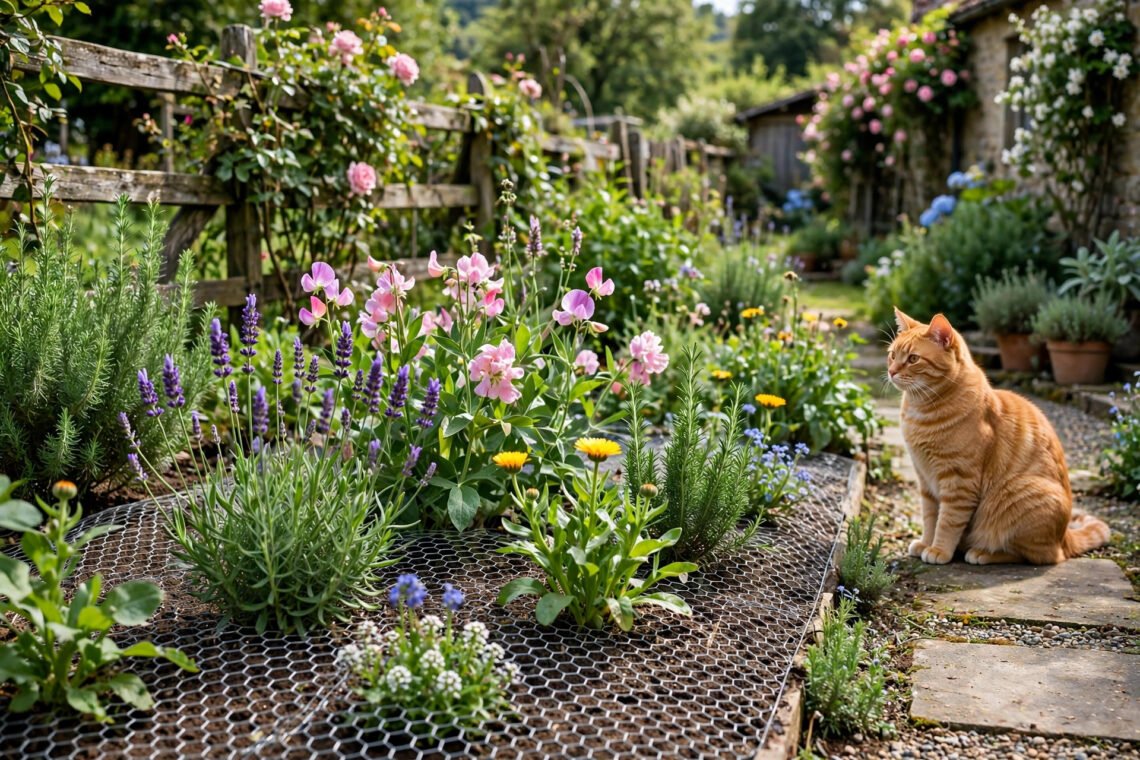
There’s a special frustration reserved for gardeners who find their lovingly prepared seed bed has become the neighbourhood cats’ preferred toilet. The smell, the dug-up seedlings, the health concerns — it’s enough to make the mildest person contemplate drastic measures. But before you reach for the mothballs or the hosepipe, know this: the effective solutions are humane, legal, and mostly about making your garden boring to cats rather than hostile to them.
Here’s what actually works in 2026 — and what’s illegal, cruel, or simply a waste of money.
Why Cats Choose Your Garden (Think Like a Cat)
Cats aren’t targeting you personally. They’re looking for three things: loose, diggable soil (freshly turned beds are irresistible — it’s the texture), quiet cover (somewhere they feel safe while vulnerable), and territory marking (unchallenged ground gets claimed). Newly planted beds, bark mulch, and gravel are all premium cat toilets from a feline perspective.
Understanding this reframes the solution: you don’t need to repel cats from your garden — you need to make the specific spots undiggable and unappealing while leaving the rest alone. The Cats Protection charity advocates exactly this approach: humane deterrence focused on behaviour, not punishment.
What Actually Works (Ranked by Effectiveness)
1. Physical barriers — the gold standard
Chicken wire laid flat over beds: cats hate the feel on their paws but plants grow through it. Ugly for a week, invisible once plants establish — the single most effective method. Thorny prunings (holly, rose, berberis) laid on soil: free, effective, and they compost down. Stone mulch or large pebbles around prized plants: undiggable and attractive. Cat-proof fencing toppers (angled mesh) for persistent fence-walkers.
2. Texture deterrents
Cats toilet where digging is easy. Make it hard: pinecones scattered on soil, eggshells (crushed, sharp-edged), holly leaves, or cocktail sticks (blunt ends up) in seed trays. These sound like old wives’ tales; they’re actually the most consistently reported effective measures in gardener surveys.
3. Scent deterrents — the honest assessment
Citrus peels, coffee grounds, lavender, and commercial cat repellent granules can work — but they wash away in rain (a significant issue in Britain) and need constant reapplication. Coleus canina (“scaredy-cat plant”) is the famous one; evidence is anecdotal but many gardeners swear by it. Treat scent as a supplement to physical barriers, not a standalone solution.
4. Water — the nuclear option (used kindly)
Motion-activated water sprinklers startle cats without harming them and are highly effective for defined areas. The downsides: cost (£30–£60), they also startle you when you forget, and they need a hose connection. Manual hosepipe ambushes are satisfying but teach cats only to avoid you, not the garden.
5. Give them somewhere better
The counterintuitive masterstroke: create a designated cat area — a sunny patch of loose sand or fine soil in a quiet corner. Cats are creatures of convenience; a purpose-built toilet often wins over your defended beds. It feels like surrender; it’s actually strategy.
What NOT to Do (Illegal, Cruel, or Useless)
Mothballs: toxic to cats, children, and wildlife — and illegal to use as animal repellent in the UK. Cayenne pepper/chilli: causes severe pain if it gets in eyes; cruel and the RSPCA explicitly condemns it. Trapping and dumping cats: illegal under animal welfare law, and “relocated” cats usually die. Ultrasonic repellers: the evidence is weak, they annoy dogs and teenagers (who hear the frequency), and cats habituate within weeks. Confronting neighbours aggressively: counterproductive — a calm conversation about the issue works better than a feud, and good boundaries (literal fencing) solve more than arguments.
The Neighbour Conversation
If one cat is the main culprit, a friendly word with its owner often helps — they may not know, and might fit a collar bell (reduces hunting, not toileting, but shows goodwill) or keep the cat in at dawn/dusk. Frame it as a shared problem, not an accusation. And check your own garden’s attractiveness honestly: the freshly-dug bed you mulched with lovely loose bark is, to a cat, a five-star facility. Maintaining your boundaries — fences, hedges, and clear edges — is part of the long-term fix.
Dealing With Problem Cats (and Problem Owners)
Most cat issues resolve with barriers, but occasionally you’ll face the persistent offender — usually an unneutered tom marking territory aggressively. In these cases, the neighbour conversation becomes essential: neutering dramatically reduces roaming and marking, and many owners simply haven’t got round to it. Offer the information kindly, not as an accusation.
If a neighbour is uncooperative and the problem is severe (health hazard rather than annoyance), your local council’s environmental health team can advise — though their powers over cats are limited compared to dogs. Mediation services exist for neighbour disputes that escalate; use them before the relationship breaks down completely. The vast majority of cases never reach this stage — barriers plus a calm conversation solve roughly 90% of cat-garden conflicts.
Key Takeaways
- Physical barriers win: chicken wire laid flat over beds is the single most effective method — ugly for a week, invisible once plants establish.
- Texture deterrents work: thorny prunings, pinecones, crushed eggshells, and stone mulch all make digging unpleasant.
- Scent is a supplement, not a solution: citrus and commercial granules wash away in British rain within days.
- Try the counterintuitive fix: a designated sunny patch of loose sand gives cats somewhere better — strategy, not surrender.
- Never use: mothballs (toxic, illegal as repellent), chilli/cayenne (cruel, RSPCA-condemned), or traps (illegal under animal welfare law).
The Bottom Line
Stopping cats using your garden as a litter tray: make target areas undiggable (chicken wire, thorny prunings, stone mulch), add texture deterrents, consider a motion-activated sprinkler for hotspots, provide a designated alternative spot, and never use mothballs, chilli, or traps. It’s a management problem, not a war — and the gardeners who win are the ones who think like cats, not the ones who fight them.
Frequently Asked Questions
How do I stop cats pooing in my garden?
Make the soil undiggable: lay chicken wire flat over beds, scatter thorny prunings or pinecones, use stone mulch, and consider a motion-activated sprinkler. Providing a designated sandy spot elsewhere also redirects the behaviour.
Are ultrasonic cat repellers effective?
Evidence is weak — cats habituate quickly, and the devices can disturb dogs and young people who hear the frequency. Physical barriers are far more reliable and don’t need batteries.
Is it illegal to deter cats from my garden?
Humane deterrence is legal. What’s illegal: harming cats (Animal Welfare Act 2006), using mothballs as repellent, and trapping/dumping cats. Stick to barriers, textures, and water deterrents.
Do coffee grounds deter cats?
Mildly and temporarily — they dislike the smell, but rain washes it away within days in British weather. Useful as a supplement to physical barriers, not a solution alone. (They’re also a decent soil conditioner.)
Should I talk to my neighbour about their cat?
Yes, calmly and early — most owners don’t know and are cooperative. Frame it as a shared problem, suggest practical measures, and avoid accusations. Feuds help nobody; fences help everybody.
What plants naturally deter cats?
Coleus canina (“scaredy-cat plant”) is the famous one — it releases an odour cats dislike when brushed, though evidence is mostly anecdotal. Lavender, rosemary, and rue are also reported as mild deterrents. Be realistic: no plant is a reliable standalone barrier. Use them as a pleasant-smelling supplement to physical measures like wire mesh and thorny mulch, not as the main defence.