The jar promises to “turn back the clock”, “erase wrinkles” and “take ten years off” — for £65. Anti-ageing creams are skincare’s most lucrative and least honest category, and choosing ones that actually work means ignoring almost everything on the packaging. The truth, backed by dermatological evidence, is refreshingly simple: a handful of ingredients have genuine proof, everything else is hope in a jar, and the best anti-ageing cream is often the cheapest one with the right actives. This guide names what works, exposes what does not, and shows you how to spend wisely.
Perspective first: no cream “erases” wrinkles or “turns back the clock” — those claims would make the product a medicine, and cosmetic regulations prohibit them for a reason. What good creams can do is meaningful: improve texture, soften fine lines, even tone, strengthen the barrier and protect against future damage. Anyone promising more is lying, whatever the price.
The Ingredients With Actual Evidence
Retinoids (retinol and friends): the gold standard — the most evidence for wrinkle reduction, texture improvement and collagen stimulation of any cosmetic ingredient. If your anti-ageing routine has one active, this is it. Sunscreen (SPF 30+, broad-spectrum): the most effective anti-ageing product ever made — prevents the photoageing responsible for up to 80% of visible skin ageing. Without it, every other product is mopping while the tap runs.
Vitamin C (L-ascorbic acid, 10–20%): genuine antioxidant evidence for brightening, collagen support and sun-damage repair — use in the morning under sunscreen for the synergistic effect. Niacinamide (vitamin B3, 4–5%+): well-evidenced for barrier strengthening, pore appearance, tone evening and sebum regulation — the best-tolerated active for sensitive skin. Peptides (matrixyl and similar): modest but real evidence for collagen signalling — worth having, not worth paying a premium for. Alpha-hydroxy acids (glycolic, lactic): proven exfoliants improving texture and tone — effective but barrier-disrupting if overused. Ceramides, hyaluronic acid and glycerin: the hydration-barrier foundation everything else builds on. The British Association of Dermatologists patient information covers which cosmetic ingredients have genuine evidence behind them.
The Marketing Nonsense to Ignore
“Clinically proven” usually means a small manufacturer-funded study with subjective assessments — it is not the same as independent clinical evidence. Before-and-after photos are lit, posed and often retouched; the ASA has sanctioned brands for misleading imagery. “Dermatologist tested” means a dermatologist looked at it once, not that it works. Exotic ingredients (caviar, gold, rare flower extracts) have no meaningful evidence and exist to justify prices. “Instant wrinkle fillers” are silicones that blur optically for hours — fine as makeup primers, useless as treatment.
Stem cells (plant stem cells do nothing for human skin), “collagen creams” (collagen molecules are too large to penetrate skin — they moisturise the surface and nothing more), and anything claiming to work “like Botox in a jar” (nothing topical replicates neuromodulator effects) all belong in the bin of marketing fiction. Price is the most persistent myth: Which? independent anti-ageing cream tests have repeatedly found £10–£20 creams outperforming £100+ luxury products in blind assessments — because the actives are cheap and the packaging is expensive.
Building a Routine That Works (Under £40)
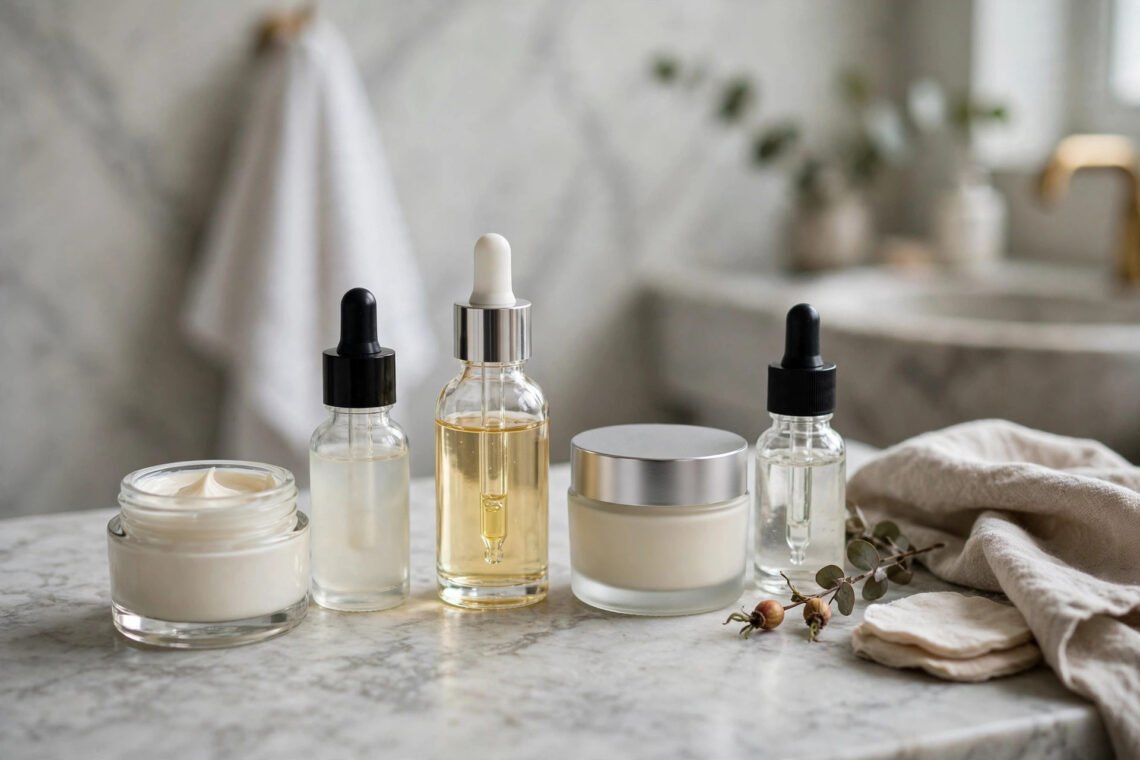
Morning: gentle cleanser, vitamin C serum (£10–£15, The Ordinary or equivalent), moisturiser with niacinamide, SPF 30+ sunscreen. Evening: cleanser, retinol 0.25–0.3% (2–3 nights weekly, building up), ceramide moisturiser. That is the entire evidence-based routine — six products, roughly £35–£45 total, outperforming any £200 “miracle system”. Add an AHA exfoliant 1–2 times weekly if texture needs it, and only if the barrier tolerates it.
The critical discipline is consistency over novelty: actives need 8–12 weeks minimum to show results, and routine-hopping resets the clock every time. Introduce one active at a time, two weeks apart, so you can identify what helps and what irritates. Simplify when overwhelmed — a routine of sunscreen plus retinol plus moisturiser beats a twelve-step routine abandoned in a month. And protect the investment: the NHS sun safety guidance reminds us that UV protection is the foundation everything else depends on.
When Creams Are Not Enough (Honest Escalation)
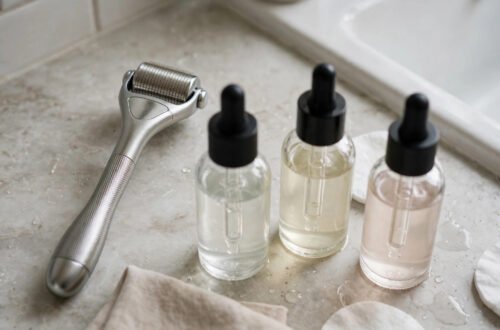
Be honest about limits: creams soften fine lines and improve texture, but they do not lift sagging, remove deep wrinkles or replace lost volume. For concerns beyond cosmetics’ reach, the evidence-based escalations are: prescription tretinoin (via GP or dermatologist — stronger than cosmetic retinol), professional chemical peels, microneedling, laser treatments and injectables — each with real effects, real costs and real risks, to be discussed with qualified practitioners, not beauty counters.
Lifestyle matters as much as topicals: smoking, excess alcohol, chronic sleep deprivation and unprotected sun exposure age skin faster than any cream can counteract. The unglamorous fundamentals — sleep, sunscreen, not smoking — outperform the most expensive jar. And ageing itself deserves a kinder framing: the goal is healthy, vibrant skin at every age, not the impossible erasure of time. Confidence, as our guide to finding your personal style in your 30s explores, comes from coherence and self-knowledge more than from any product — and looking put-together with minimal effort shows how small consistent habits compound.
The Free Anti-Ageing Programme
The most powerful anti-ageing interventions cost nothing. Sleep: chronic sleep deprivation visibly ages skin — poor sleepers show more fine lines, uneven pigmentation and reduced barrier recovery, and the effect is measurable within days. Sun behaviour: seeking shade at midday, wearing sunglasses (which also prevent squint lines) and a hat on bright days compound the sunscreen habit. Not smoking: smoking accelerates skin ageing more dramatically than almost any other lifestyle factor, degrading collagen and constricting the blood vessels that nourish skin. Diet: no superfood reverses ageing, but adequate protein (collagen is protein), vitamin C (cofactor for collagen synthesis) and essential fatty acids support the skin’s own maintenance — the Mediterranean dietary pattern correlates with better skin ageing outcomes in observational studies. Stress management: chronic cortisol elevation degrades collagen and impairs barrier function. None of this sells jars, which is why nobody advertises it — but the free programme outperforms the £200 cream.
The Bottom Line
Anti-ageing creams that actually work contain retinoids, vitamin C, niacinamide, peptides or AHAs — plus daily sunscreen, which matters more than all of them. Ignore “clinically proven” claims, before-and-after photos and luxury pricing; the £15 cream with the right actives beats the £150 jar of hope. Build a simple consistent routine, give it three months, and spend the savings on sunscreen — the one product the evidence says you cannot skip.
Frequently Asked Questions
Do anti-ageing creams really work?
Those with proven actives (retinoids, vitamin C, niacinamide, AHAs) genuinely improve texture, tone and fine lines over 8–12 weeks. No cream erases deep wrinkles or lifts sagging — those claims are marketing fiction.
What is the best anti-ageing ingredient?
Retinoids have the strongest evidence for wrinkle reduction and collagen stimulation; sunscreen is the most effective anti-ageing product overall because it prevents the photoageing behind most visible ageing.
Are expensive anti-ageing creams better?
No — independent tests repeatedly find £10–£20 creams outperforming £100+ products. The active ingredients are inexpensive; luxury pricing pays for packaging and marketing.
How long do anti-ageing creams take to work?
Allow 8–12 weeks of consistent use for visible results from actives like retinol and vitamin C. Texture improvements appear first; wrinkle softening takes months.
At what age should I start using anti-ageing cream?
Sunscreen from childhood; antioxidants like vitamin C from your twenties; retinoids from late twenties to thirties when collagen decline begins. There is no benefit to strong actives in teenage skin.