There’s something quietly magical about harvesting your first flush of mushrooms from a box in your kitchen — breakfast you grew from what looked like sawdust, in the dark, with almost no effort. Mushroom growing is having a moment in Britain, and for good reason: it’s the only “gardening” that needs no garden, no sunlight, and barely any skill.
Growing mushrooms at home for beginners in 2026 is genuinely one of the easiest food projects you can attempt. Here’s how to do it right first time — and which mistakes turn exciting kits into mouldy disappointments.
Why Mushrooms Are Perfect for Beginners
Unlike vegetables, mushrooms don’t need light, soil, or seasons. They grow on substrate (straw, sawdust, coffee grounds), fruit in days once triggered, and go from kit to plate in 2–4 weeks. A £15–£25 kit typically yields 500g–1kg of mushrooms over several flushes — oyster mushrooms from a kit cost roughly the same as supermarket ones, but taste dramatically better and arrive with the unbeatable satisfaction of having grown them.
They’re also wonderfully low-commitment: no weeding, no watering schedules, no slugs. The RHS growing guidance increasingly covers fungi alongside vegetables, reflecting how mainstream home mushroom growing has become.
Start Here: The Kit (Don’t Start From Spores)
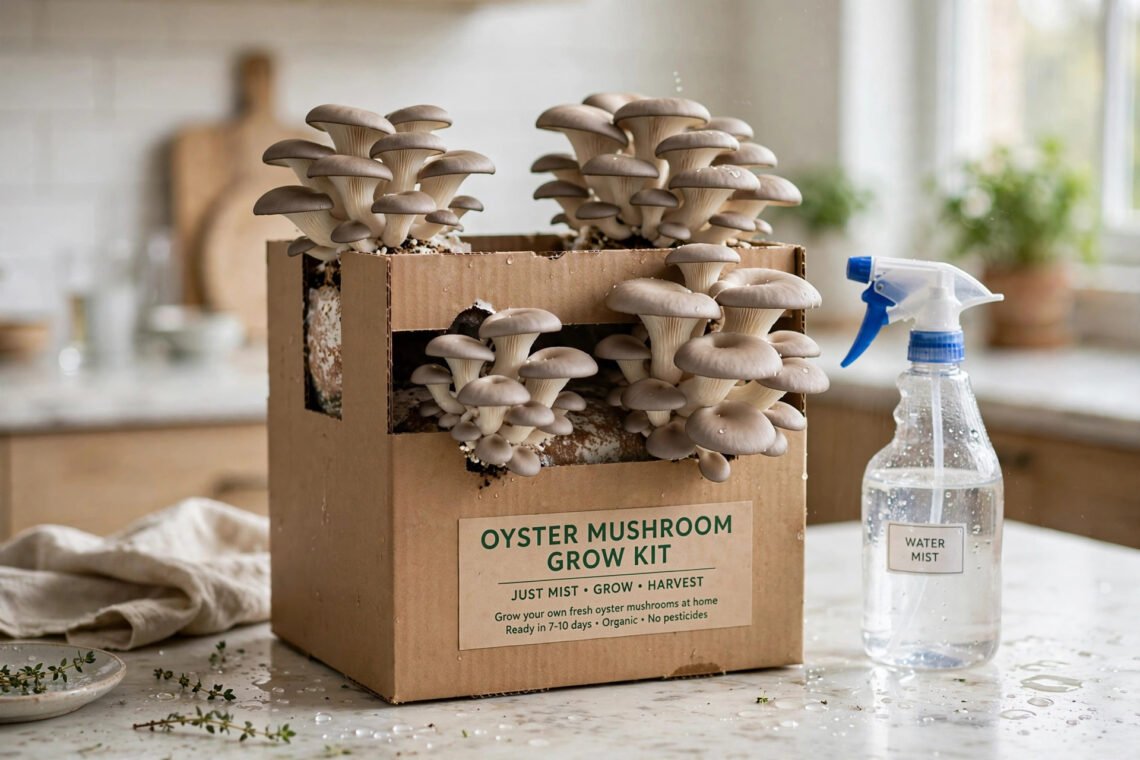
Beginners should always start with a ready-to-fruit kit, not spores or liquid culture. Kits contain fully colonised substrate — the hard, contamination-prone work is done for you. Your job is just providing the right conditions for fruiting. Reputable UK suppliers (Merryhill Mushrooms, Ann Miller’s, GroCycle — the latter famously growing on coffee grounds) sell oyster, shiitake, and lion’s mane kits for £12–£25.
Oyster mushrooms are the ideal first grow: aggressive, forgiving, fast (first harvest in 10–14 days), and delicious. Shiitake take longer (several weeks) but reward patience. Lion’s mane is the trendy one — striking to look at, with a seafood-like flavour. Start with oysters; graduate when you’re hooked.
The 4 Conditions That Matter
1. Humidity (the big one): mushrooms are ~90% water and abort without moisture. Mist the kit 2–3 times daily, or tent it with a perforated plastic bag to create a humid microclimate. A bathroom with natural light often works brilliantly — humid, indirect light, stable temperature.
2. Fresh air: mushrooms breathe oxygen and exhale CO2 — stale air produces long, spindly stems and tiny caps. Fan gently or ensure airflow; the classic beginner error is sealing the kit in plastic with no air exchange.
3. Indirect light: not darkness, not direct sun — mushrooms use light as a directional signal, not energy. A north-facing windowsill or a shaded kitchen counter is perfect. North-facing spots that defeat most plants are ideal for fungi.
4. Temperature: most kits fruit at 15–24°C — normal UK indoor temperatures. Avoid radiators (drying) and cold draughts. Kitchens and bathrooms are usually perfect; airing cupboards are too warm and dry.
Harvest and Second Flushes
Harvest oysters when the caps are still slightly curled under at the edges — just before they flatten and release spores (a fine white dust). Twist and pull the whole cluster gently; cutting leaves stumps that rot. Then rest the kit for a week (keep it slightly moist), and it’ll usually fruit again — most kits give 2–4 flushes over 2–3 months, with diminishing returns.
Cook them simply the first time: hot pan, butter or oil, salt — paired with your own fresh herbs, home-grown oysters are a genuine delicacy. You’ll never look at supermarket mushrooms the same way.
Level 2: Beyond the Kit
Once kits click, the natural next steps: spent coffee grounds buckets (oyster mycelium from a kit colonises fresh grounds — free substrate from your kitchen), log cultivation (shiitake on oak logs in a shady garden corner — inoculate in spring, harvest for years), and wine cap beds (grown outdoors on wood chips — the easiest outdoor mushroom, practically unkillable). The Gardeners’ World community has active fungi-growing threads with UK-specific seasonal advice.
Safety: The One Serious Section
Never eat wild mushrooms based on app identification or guesswork — the UK has genuinely deadly species (the death cap kills every year) and dangerous lookalikes. Home kits are 100% safe (you know exactly what you inoculated), but foraging demands expert guidance: join a local fungi group and learn from experienced identifiers before eating anything wild. This isn’t scaremongering; it’s the single rule that matters.
Cooking Your Harvest: Beyond Butter and Salt
Once the basic pan-fry is mastered, home-grown mushrooms open up proper cooking. Oyster mushrooms shred into convincingly meaty textures — try them as “pulled” mushroom tacos, or crisped in a hot oven with smoked paprika. Shiitake elevate any stock or ramen beyond recognition; dried (thread on a string, hang somewhere airy), they keep for months and rehydrate beautifully. Lion’s mane, sliced thick and seared like scallops with garlic butter, is the party trick that converts sceptics.
The flavour difference from shop-bought is real: freshly picked mushrooms have an aroma that fades within days of harvest, which is why yours taste better than anything transported and warehoused. Grow enough and you’ll start giving them away — the universal currency of the home grower, and the fastest way to convert friends to the hobby.
Key Takeaways
- Always start with a kit (£12–£25) — the contamination-prone colonisation work is done for you; never start from spores.
- Oyster mushrooms first: forgiving, fast (10–14 days to harvest), and delicious — graduate to shiitake and lion’s mane later.
- Four conditions: humidity (mist 2–3x daily), fresh air, indirect light, and 15–24°C — kitchens and bathrooms are ideal.
- Harvest before caps flatten and expect 2–4 flushes over 2–3 months from each kit.
- The one safety rule: kits are 100% safe, but never eat wild mushrooms without expert identification — the UK has deadly lookalikes.
The Bottom Line
Growing mushrooms at home as a beginner: buy an oyster mushroom kit (£12–£25), give it humidity, fresh air, indirect light, and room temperature, mist daily, harvest in 2–4 weeks, and enjoy 2–4 flushes. It’s the highest-reward, lowest-effort food growing available to British homes — no garden required, just a kitchen counter and a spray bottle.
Frequently Asked Questions
How long do mushroom kits take to grow?
Oyster mushroom kits typically fruit 10–14 days after starting, with harvest over the following week. Shiitake take longer (3–6 weeks). Most kits produce 2–4 flushes over 2–3 months.
Are mushroom growing kits worth it?
Yes for beginners — £12–£25 for 500g–1kg of superior-tasting mushrooms plus the experience. They’re also the safest way to learn, since you know exactly what species you’re growing.
Do mushrooms need light to grow?
They need indirect light as a directional signal, but not for energy (they’re not plants). A shaded windowsill or north-facing counter is ideal; direct sunlight dries them out.
Can you grow mushrooms from shop-bought mushrooms?
Sometimes — oyster mushroom stems can be cloned onto cardboard or coffee grounds, though success rates vary. Kits are far more reliable for beginners; try cloning as an experiment once kits work.
Is it safe to grow mushrooms at home?
Completely — with a reputable kit, you know exactly what species you’re growing. The safety rule applies to wild foraging: never eat wild mushrooms without expert identification, as the UK has deadly lookalike species.