Bluetooth version numbers get thrown around in product listings like they mean something — “Bluetooth 5.3!” — but what is Bluetooth 5.0, and does it make a difference to anything you actually do? The short answer: yes, it was a meaningful upgrade, but probably not for the reasons you think. Here’s what changed and when it matters.
What Bluetooth 5.0 actually improved
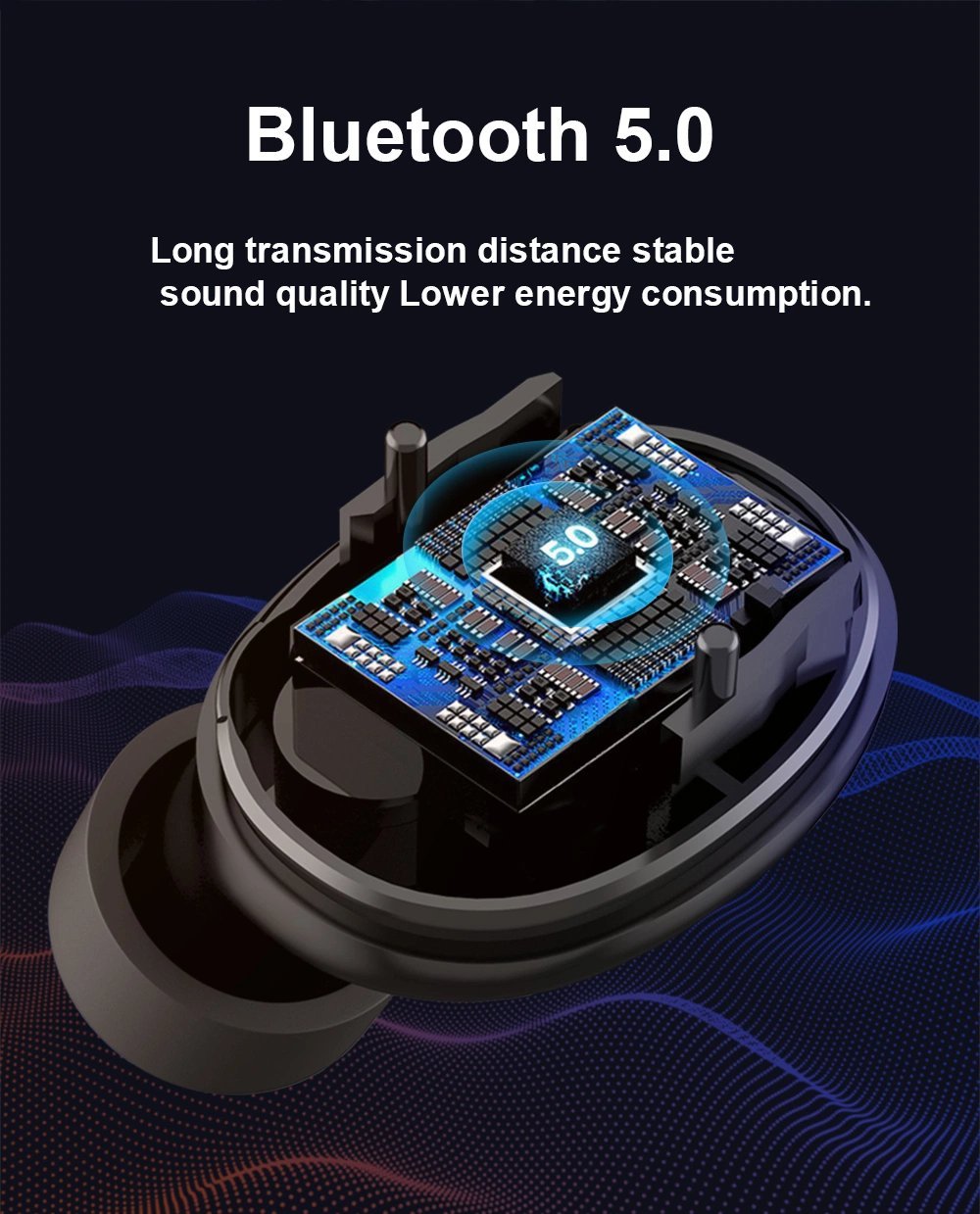
Released in 2016, Bluetooth 5.0 was the biggest overhaul of the standard in years. The headline improvements over 4.2:
- 4× the range. Theoretical range jumped from ~10 metres to ~40 metres outdoors (real-world: roughly double the usable range indoors through walls). This is the improvement you’ll actually feel.
- 2× the speed. Data rate doubled from 1Mbps to 2Mbps. More headroom for audio, faster file transfers, snappier connections.
- 8× the broadcast capacity. Devices can broadcast much more data without connecting — this is what enables things like detailed location beacons and richer smart-home advertising.
- Lower power consumption. Especially for Bluetooth Low Energy (BLE) devices — fitness trackers, smartwatches, sensors — 5.0 sips power, which is why your budget smartwatch lasts a week.
Later versions (5.1, 5.2, 5.3, 5.4) added refinements — direction finding, the LC3 audio codec, better handling of crowded environments — but 5.0 was the big leap. If your devices are 5.0 or later (anything made after ~2018 generally is), you have the important stuff.
Does it make a difference? Where you’ll notice
Range — yes, noticeably. This is the real-world win. Bluetooth 4.x earbuds started crackling when your phone was in the next room; 5.0 earbuds often hold a solid connection through a wall or two. If your wireless earbuds keep disconnecting, and they’re ancient 4.x models, the Bluetooth version is genuinely part of the problem. Leave your phone on the kitchen counter and walk to the living room — 5.0 handles it, 4.2 didn’t.
Audio quality — not directly. Here’s the misconception: Bluetooth 5.0 doesn’t automatically mean better sound. Audio quality depends on the codec (SBC, AAC, aptX, LDAC) — the compression method — not the Bluetooth version. A 5.0 device using basic SBC sounds the same as a 4.2 device using SBC. What 5.0’s extra bandwidth enables is headroom for better codecs to work reliably, and version 5.2’s LC3 codec does improve quality at lower bitrates — but both devices need to support it.
Battery life — yes, for accessories. Your earbuds and smartwatch last longer on 5.0 thanks to efficiency improvements. For your phone, the difference is negligible — the screen dwarfs Bluetooth power draw.
Connection speed and reliability — modestly. Pairing is a bit snappier, dual-device connections (earbuds connected to phone and laptop simultaneously) work better, and crowded environments are handled more gracefully. It’s evolution, not revolution.
The catch: both devices need it
Bluetooth negotiates down to the oldest version in the pair. A Bluetooth 5.3 phone connected to Bluetooth 4.2 earbuds talks Bluetooth 4.2 — you get none of the improvements. This is why upgrading just one end sometimes disappoints. When buying new accessories, 5.0+ on both sides is the baseline to expect in 2026; anything still shipping 4.x is a red flag for corner-cutting.
Should you upgrade devices for Bluetooth 5.0?
Almost certainly not as a standalone reason. If your current earbuds, speaker or watch work fine, a version number isn’t worth £50. But when you’re buying anyway — new earbuds, a new speaker — treat 5.0 as the minimum and prefer 5.2/5.3 for the latest audio codecs and efficiency. It’s a tiebreaker between otherwise equal options, not a reason to replace working gear.
The exception: if you have a specific range problem — you want music in the garden from a phone indoors, or your earbuds cut out when the phone’s in your bag — then yes, 5.0+ devices on both ends genuinely help, because range was the biggest real improvement.
Bluetooth and your smart home
One area where 5.0’s improvements really compound: smart home devices. The extended broadcast capacity and better mesh networking support (formalised around the 5.0 era) are why modern smart speakers and sensors play together more reliably than the flaky early generations. If you’re building out smart lighting or sensors, 5.0+ (or Thread/Matter, which build on similar radio tech) is worth specifying.
The bottom line
Bluetooth 5.0 vs 5.1, 5.2, 5.3: should you care?
Quick tour of what came after 5.0, so the version numbers on boxes make sense. Bluetooth 5.1 added direction finding — your phone can tell which direction a signal comes from (used in item trackers like AirTags-adjacent tech). Bluetooth 5.2 brought the LC3 audio codec, which delivers better sound at lower bitrates, plus proper support for hearing aids (a genuinely important accessibility win). Bluetooth 5.3 improved efficiency and connection reliability in congested environments. Bluetooth 5.4 enhanced broadcasting for electronic shelf labels and large-scale sensor networks. For earbuds and speakers, 5.2’s LC3 is the meaningful one — but both devices must support it, and adoption has been slow. Net: 5.0 remains the baseline that matters; higher versions are nice refinements, not reasons to upgrade.
Bluetooth vs WiFi for audio: which to use?
People sometimes wonder whether they should stream audio over WiFi instead of Bluetooth — many smart speakers offer both. WiFi handles higher-quality audio (lossless streaming from Tidal or Apple Music) and multi-room sync better, with effectively unlimited range within your network. Bluetooth is simpler, works without WiFi, and uses less power on portable devices. Rule of thumb: portable listening (earbuds, portable speakers, car) — Bluetooth. Home listening on a good speaker — WiFi if the speaker supports it, for the quality edge. Your phone handles both without you thinking about it; just know the option exists when a speaker offers “WiFi setup” alongside Bluetooth pairing.
The Bluetooth SIG’s official site documents every version’s features if you want the deep technical detail.
Bluetooth 5.0 doubled speed, quadrupled range and cut power use — a genuine upgrade, with range being the difference you’ll actually feel day to day. It doesn’t magically improve audio quality (that’s the codec’s job), and both devices need to support it. Don’t upgrade working gear for a version number, but when buying new, 5.0 is the floor and 5.2+ is preferable. In the endless spec-sheet arms race, this is one of the few numbers that meant something real.