
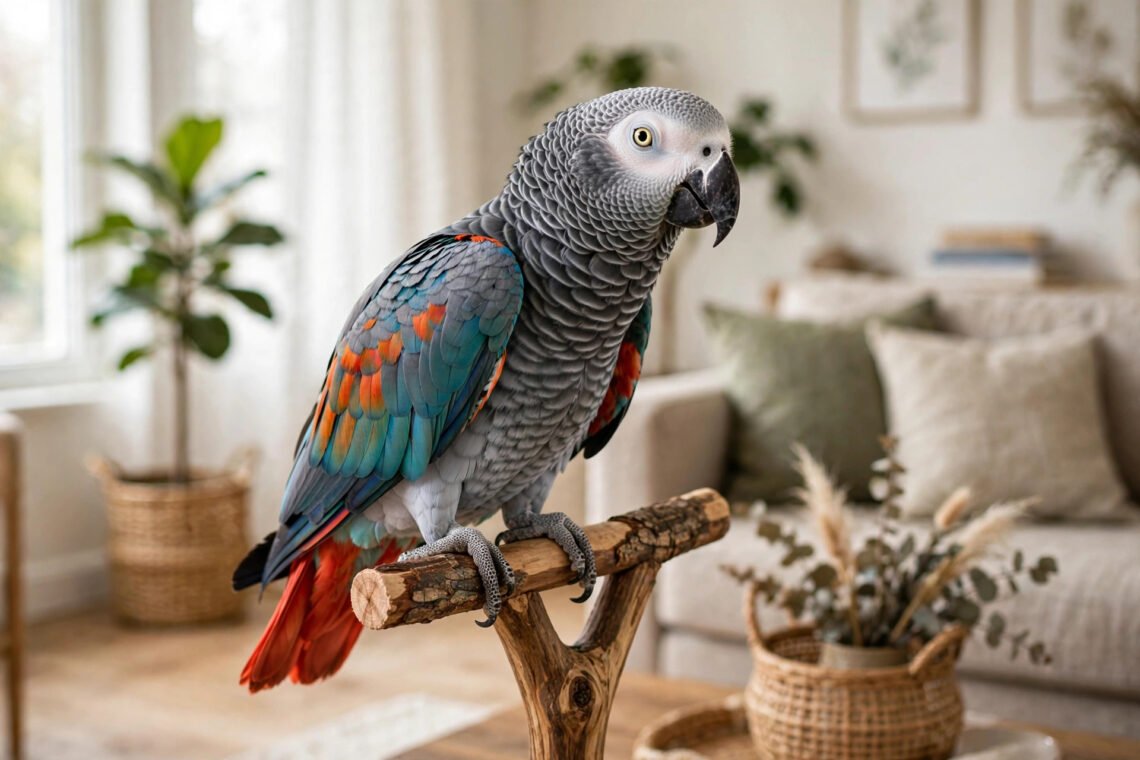
The screaming starts at dawn. Feathers drift through the house like snow. Your parrot has started plucking his chest bare, biting anyone who comes near the cage, and you are wondering what you did wrong. Understanding parrot behaviour problems takes longer than most new owners expect — not because the answers are complicated, but because parrots are complicated. These are wild animals with the emotional complexity of a toddler and the lifespan of a human, living in our living rooms. So how long does it take to really understand parrot behaviour problems? Expect three to six months of dedicated learning before the patterns click — and this guide will compress that journey as much as honestly possible.
Context matters enormously. A budgie lives 8–15 years; an African grey or macaw can live 50–80 years. Behavioural problems in parrots are almost never spite or disobedience — they are communication. Screaming, biting, plucking and aggression are symptoms of unmet needs, and decoding them requires understanding what a parrot actually is: a highly social, intelligent flock animal designed to fly miles daily, forage for hours and live in constant company.
The Big Four: Screaming, Biting, Plucking, Aggression
Excessive screaming is the most common complaint. Parrots are naturally vocal — dawn and dusk choruses are hardwired — but hours of screaming usually signals loneliness, boredom or a learned pattern (scream, human appears, screaming works). Biting is communication too: parrots explore with their beaks and bite when frightened, hormonal, territorial or when earlier warning signals — pinned eyes, raised feathers, leaning away — were ignored. Respect the warnings and bites decrease dramatically.
Feather plucking is the most distressing to witness and the hardest to resolve. Causes split into medical (infection, liver disease, allergies, parasites) and behavioural (boredom, anxiety, sexual frustration, lack of bathing or sunlight). Any plucking parrot needs a vet check first — an avian vet, not a general practice — because treating a medical cause as behavioural wastes critical time. The RSPCA’s bird welfare guidance stresses this medical-first rule, and it cannot be overstated. Cage aggression — lunging at hands inside the cage — is usually territoriality; the cage is the bird’s bedroom, and many parrots are simply defending it. Train “step up” outside the cage instead of reaching in.
What Your Parrot Actually Needs
Most behaviour problems trace back to five unmet needs. First, social contact: parrots need hours of daily interaction. A bird left alone 10 hours a day while you work will develop problems with near certainty — this is the hardest truth in parrot keeping. Second, foraging: wild parrots spend 4–8 hours daily finding food. A bowl of seed delivered in seconds leaves a foraging brain with nothing to do. Scatter food, use foraging toys, wrap treats in paper — make meals take time.
Third, flight and exercise. Clipped or caged-all-day birds develop frustration that surfaces as screaming and aggression. Safe out-of-cage time daily, in a parrot-proofed room, is transformative. Fourth, sleep: parrots need 10–12 hours of dark, quiet sleep. A cage in a living room with the television blaring until midnight produces a chronically sleep-deprived, irritable bird — the equivalent of a permanently overtired toddler. Fifth, bathing and sunlight (or full-spectrum lighting): feather condition and mood both depend on them. Meeting these five needs resolves a remarkable proportion of “problem” behaviour without any training at all, a point the Blue Cross bird care guides reinforce with practical setup advice.
The Learning Curve: What the Months Look Like
Month one is observation. You will learn your bird’s body language: the difference between contented beak-grinding and stressed feather-slicking, between playful eye-pinning and aggressive eye-pinning (context is everything), what a relaxed posture looks like versus a fearful crouch. Keep a simple diary noting when problem behaviours occur — patterns emerge fast. Does the screaming start when you leave the room? Does the biting happen at dusk? Data beats guesswork.
Months two and three are about experimentation: adjusting sleep hours, introducing foraging, changing the cage layout, trying new training approaches. This is where most owners either crack it or give up, because progress is rarely linear — a plucking parrot may improve for two weeks then relapse during a hormonal season. Months four to six bring genuine fluency: you read your bird the way you read a familiar person’s moods, you anticipate triggers, and the problems that remain are manageable quirks rather than crises. Owners who consult a qualified parrot behaviourist typically compress this timeline significantly.
Training That Works (and What Does Not)
Parrots respond to positive reinforcement and to nothing else. Punishment — shouting, spraying water, “time out” isolation, tapping beaks — reliably makes behaviour worse, because a lonely parrot will accept negative attention over no attention, and fear destroys the trust training depends on. Instead, reward the behaviour you want: quiet moments get treats and praise, stepping up calmly gets the favourite nut, playing independently gets a foraging surprise.
Target training — teaching the bird to touch a stick for a reward — is the foundation skill that unlocks everything else, from stepping up to entering a carrier voluntarily. Sessions should last two to five minutes, end on a success, and happen when the bird is alert but not frantic. And manage the environment alongside training: you cannot train away a behaviour the environment keeps causing. A screaming parrot in a silent empty house needs company and enrichment, not more training sessions. For broader household preparation, childproofing techniques for the home adapt well to parrot-proofing a room (covering the same chewable, toxic and fragile hazards), and if you travel, finding pet-friendly accommodation in the UK now includes options for bird owners if you plan ahead.
The Bottom Line
Really understanding parrot behaviour problems takes three to six months of attentive learning — but the core insight arrives much sooner: problem behaviour is communication about unmet needs, not disobedience. Rule out medical causes first, meet the five fundamental needs (company, foraging, exercise, sleep, bathing), learn your bird’s body language, and train with rewards only. Parrots are a decades-long commitment that punishes impulse buying and richly rewards the patient. The screaming, biting bundle of feathers can become the most engaging companion you will ever share a home with — but only if you learn to listen to what the behaviour is telling you.
Frequently Asked Questions
Why does my parrot scream all day?
Usually loneliness, boredom or a learned pattern where screaming reliably summons you. Increase social time, foraging enrichment and out-of-cage exercise, and reward quiet behaviour rather than rushing over when the screaming starts.
How do I stop my parrot biting me?
Learn the warning signals (eye pinning, feather slicking, leaning away) and respect them — most bites follow ignored warnings. Never punish biting; instead build trust with target training and avoid putting the bird in situations where it feels it must bite.
Why is my parrot plucking its feathers?
See an avian vet first to rule out medical causes (infection, liver disease, parasites). If medical causes are excluded, plucking usually indicates boredom, anxiety, insufficient sleep or lack of bathing — address the environment systematically.
How much sleep does a parrot need?
Ten to twelve hours of dark, quiet, uninterrupted sleep nightly. Chronic sleep deprivation is one of the most common hidden causes of aggression and screaming in pet parrots.
Can an aggressive parrot be rehabilitated?
In most cases, yes — aggression is usually fear-based or territorial and responds to trust-building, environment changes and positive-reinforcement training. Severe long-standing cases benefit from a qualified parrot behaviourist.


