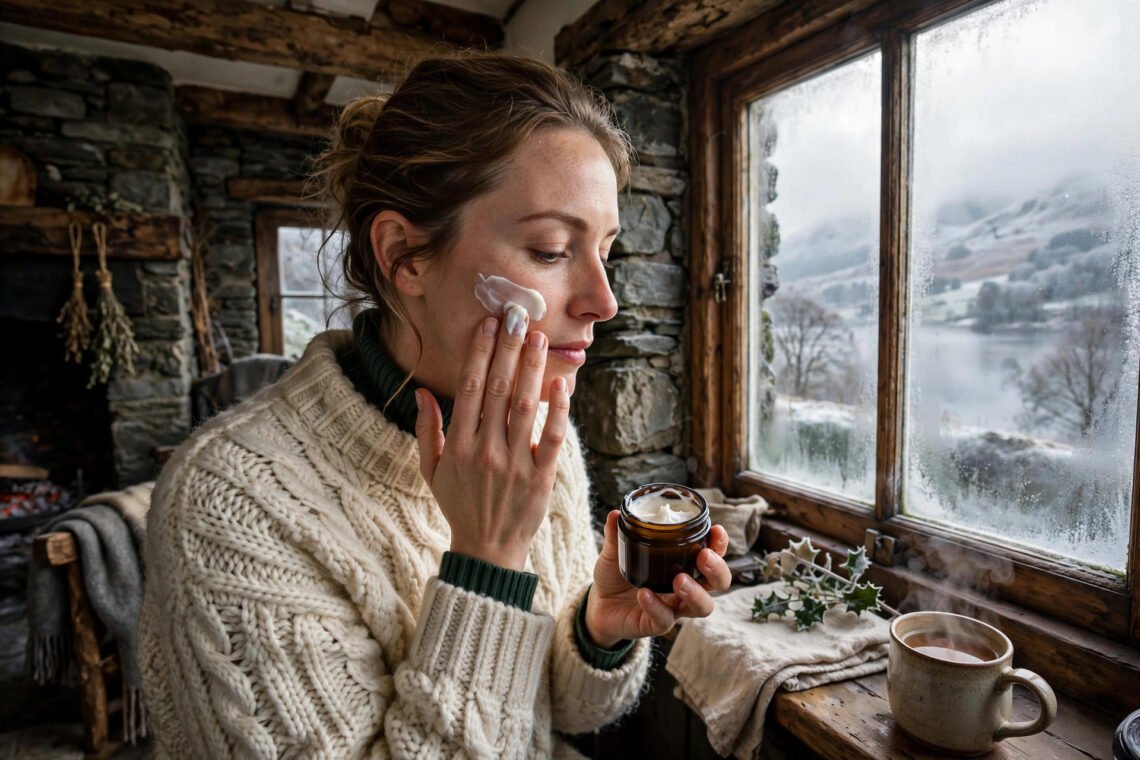
By February in the Lake District, the wind has done its work: your face feels tight by midday, foundation catches on dry patches, and your usual moisturiser — fine in September — is losing the battle. Choosing the right moisturiser for dry winter skin in the Lake District is not about buying the most expensive cream; it is about understanding what winter does to skin and matching ingredients to the problem. This guide explains the science of winter dryness, the ingredient combinations that actually work, and how to build a cold-weather routine for Cumbrian conditions.
Winter attacks skin on three fronts simultaneously: cold air holds less moisture, indoor heating drops humidity further (central heating can push indoor humidity below 20%), and hot showers strip natural oils. The result is transepidermal water loss — moisture evaporating from the skin faster than it is replaced — plus a compromised skin barrier that lets irritants in. The tight, flaky, itchy feeling is your barrier asking for help.
What to Look For: The Three Ingredient Jobs
Effective moisturisers do three jobs, and the best winter formulas do all three. Humectants (hyaluronic acid, glycerin, urea) draw water into the skin — glycerin is the underrated hero, as effective as hyaluronic acid at a fraction of the price. Emollients (ceramides, squalane, fatty acids) fill the gaps between skin cells, smoothing the barrier — ceramides are particularly well-evidenced for barrier repair. Occlusives (petrolatum, shea butter, dimethicone) seal everything in, physically blocking water loss — unglamorous petrolatum remains the most effective occlusive known, which is why dermatologists keep recommending it.
For genuinely dry winter skin, you want all three: a humectant to hydrate, ceramides to repair, and an occlusive to seal. Lightweight gel moisturisers that sufficed in summer usually lack the occlusive component — that is why they “stop working” in winter. The British Association of Dermatologists patient resources explain barrier function and why winter routines need to change, not just intensify.
Matching Formula to Your Skin
Dry but not sensitive: rich creams with ceramides plus an occlusive layer — CeraVe Moisturising Cream (£10–£16, the famous tub) is the benchmark for a reason: ceramides, hyaluronic acid and petrolatum in one affordable formula. Layer facial oil or a balm over the top on the harshest days. Dry and sensitive: fragrance-free is non-negotiable (fragrance is the top irritant in moisturisers), and fewer ingredients beat more — La Roche-Posay Lipikar and Avène’s rich lines suit reactive winter skin. Eczema-prone: treat it as a medical issue alongside cosmetics — regular emollient use plus GP-prescribed treatments during flares; the NHS eczema guidance covers emollient use properly.
Oily-but-dehydrated (the confusing one): skin can be oily and dehydrated simultaneously — dehydration is water lack, oiliness is oil excess. These skin types need humectant-heavy, oil-light hydration, not rich creams that worsen congestion. And body skin needs attention too: the same barrier science applies, and cheap body moisturisers with urea (5–10%) transform winter legs and arms — apply within three minutes of showering to lock in dampness. Which? independently tests moisturisers, regularly finding £10 creams outperforming £60 ones.
The Winter Routine (and What to Change)
Winter routine adjustments beyond the moisturiser itself: switch to a gentler cleanser (foaming cleansers that were fine in summer now strip too much — try a cream or balm cleanser), shorten hot showers and lower the temperature (hot water is devastating to the barrier), and consider a humidifier in the bedroom — raising humidity from 20% to 40% does more for winter skin than any single product. Apply moisturiser to damp skin, not dry — humectants need water to grab, and applying to a dry face in a dry room can paradoxically pull moisture from deeper skin layers.
Layering order: thinnest to thickest — hydrating serum on damp skin, moisturiser, then occlusive or facial oil to seal. At night, go heavier: “slugging” (a thin petrolatum layer over everything) sounds extreme but is simply effective occlusion, and dermatologists endorse it for very dry skin. Drop or reduce strong actives (retinoids, exfoliating acids) in the depths of winter if barrier damage appears — you can resume in spring. Lips and hands need their own products: lanolin-based lip balms and barrier hand creams with gloves for outdoor Cumbrian days.
Lake District Winter Specifics
Cumbrian winters are wetter and windier than most of England, and wind is the great unacknowledged skin damager — windburn is real barrier disruption, distinct from sunburn. A balaclava-style approach for exposed skin on fell walks (barrier balm on cheeks and nose) is not vanity; it is protection. The constant damp-cold cycling — wet outside, blasting heating inside — is harder on skin than steady cold, so reapply barrier protection before going out, not just morning and night.
Local shopping is straightforward: Boots and Superdrug in Kendal, Penrith and Carlisle stock every product mentioned here, and Cumbrian pharmacies are excellent sources of advice — pharmacists can recommend emollients and identify when dryness needs GP attention. And winter skin is part of the overall polished picture: our guide to colours for pale winter skin tones helps with the seasonal wardrobe shift, while finding your personal style covers building a look that works with — not against — the season.
Common Winter Moisturiser Mistakes
The most common error is simply using more of the summer product — a thicker layer of a lightweight gel still lacks occlusives, so it evaporates the same. Second: skipping moisturiser because skin feels oily — winter oiliness with underlying dehydration needs humectant hydration, not avoidance. Third: exfoliating aggressively to remove flakes — over-exfoliation damages the barrier further and worsens the flaking cycle; flakes need moisture, not scrubbing. Fourth: applying products in the wrong order — occlusive oils applied before humectant serums block absorption. And fifth: neglecting the neck, hands and body while perfecting the face — winter dryness is whole-body, and the hands that brave Cumbrian winds need barrier cream as much as the face does.
The Bottom Line
For dry winter skin in the Lake District, choose a fragrance-free moisturiser combining humectants (glycerin, hyaluronic acid), barrier-repairing ceramides and a genuine occlusive (petrolatum, shea) — the £10–£16 CeraVe-style formulas outperform most luxury creams. Apply to damp skin, seal with an occlusive layer, gentler cleanser, shorter cooler showers, and consider a bedroom humidifier. Winter dryness is a barrier problem with a barrier solution — match the ingredients to the job and the tight flaky feeling resolves within days.
Frequently Asked Questions
Why does my moisturiser stop working in winter?
Summer moisturisers usually lack occlusives — they hydrate but do not seal, so moisture evaporates in dry heated air. Winter needs heavier formulas with ceramides and occlusives like petrolatum or shea butter.
What ingredients are best for dry winter skin?
The winning combination: humectants (glycerin, hyaluronic acid, urea) to draw in water, ceramides to repair the barrier, and occlusives (petrolatum, shea butter) to seal it in. Fragrance-free for sensitive skin.
Should I apply moisturiser to damp or dry skin?
Damp — within a few minutes of cleansing or showering. Humectants need water to bind, and applying to damp skin locks in significantly more moisture.
Is slugging good for dry skin?
A thin petrolatum layer over your night routine is effective occlusion for very dry skin and dermatologist-endorsed. Skip it if you are acne-prone, as heavy occlusion can worsen breakouts.
When is dry skin a medical issue?
See your GP or pharmacist if dryness comes with severe itching, cracking and bleeding, weeping, or does not improve with proper emollient use — these suggest eczema, dermatitis or other conditions needing treatment.