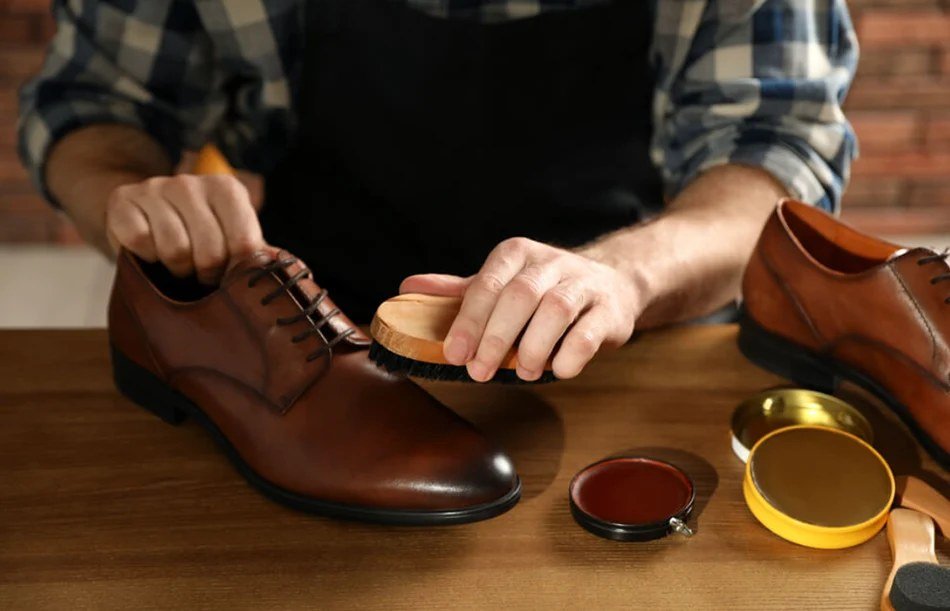
A good pair of leather shoes can last a decade or more — or look knackered within a year. The difference isn’t the price tag; it’s maintenance. Leather is skin, and like skin it needs cleaning, moisturising and protection. Here’s how to care for leather shoes so they last for years, with a routine that takes minutes and costs less than a single replacement pair.
How to care for leather shoes so they last for years
It comes down to cleaning, conditioning and resting them — plus resoling instead of replacing. A £150 pair maintained well outlasts three £50 pairs. Here’s the full routine, product by product.
The basic leather shoe care routine
1. Clean after wearing (30 seconds). Wipe shoes with a dry or slightly damp cloth after each wear to remove dust and dirt. Dirt left on leather works into the creases and grinds away at the finish — this tiny habit prevents most long-term damage. For muddy shoes, let mud dry completely, then brush it off with a horsehair brush before wiping.
2. Condition regularly (monthly). Leather dries out, cracks and loses its lustre without moisture. Apply a leather conditioner or cream (neutral or matched to the colour) with a soft cloth, working it into the leather in small circles, paying attention to creases and toe caps. Leave for 10–15 minutes, then buff off the excess. This is the single most important step — conditioned leather resists water, stays supple and ages beautifully instead of cracking.
3. Polish for protection and shine (as needed). Cream polish nourishes and recolours; wax polish adds shine and water resistance. Apply thin layers — multiple thin coats beat one thick one — buffing between layers with a horsehair brush. Black and brown polishes also disguise scuffs brilliantly.
4. Protect from water. A waterproofing spray (silicone or beeswax-based) before first wear and reapplied seasonally is essential for British weather. If shoes get soaked: stuff with newspaper, let them dry naturally at room temperature — never on a radiator or with direct heat, which cracks leather — then condition once dry.
The toolkit (under £30 total)
- Horsehair brush (for dusting and buffing) — £8–£10
- Leather conditioner/cream — £8–£12 (lasts years)
- Polish in your shoe colours — £5–£7 each
- Waterproofing spray — £8–£10
- Cedar shoe trees — £15–£25 per pair (worth every penny — see below)
High-street options from Clarks, Timberland or specialist brands like Saphir (the enthusiast’s choice) all work. You don’t need the most expensive — you need to actually use them.
Shoe trees: the unsung heroes
If you buy one accessory, make it cedar shoe trees. Inserted after wearing, they: absorb moisture (feet sweat ~250ml daily — that moisture rots leather from inside), hold the shoe’s shape (preventing the toe curling and creasing that ages shoes prematurely), and the cedar deodorises naturally. They’re the difference between shoes that look a year old after three years and shoes that look three years old after one.
Rotation, resoling and storage
Rotate: Never wear the same pair two days running — leather needs 24 hours to dry out and recover. Two pairs rotated last far longer than two pairs worn sequentially — the same logic behind building a capsule wardrobe, where fewer, better things outperform a large neglected collection.
Resole: Good shoes (Goodyear-welted especially) can be resoled for £30–£60, extending life by years — find a proper cobbler, not a heel-bar. Even glued shoes can often be reheeled. Rest: Undo laces fully when removing shoes (don’t stamp them off — it crushes the heel counter). Store: In dust bags, with trees inserted, away from direct heat and sunlight.
For suede and nubuck, the routine differs — a suede brush and protector spray instead of cream polish, and never use regular leather conditioner. But the principles (clean, protect, rest, trees) are identical.
The economics are compelling: a £120 pair maintained for 8 years costs £15/year; a £40 pair replaced annually costs £40/year — and looks worse throughout. Leather shoe care isn’t fussiness; it’s one of the best value-for-money habits in all of fashion. Ten minutes a month, and your shoes will outlast trends, seasons and probably your interest in replacing them.
Suede and nubuck: the separate routine
Suede and nubuck need different care from smooth leather — using regular polish on suede ruins it. Cleaning: a suede brush (£5–£8) — brush in one direction to lift the nap, then the other to finish. For marks, a suede eraser (or clean pencil eraser) rubbed gently lifts most scuffs. Wet suede: stuff with newspaper, dry naturally (never heat), then brush the nap back up when dry. Water spots often disappear with brushing alone.
Protection: suede protector spray before first wear is essential — it creates an invisible barrier against water and stains. Reapply every few months or after cleaning. This is the step that determines whether suede shoes last two years or two months. Salt stains (winter’s gift): wipe with a cloth dampened with water and white vinegar (50/50), dry, brush. Treat promptly — road salt damages suede permanently if left.
Storage: same as leather — trees, dust bags, no piling. Suede crushes easily, so don’t stack heavy items on suede shoes. When to use a cobbler: worn suede heels, damaged nap, colour restoration — a good cobbler can re-dye suede (£15–£25), making tired shoes look new. Many people discard suede shoes that a cobbler could rescue in a week. The routine is barely more effort than smooth leather — brush, protect, dry properly — and the payoff is suede that looks luxurious for years instead of shabby in months. Different material, same principle: a little maintenance beats replacement, every time.
When to resole vs replace: the decision guide
Resole when: the uppers are in good condition (leather healthy, no cracks, shape held), the shoes fit perfectly (broken-in comfort is irreplaceable), and they’re quality construction (Goodyear-welted or Blake-stitched — designed for resoling). Cost: £30–£60 for a full resole, £15–£25 for heels. Replace when: the uppers are cracked or collapsing, the insoles are destroyed, the fit was never right, or the repair costs exceed half the replacement cost.
Finding a good cobbler: look for traditional shoe repairers (not just heel bars) — ask about Goodyear welting specifically; a cobbler who knows the term is a cobbler who can do the work. Timpson and similar chains handle basic resoling; independents often do finer work. What resoling involves: the old sole is removed, the welt inspected, a new sole attached and finished — typically a week. Your shoes come back with new soles and the same beloved uppers.
The economics: £120 shoes + £45 resole every 3 years = £15/year for decades of wear. The resoling habit is what separates the people whose good shoes last 15 years from those who buy new every 3. Prevention: toe taps (£8–£12, fitted by a cobbler) protect the most-worn part of the sole; rubber topy soles (£20–£30) protect leather soles from wet pavements; and rotation (never two days running) doubles sole life. The mindset: quality shoes are maintainable assets, not consumables. Resole, repair, condition, repeat. The initial investment pays dividends for decades — if you maintain it — which is why knowing where to spend vs save in your wardrobe matters so much. That’s the entire philosophy of this article in one sentence.
For keeping leather goods in top condition, Love Your Clothes has care guides covering everything from cleaning to storage — the same principles that keep a wardrobe working for years.