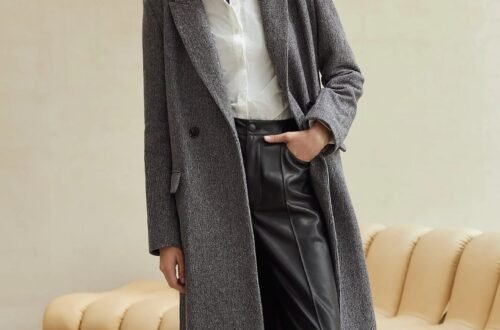
Two of the most confusing phrases in modern dress codes — and the difference between them matters, because getting it wrong means being the overdressed person at the startup or the underdressed person at the client dinner. What’s the actual difference between business casual and smart casual? Let’s decode them once and for all.
The difference between business casual and smart casual
These dress codes overlap but aren’t the same — get it wrong and you’re either overdressed or underdressed. Here’s the definitive breakdown with outfit examples for men and women.
Business casual: relaxed professionalism
Business casual is workplace dress with the formality dialled down from full business attire — but it’s still business. The key word is business: you should look like a professional who happens not to be wearing a suit. Think: tailored trousers or chinos (not jeans — traditionally), collared shirts, blouses, knit jumpers, blazers (optional but common), closed-toe smart shoes (loafers, derby shoes, smart flats, low heels).
Business casual avoids: jeans (in traditional interpretations — modern offices increasingly allow dark jeans, but check), t-shirts, trainers, shorts, anything you’d wear to the gym or beach, and anything too sexy or sloppy. It’s the dress code of modern offices, client meetings (non-formal), conferences and business dinners.
Business casual outfit examples
- Women: Tailored trousers + blouse + blazer + loafers; midi skirt + knit + pointed flats; dark tailored dress + cardigan + low heels. See our office midi styling and workwear brands guides.
- Men: Chinos + shirt + blazer + derby shoes; tailored trousers + polo + loafers; dark jeans (if permitted) + shirt + blazer.
Smart casual: polished personal style
Smart casual is casual dress lifted to look intentional and polished — the key word is casual. It starts from everyday clothes and adds polish, whereas business casual starts from business clothes and removes formality. Jeans are welcome (dark, well-fitting), trainers are acceptable (clean, minimal — see our trainers-with-smart guide), and personal style has much more room.
Smart casual avoids: anything sloppy (the “casual” still needs the “smart”), gym wear, ripped jeans, flip-flops, and looking like you didn’t consider the occasion. It’s the dress code of nice restaurants, dinner dates (see our date night guide), parties, weddings marked smart casual (see our men’s wedding guide), and creative workplaces.
Smart casual outfit examples
- Women: Dark jeans + silk blouse + blazer + heeled boots; midi dress + trainers + denim jacket; tailored jumpsuit + minimal jewellery.
- Men: Dark jeans + open-collar shirt + unstructured blazer + clean trainers or loafers; chinos + knit + boots.
The difference at a glance
Business casual = business minus the suit. Professional context, colleagues and clients, daytime. Leans tailored, conservative, “work-appropriate.” When in doubt, dress up.
Smart casual = casual plus polish. Social context, evenings and weekends. Leans stylish, personal, “effort-dressing.” When in doubt, keep it simple and well-fitted.
The overlap zone is real — a blazer with dark jeans and a shirt could pass as either, which is exactly why it’s the safest choice when you’re unsure. The differentiator is usually the bottom half and shoes: tailored trousers + formal shoes reads business casual; dark jeans + smart trainers reads smart casual.
How to handle ambiguous invitations
“Smart casual” on a wedding invitation usually means “business casual or smarter” (weddings borrow formality — don’t wear trainers). “Business casual” for an evening event means “smart casual is fine, just look polished.” And “dressy casual” means smart casual. When truly uncertain: ask the host, check photos of past events, or choose the overlap outfit (blazer, dark jeans/trousers, smart shoes) that survives either interpretation.
The one-sentence version to remember: business casual dresses down from business; smart casual dresses up from casual. Start from the right end and you’ll never be the odd one out again.
The interview dress code decoder
“Dress code: casual” (tech startup): dark jeans, quality knit or shirt, clean minimal trainers or boots. Still polished — “casual” at an interview means smart casual, not actual casual. “Smart casual”: the overlap outfit — blazer, dark trousers/jeans, shirt, smart shoes. The safest interview choice when the code is vague. “Business casual”: tailored trousers, shirt, blazer, formal shoes. No tie needed; tie optional if you want the edge.
“Formal” / “business attire”: full suit, shirt, tie, formal shoes. Traditional industries (law, finance, consulting) still expect this — when in doubt in these fields, wear the suit. “Creative” / no code given: research the company culture (Instagram, team page) and pitch one step above their everyday — our creative interview guide covers this in depth. Video interviews: same rules apply waist-up, but dress fully — the confidence effect is real, and standing up unexpectedly in pyjama bottoms ends careers.
The universal interview rules: overdressed beats underdressed (you can remove a tie; you can’t conjure one), fit beats price (a tailored high-street suit beats an ill-fitting designer one), grooming is half the outfit (hair, nails, shoes — the details interviewers actually notice), and comfort is confidence (if you’re physically uncomfortable, it shows — choose the outfit you forget you’re wearing). The dress code decoder’s final rule: when truly uncertain, ask. “What’s the dress code for the interview?” is a perfectly professional question — asked to HR, not the hiring manager. Better to ask than to guess wrong.
Dress codes in UK workplaces: the current landscape
The post-pandemic shift: UK offices have relaxed significantly — the full suit is now rare outside law, finance and client-facing consulting. Most offices operate on a business-casual-to-smart-casual spectrum, with tech and creative at the casual end. How to read your office: observe the first week (dress one step up, then calibrate down), note what leadership wears (that’s the real code), and ask HR for the written policy (it exists, even if no one follows it exactly).
Sector guides: law/finance — business formal to business casual (suit without tie is the modern standard); consulting — business casual, client-dependent; tech — smart casual to casual (jeans normal, but keep them dark and neat); creative/media — smart casual with personality (the most permissive); public sector — business casual, conservative; startups — whatever the founders wear (observe and match).
The interview-to-job transition: interview one step above the office norm, then match the norm on day one. Client meetings: dress to the client’s code, not yours — the tech consultant visiting a bank wears the suit. The Friday question: “dress-down Friday” usually means smart casual, not actual casual — dark jeans fine, ripped jeans not. The universal rule: you can always dress down (remove the tie, lose the blazer), but you can’t dress up without the clothes. When uncertain, start formal and relax — it’s the only direction that works. For the full breakdown of the two key codes, see the main article — and for building the wardrobe to match, our workwear brands guide.
For what to wear to interviews across industries, Prospects’ interview advice covers dress codes from creative to corporate.