You survived teenage acne, enjoyed a decade of relatively clear skin, and now at 33 your jawline is erupting like you are sixteen again. Welcome to hormonal acne in your thirties — experienced by a huge proportion of adult women (studies suggest up to 40% of women in their thirties deal with it) and plenty of men too. It is frustrating, it is poorly understood, and it does not respond to the harsh treatments that worked at seventeen. Here is what is actually happening and how to treat it properly.
First, the reassurance: adult hormonal acne is extremely common and not caused by poor hygiene or chocolate. It is driven by fluctuations in androgens (present in all genders) that increase sebum production, particularly around the lower face. Triggers in your thirties include stopping or changing hormonal contraception, pregnancy and postpartum shifts, perimenopause’s early hormonal wobbles (yes, it can start in the late thirties), stress (cortisol disrupts everything), and conditions like PCOS.
Recognising the hormonal pattern
Hormonal acne has a signature: deep, painful, cystic spots concentrated on the jawline, chin and lower cheeks — the “beard distribution” — often flaring cyclically with the menstrual cycle (typically 7–10 days before a period). The spots are tender underground lumps rather than surface whiteheads, they linger for weeks, and they scar more readily. If this pattern fits, treating it as generic acne misses the driver.
See a GP if: acne is sudden and severe, accompanied by irregular periods, excess facial hair growth, hair thinning or deepening voice (possible PCOS or other androgen disorders), or if it is significantly affecting your mental health. These warrant investigation, not just skincare. The NHS acne guidance outlines when medical treatment is appropriate.
The treatment hierarchy: what actually works
Topical retinoids (adapalene/differin): the gold standard for adult acne — normalise skin cell turnover, prevent clogged pores, improve scarring and fine lines simultaneously (the thirties bonus). Start 2–3 nights a week, pea-sized amount, moisturiser first (“buffering”) to reduce irritation. Expect 8–12 weeks for real results; purging in weeks 2–6 is normal. Available OTC in the UK as Differin or prescribed stronger as tretinoin.
Azelaic acid (15–20%): the underrated hero — anti-inflammatory, antibacterial, fades post-acne marks, and safe in pregnancy (unlike retinoids). Excellent for sensitive skin that cannot tolerate retinoids. Benzoyl peroxide (2.5–5%): kills acne bacteria; effective but bleaches towels and can irritate — short-contact therapy (apply 10 minutes, rinse) reduces irritation. Niacinamide: regulates sebum and calms inflammation; a good supporting player.
What to avoid: harsh scrubs, alcohol-heavy toners, picking (the scars last years longer than the spots), and layering five actives at once. Adult skin is less resilient than teenage skin — gentle consistency beats aggressive assaults. Skin reflects inner health too; our guide to improving gut health with everyday foods covers the nutrition side, since emerging research links gut health to inflammatory skin conditions.
Prescription options worth discussing
For persistent hormonal acne, GPs and dermatologists have powerful tools: combined oral contraceptives (certain pills like co-cyprindiol or Yasmin-type formulations significantly improve hormonal acne), spironolactone (an anti-androgen increasingly prescribed off-label for adult female acne), oral antibiotics (short courses for inflammatory flares), and isotretinoin (for severe, scarring acne — effective but with significant side effects requiring monitoring). Do not suffer in silence if topicals are not enough after 3 months — escalate. The British Association of Dermatologists provides patient information on prescription acne treatments.
Lifestyle factors that genuinely help
Stress management: cortisol drives androgen activity; the acne-stress-acne cycle is real. Sleep, exercise and actual downtime are skincare. Diet: the evidence is modest but real — high-glycaemic diets and, in some people, dairy correlate with worse acne. Try a low-GI shift for 6–8 weeks and judge by results, not dogma. Skincare hygiene: clean pillowcases twice weekly, clean phone screens, remove makeup properly every night (a calm evening routine helps — see our guide to simple self-care routines for busy days), and stop touching your jawline. Hair products: pomades and heavy conditioners along the jawline cause “pomade acne” — keep hair products off the lower face.
And be kind to yourself in the mirror. Adult acne carries a particular sting — the feeling of going backwards — but it is a medical condition, not a personal failing. Your thirties can be about finding your personal style in your 30s and confidence, not hiding from cameras. Treat the skin medically, support it gently, and give treatments the 12 weeks they need to work.
Makeup and adult acne: the practical guide
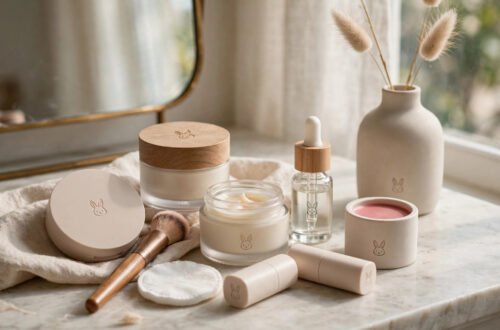
Adult acne does not mean abandoning makeup — it means choosing it strategically. Foundation: non-comedogenic formulas labelled oil-free; mineral foundations suit many acne-prone skins. Apply with clean fingers or a washed sponge — dirty brushes seed bacteria. What to avoid: heavy full-coverage layering that traps heat and oil; shimmer/highlighter on active breakouts (emphasises texture); and sleeping in makeup, ever. Removal is the real skincare: an oil-based first cleanse followed by your regular cleanser takes everything off gently — and our guide to looking put-together when working from home shows why the evening routine matters. The confidence angle: makeup that covers without clogging lets you face the world while treatments work underneath — there is no virtue in suffering visibly. And a psychological trick dermatologists endorse: on bad skin days, a bold lip or strong brow draws the eye upward, away from the jawline battlefield. Strategy, not shame.
Hormonal acne in men
Women get the headlines, but men absolutely get hormonal acne in their thirties too — driven by the same androgen fluctuations, plus specific triggers: anabolic steroid use (a common and under-discussed cause of severe adult male acne), high-stress careers disrupting hormones, and the post-finasteride hormonal shifts some men experience. Male hormonal acne clusters on the jawline, chin and back, and tends toward deep cystic lesions. The treatment ladder is the same — retinoids first, GP escalation for persistent cases — with the addition that men should review any supplements or medications affecting hormones honestly with their doctor. Skincare marketing ignores men here; the dermatology does not.
Frequently Asked Questions
Why am I getting acne in my 30s when I never had it as a teenager?
Hormonal fluctuations — stopping contraception, postpartum changes, perimenopause beginnings, stress and conditions like PCOS — can trigger adult acne regardless of teenage history. Up to 40% of women in their thirties experience it.
What does hormonal acne look like?
Deep, painful cystic spots along the jawline, chin and lower cheeks, often flaring cyclically before periods. They linger for weeks, rarely come to a head, and scar more easily than teenage whiteheads.
What is the best treatment for hormonal acne in adults?
Topical retinoids (adapalene) are the first-line gold standard, with azelaic acid excellent for sensitive skin. Persistent cases warrant GP discussion of hormonal options (certain contraceptive pills, spironolactone) or isotretinoin for severe acne.
How long does it take for acne treatment to work?
Expect 8–12 weeks for meaningful improvement with topicals like retinoids. Initial purging (worse before better) in weeks 2–6 is normal. Judge any treatment over a full 12 weeks before declaring it failed.
Can diet affect hormonal acne?
Modestly. High-glycaemic diets correlate with worse acne in studies, and some people find dairy a trigger. A 6–8 week low-GI trial is reasonable; diet alone rarely resolves true hormonal acne, which usually needs topical or medical treatment. Keep a simple food-and-flare diary during the trial — patterns you cannot see from memory often emerge clearly on paper.