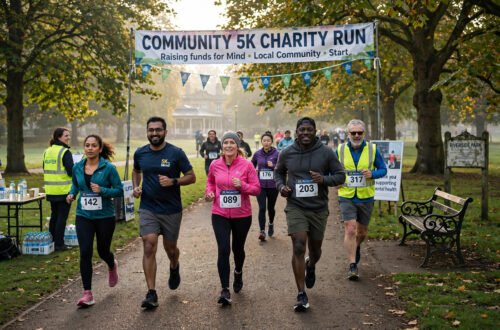
26.2 miles. It is an absurd distance, further than most people drive without thinking, now to be covered on foot. And yet every year, thousands of ordinary Britons, many of whom could barely run a mile in January, cross marathon finish lines by autumn. The marathon is not a test of talent; it is a test of patience, planning and the willingness to run slowly for a very long time. This guide gives you the complete step-by-step beginner marathon training plan: the timeline, the weekly structure, the long runs that make it possible, and how to do it as cheaply as possible in Devon.
The timeline: how long it really takes
The honest answer: 16 to 20 weeks of dedicated training, on top of a base where you can already run 30 to 40 minutes comfortably. If you cannot yet run for 30 minutes, add 8 to 12 weeks of base-building first, because training for a marathon without the base is how injuries happen. Total journey from sofa to finish line: 6 to 9 months, which is why January starters target autumn marathons, and Devon in October is glorious for it. Do not compress the timeline: the marathon famously punishes the underprepared at mile 20, in the cruellest public fashion. The training does not just build fitness; it builds the specific durability, metabolic and mental, that 26.2 miles demands. There are no shortcuts; there is only the plan, followed patiently.
The weekly structure: four runs that build a marathoner
Every credible beginner plan is built from four session types. The long run, weekly, building from 8 to 20 miles: the cornerstone. It trains fat metabolism, mental endurance and the simple ability to be on your feet for hours, and it is run slowly, at conversational pace. The midweek medium run, 6 to 10 miles: supports the long run adaptations. The tempo or interval session: one weekly quality session of comfortably-hard efforts that raise your sustainable pace. The easy recovery run: short, slow, enjoyable. Plus one or two rest days, which are non-negotiable, and one strength session, the knee-and-hip protection that keeps runners knees healthy through high mileage. Weekly mileage builds gradually under the 10 percent rule, peaking around 35 to 45 miles for beginners, then a three-week taper before race day. The taper feels wrong, you will feel sluggish and paranoid, and it is absolutely correct.
The long run: your weekly university
The long run deserves special attention because it is where marathons are actually trained. Build it by 1 to 2 miles per week, with a cutback every fourth week. Practise everything on long runs: the shoes, the socks, the fuelling, the pace. Race day must contain zero experiments. Run them on terrain similar to your target marathon. Devon’s hills are beautiful and brutal, so train on hills if racing on hills. And respect the 20-mile ceiling: most beginner plans peak at 20 miles, not 26. The final 6.2 come from taper freshness and race-day adrenaline, a well-evidenced approach.
Fuelling: the fourth discipline
Beginners under-fuel marathons more than they under-train them. Daily nutrition matters enormously at marathon volume: eating properly around training is essential because you cannot build 40-mile weeks on skipped meals. During long runs, practise taking on carbohydrate, gels, chews or real food, every 30 to 45 minutes from mile 6 onward. Train your gut like you train your legs. Hydration: drink to thirst with electrolytes on long runs; overhydration is as dangerous as dehydration. Race week: normal eating, slightly more carbohydrate in the final two to three days. Race morning: the breakfast you practised, two to three hours before the start, nothing new. The marathon is an eating contest with running in between. Respect the fuelling and the wall at mile 20 becomes a hill, not a cliff.
Devon on a budget: the cheapest marathon build
Marathon training can cost almost nothing, or a fortune. The budget path: shoes at 80 to 120 pounds, the one non-negotiable expense, replaced once mid-plan. Free training plans: reputable 16 to 20 week beginner plans are freely available from major marathon organisations. Free weekly parkruns serve as tempo efforts and community. Trails and coastal paths are your free gym, and the South West Coast Path is world-class training terrain. A running club at 30 to 50 pounds annual membership is the best value in running: coached sessions, company on long runs, race-day support. Skip the GPS watch, because your phone works; buy gels in bulk online; avoid expo shopping. Race entry itself, 60 to 90 pounds for major UK marathons, is the main cost. Enter early, as popular races sell out and charity places require fundraising commitments.
Race day: the final 48 hours
Sixteen weeks of training come down to two days — and the rules are simple: nothing new, nothing heroic. The final 48 hours: keep eating normally with slightly more carbohydrate, hydrate steadily (pale-yellow urine is the target — clear means overdoing it), lay out everything the night before (number pinned, shoes, gels, clothes — race-morning decisions are where disasters breed), and get to bed early without obsessing about sleep (one bad night barely affects performance; anxiety about it does). Race morning: the practised breakfast 2–3 hours before, arrive early enough to be bored (better than late and panicked), warm up gently, and position yourself correctly — with the pace group matching your goal, not your dreams. The first 10K: run it slower than feels right — the number one beginner error is banking time early, and the marathon collects that debt with interest at mile 20. The middle miles: settle into rhythm, take gels on schedule, acknowledge the crowds (they are fuel). The final 10K: this is what you trained for — the legs will hurt, the mind will bargain, and the training will carry you if you let it. London Marathon Events publishes excellent race-day guides applicable to any UK marathon. Cross the line, collect the medal, and discover the truth every marathoner learns: the finish line is not the end of the journey — it is the beginning of wondering when you can do it again.
Frequently Asked Questions
Can a complete beginner really run a marathon?
Yes, with 6 to 9 months of patient training. The marathon does not require talent; it requires consistent, gradual mileage building. Thousands of first-timers finish every year, most of them slower than they hoped and happier than they expected.
What is a realistic first-marathon time?
For most beginners: 4:30 to 5:30. Anyone promising you sub-4 on a first marathon is selling something. The only goal that matters for marathon one is finishing strong and healthy. Time is marathon two’s problem.
How do I avoid hitting the wall?
The wall is glycogen depletion, preventable by correct pacing, starting slower than feels necessary, and fuelling with carbohydrate from early in the race, not when you feel empty. Most wall-hittings trace to going out too fast, the classic beginner error.
What should I do the week before the marathon?
Taper: drastically reduced running, normal eating with slightly more carbs, no new anything, early nights, and trust in the training. You cannot gain fitness in race week; you can only arrive fresh or tired. Choose fresh.
Sixteen weeks, four runs a week, one long run that grows like a legend, and fuelling practised until it is boring. That is the marathon, demystified. The finish line is not 26.2 miles away. It is sixteen weeks of ordinary Tuesdays away. Start this week, run the first long run this weekend, and let the Devon coast do the rest.