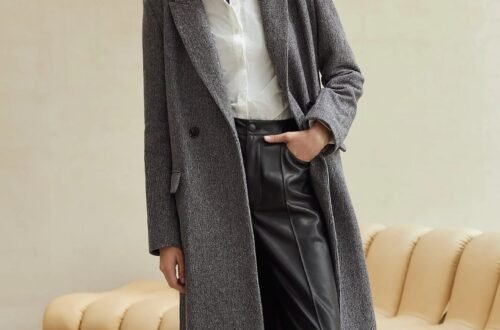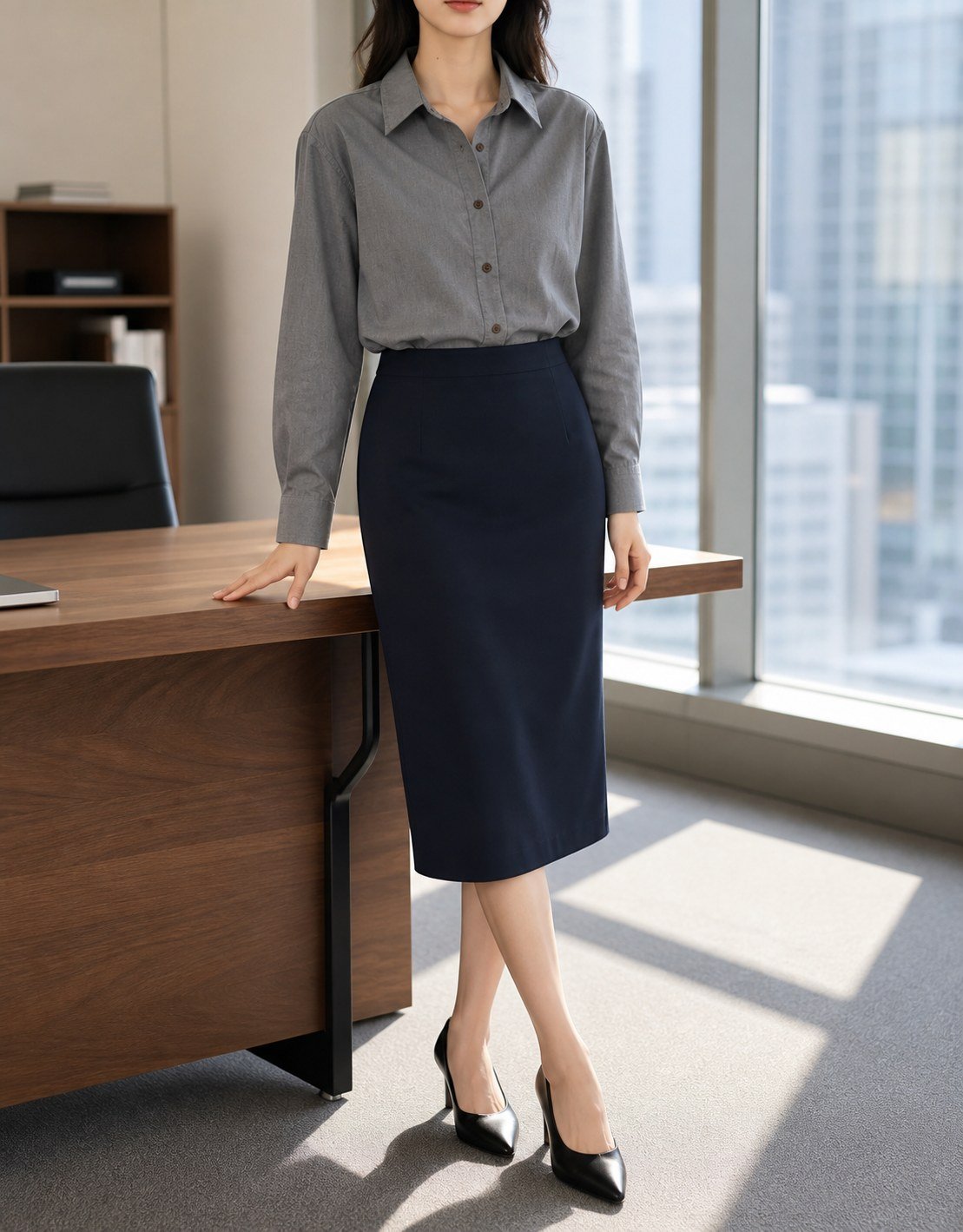
The midi skirt is workwear’s quiet overachiever — professional without the suit’s stiffness, feminine without fuss, and comfortable through long desk days. But it has styling pitfalls: the wrong length swamps, the wrong top unbalances, the wrong shoes stumpify. Here’s how to style a midi skirt for the office so it looks intentional and polished every time.
How to style a midi skirt for the office
The formula is a defined waist, a streamlined top, and the right shoe — the midi does the rest. Here’s how to wear it for different office dress codes, seasons, and body shapes.
Choose the right midi for work
Length: The most flattering midi hits at the slimmest part of your lower leg — typically just below the knee to mid-calf. Longer midis (near the ankle) can work but risk looking dowdy in an office; shorter (just below knee) is the safest professional length. Petite frames should stick to the shorter end and show ankle.
Silhouette: A-line and pleated midis are the office workhorses — they skim, move well when walking, and sit comfortably at a desk. Pencil midis are sleek but restrictive (check you can climb stairs and sit comfortably). Full gathered midis can overwhelm in an office — save them for weekends.
Fabric: Crepe, ponte, wool-blend, structured cotton — fabrics with body that hold their shape through a day of sitting. Avoid clingy jersey (shows every chair crease) and dry-clean-only silks for daily wear. Dark neutrals (navy, black, charcoal, camel) are the hardest-working; add pattern (subtle pleats, pinstripes, small prints) once the basics are covered.
The tucking rule
Always tuck in, or do a French tuck — an untucked top over a midi skirt erases the waist and ruins the proportions. The waistband is the outfit’s anchor point; show it. A belt over the tuck adds definition and polish (see our accessories guide for why this works).
Office midi outfit formulas
- Classic: Pleated midi + tucked-in shirt or blouse + pointed flats or low heels. The can’t-go-wrong office uniform.
- Modern: A-line midi + fine-knit jumper (tucked) + loafers. Comfortable, contemporary, desk-to-dinner capable.
- Polished: Pencil midi + blazer + camisole + court shoes. Boardroom-ready — add the blazer from our oversized blazer guide for a fashion-forward edge, or a fitted one for classic.
- Creative office: Patterned midi + tucked tee + trainers or boots + denim jacket. Smart-casual workplaces only — know your office (see dress code decoding).
- Winter: Wool midi + polo neck + tights + knee-high or ankle boots. The cold-weather formula — opaque tights (60+ denier) keep it professional.
Shoes and hosiery
Shoes: Pointed flats elongate the leg under a midi; block heels add polish and height; loafers keep it modern; ankle boots work with the right length (the skirt should meet or cover the boot top — a gap of bare leg between midi and bootie shortens the leg). Avoid: round-toe ballet flats (stumpy with midis) and very strappy sandals in conservative offices.
Tights: Bare legs are fine in summer in most modern offices; in cooler months, opaque black or navy tights streamline the whole look. Match tights to shoes (black tights + black shoes = longest leg line) and avoid the mid-denier “American tan” — it dates everything.
Making it work practically
Test-drive new midis: sit for an hour (does it ride up? crease badly?), climb stairs, walk briskly. Static-cling is the midi’s nemesis — anti-static spray or a slip solves it. And keep a lint roller at your desk; dark midis attract everything.
For building around this piece, our workwear brands guide tells you where to shop, and the capsule wardrobe method shows how three midis can anchor a whole work wardrobe. The midi skirt rewards a little thought with a lot of polish — arguably the best effort-to-impact ratio in office dressing.
Midi skirts for petite and tall frames
Petite (5’3″ and under): stick to the shorter end of midi (just below the knee), show ankle, and choose skirts with a defined waist — the leg visible below the hem is what keeps you from looking swamped. Avoid full, gathered midis (too much fabric) and mid-calf lengths that hit at the widest part of the calf. Petite ranges (M&S, Next) or hemming (£10–£15) get the length right. Shoes: pointed flats or heels — the point extends the leg line under the midi.
Tall (5’8″+): you can wear the full midi range — longer midis that overwhelm others look elegant on tall frames. Full skirts, bold patterns, dramatic pleats — go for it. The only caution: standard “midi” lengths may hit above the knee on you (becoming minis) — check the actual length, and look for tall ranges. Plus size: A-line and pleated midis in structured fabrics are the most flattering — they skim without clinging. High-waisted styles define the waist; dark colours streamline; and a tucked-in top with a belt creates the hourglass line. Avoid clingy jersey and low-rise waists.
The universal midi alterations: hemming to hit your slimmest calf point (£10–£15), taking in the waist (£10), and adding a lining to unlined skirts (£15–£20 — prevents clinging and adds polish). A £25 high-street midi with £25 of alterations fits like a £100 skirt. And the confidence note: the midi is one of the most universally flattering lengths in fashion — it works on every body, every age, every office. If you’ve been avoiding it, the problem was the specific skirt, not the length. Keep trying; your midi is out there.
Tights guide for midi skirts: deniers decoded
15 denier: sheer, barely-there — for when you want the polished look without visible coverage. Fragile (ladder easily — carry a spare pair, £4). 40 denier: the workhorse — semi-opaque, professional, durable enough for regular wear. The default office tight. 60–80 denier: opaque — maximum polish, maximum warmth. The winter standard. 100+ denier: essentially leggings — cosy, casual, best with boots and knit dresses rather than office tailoring.
Colour rules: black opaques with black shoes = longest leg line (the elongating trick). Navy tights with navy shoes, same principle. “Nude” tights: match to your skin tone — the packet’s “nude” is often one shade. Avoid shiny finishes (cheap-looking); matte is modern. Care: hand wash (machine washing kills tights fast), air dry, and store rolled not balled. A £6 pair cared for outlasts a £3 pair abused — the economics favour mid-range.
The bare-leg question: in most modern UK offices, bare legs are fine in summer — but consider the meeting, the client, and your comfort. There’s no universal rule anymore; it’s judgement. Alternatives: knee-high socks with midi skirts and ankle boots (the fashion-forward option — shows a deliberate flash of leg), and thermal tights (£8–£12) for the coldest months — warmth without the bulk of layering. The emergency kit: keep spare tights and clear nail polish (stops ladders) in your desk drawer. The midi-and-tights combination is the backbone of autumn-to-spring office dressing — get the deniers right and it’s effortless polish for six months of the year.
Good Housekeeping’s workwear edits round up the best office pieces each season — handy for spotting versatile skirts worth the investment.