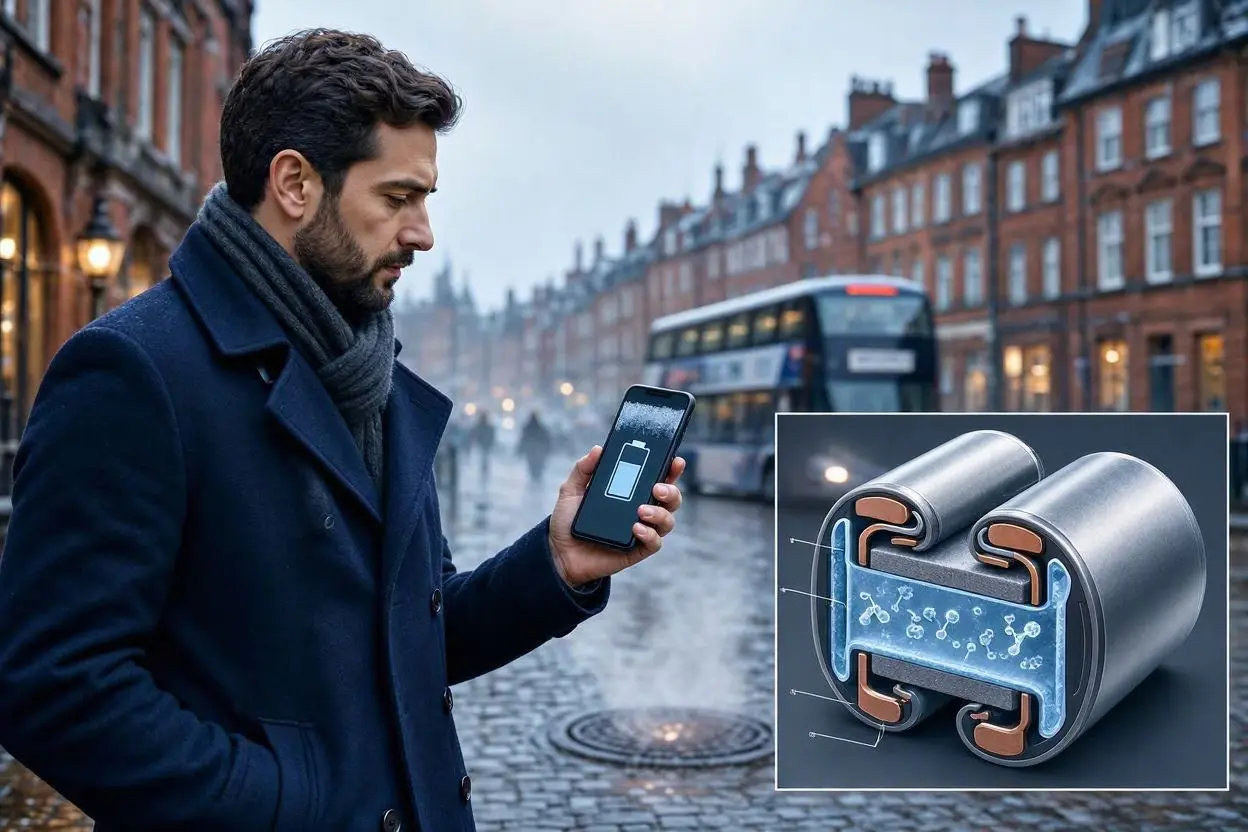
If you live in the UK, you may have noticed something frustrating during the colder months: your phone battery seems to disappear much faster than usual.
You might leave home with 70% battery, spend some time outside in the cold, and suddenly see it drop to 40% or even lower. In some cases, your phone may even shut down unexpectedly despite showing plenty of battery remaining.
So, why is my phone battery draining faster in cold weather UK?
The main reason is that cold temperatures temporarily affect the chemical reactions inside your phone’s lithium-ion battery. This can make the battery deliver power less efficiently and cause the battery percentage to fall more quickly.
The good news is that cold-weather battery drain is usually temporary. Once your phone returns to a normal temperature, its battery performance should generally improve.
How Does Cold Weather Affect Your Phone Battery?
Most modern smartphones use lithium-ion batteries. These batteries rely on chemical reactions to store and release electrical energy.
When the temperature drops, those chemical reactions become slower.
As a result, your phone may struggle to deliver the same amount of power that it normally provides at room temperature.
This doesn’t necessarily mean your battery has suddenly lost its actual capacity. Instead, the cold can temporarily reduce how effectively the battery can provide power to your phone.
That’s why you may notice things such as:
- Battery percentage dropping unusually quickly
- Your phone becoming slower
- Unexpected shutdowns
- Battery percentage jumping after the phone warms up
- Difficulty charging the phone while it is very cold
This is particularly noticeable when you’re outside for a long period during a cold UK winter.
What Temperature Is Too Cold for a Phone?
There isn’t one temperature that is dangerous for every smartphone because recommended operating temperatures vary between manufacturers.
However, smartphones generally perform best within a moderate temperature range.
When temperatures fall significantly below normal indoor conditions, battery performance can start to suffer. Extremely cold conditions can make the problem more noticeable.
For example, using your phone outside on a freezing morning in the UK may cause more battery drain than using the same phone indoors.
The combination of cold temperatures, screen use, mobile data and poor signal can make the battery disappear even faster.
Why Does My Phone Battery Drain So Quickly Outside?
Cold weather isn’t always the only reason.
When you’re outside in winter, your phone may also be working harder for other reasons.
1. Poor Mobile Signal
If you’re travelling through rural areas or locations with weak mobile coverage, your phone may use additional power trying to maintain a connection.
This can be particularly noticeable when you’re using mobile data while travelling.
2. Bright Screen
Winter conditions can sometimes encourage you to increase your screen brightness, especially when you’re outside during daylight.
A brighter display requires more energy and can contribute to faster battery consumption.
3. GPS and Navigation
Using Google Maps, Apple Maps or another navigation service continuously can use significant battery power.
GPS, mobile data, the display and background processing can all contribute to increased battery usage.
4. 5G and Mobile Data
Using 5G or mobile data for extended periods can consume more energy than basic phone functions.
If you’re in an area where the signal keeps changing between network technologies, your phone may also work harder to maintain connectivity.
5. Cold Battery + Heavy Usage
This is where everything can add up.
Imagine you’re outside on a cold UK morning, using GPS, mobile data, Bluetooth and a bright screen while your phone is sitting in your pocket.
The battery is already affected by the cold, while your phone is simultaneously demanding more power.
That’s when rapid battery drain becomes particularly noticeable.
Why Does My Phone Turn Off Even When It Has Battery Left?
One of the most confusing cold-weather phone problems is an unexpected shutdown.
You might see 20% or 30% battery remaining, yet the phone suddenly turns off.
This can happen because cold temperatures increase the battery’s internal resistance and reduce its ability to deliver power efficiently.
When the phone requires a sudden amount of power, the battery voltage can temporarily drop.
The phone may interpret this as insufficient power and shut down to protect itself.
After the phone warms up, you may find that it turns back on and displays a higher battery percentage than you expected.
This doesn’t necessarily mean the battery magically charged itself. The battery’s performance has simply improved as its temperature returned to a more suitable level.
Does Cold Weather Permanently Damage a Phone Battery?
Normal exposure to cold weather does not automatically mean your battery has been permanently damaged.
Temporary battery performance problems are common in cold conditions.
However, extreme temperatures can be harmful to batteries, especially when combined with improper charging or prolonged exposure.
One important thing to remember is that you shouldn’t deliberately heat up a very cold phone using a radiator, heater or other intense heat source.
A sudden temperature change can potentially cause problems, including condensation.
Instead, allow the phone to return gradually to room temperature.
How to Stop Your Phone Battery Draining in Cold Weather
You don’t have to stop using your phone during winter. A few simple habits can help.
Keep Your Phone Warm
One of the easiest solutions is to keep your phone close to your body when you’re outside.
Instead of leaving it exposed in an outside pocket, keep it inside an inner coat pocket where possible.
Your body heat can help keep the device at a more moderate temperature.
Use a Phone Case
A suitable phone case provides some insulation and can offer additional protection from the cold.
It won’t make your phone immune to low temperatures, but it can help reduce direct exposure.
Carry a Power Bank
If you’re going somewhere for several hours, especially when travelling, carrying a fully charged power bank can be useful.
This is particularly important if you rely on your phone for navigation, tickets, emergency calls or communication.
However, avoid charging a phone while it is extremely cold. Let it return to a normal temperature first.
Reduce Screen Brightness
Your display is one of the biggest sources of battery consumption on many smartphones.
Reducing screen brightness when possible can help extend battery life.
You can also enable automatic brightness if your phone supports it.
Turn Off Unnecessary Features
When you don’t need them, consider turning off features such as:
- Bluetooth
- Mobile hotspot
- GPS/location services for unnecessary apps
- Background app refresh
- Unused notifications
You don’t need to disable everything. Focus on features you aren’t currently using.
Use Battery Saver Mode
Most modern Android phones and iPhones have battery-saving features.
Battery Saver, Low Power Mode or similar settings can reduce background activity and help your phone last longer.
This can be particularly useful when you’re outdoors in cold weather and don’t have easy access to a charger.
Should You Charge a Cold Phone?
It’s better to let an extremely cold phone return to a normal temperature before charging it.
Charging a lithium-ion battery when it is very cold can be problematic because the battery’s chemistry doesn’t operate normally at low temperatures.
If your phone has been outside in freezing conditions, bring it indoors and allow it to warm up naturally.
Avoid putting it directly against a radiator or using a hairdryer to heat it quickly.
Once the phone has returned to a normal operating temperature, charging should be safer and more effective.
What Should You Do If Your Phone Dies in the Cold?
If your phone suddenly switches off outside during cold weather, don’t panic.
Try these steps:
- Move the phone somewhere warmer.
- Keep it protected inside your coat or indoors.
- Let it gradually return to room temperature.
- Try turning it on again after it has warmed up.
- If necessary, charge it once it reaches a normal temperature.
If the phone repeatedly shuts down even when you’re indoors and at a normal temperature, the problem may not be the weather.
An ageing or damaged battery could also be responsible.
How to Tell If Your Battery Is Actually Getting Old
Cold weather can expose weaknesses in an ageing battery.
If your phone has been used for several years and you’re experiencing frequent battery drain even indoors, it’s worth checking the battery’s health.
Signs of an ageing battery can include:
- Battery percentage falling unusually quickly
- Phone shutting down unexpectedly
- Battery percentage changing suddenly
- Phone becoming unusually warm during normal use
- Much shorter battery life than when the phone was new
For iPhone users, Battery Health can provide useful information about battery capacity.
Android phones also offer battery information, although the exact settings depend on the manufacturer and model.
Does the UK Winter Make Phone Battery Drain Worse?
It can.
The UK experiences relatively mild winters compared with some countries, but temperatures can still fall low enough to affect smartphone battery performance.
Early mornings, outdoor travel, cycling, walking and long periods spent outside can expose your phone to colder temperatures.
Wind can also make the environment feel colder, although the important factor for the battery is the phone’s actual temperature rather than the wind-chill sensation you experience.
If your phone stays relatively warm inside your coat, you may notice little difference.
But if it remains exposed to cold air for a long time, battery performance can decline more noticeably.
Cold Weather vs Battery Health: What’s the Difference?
It’s important to distinguish between temporary cold-weather battery drain and a battery that is genuinely deteriorating.
Cold weather can temporarily reduce battery performance.
Battery ageing, however, reduces the battery’s long-term ability to hold and deliver charge.
For example, if your phone works normally indoors but drains quickly whenever you spend an hour outside in freezing weather, temperature is likely playing a significant role.
But if your phone loses 20% battery while sitting on your desk indoors, you may have another issue that needs investigating.
When Should You Replace Your Phone Battery?
If your battery is old and you’re experiencing frequent shutdowns, severe battery drain or significantly reduced battery life, a battery replacement may be worth considering.
Before replacing it, check your phone’s battery health and review which apps are consuming the most power.
Sometimes a poorly optimised app, background activity, weak network connection or software issue can cause excessive battery drain.
If the battery itself has degraded significantly, however, replacing it can restore much of the phone’s everyday battery performance.
Final Thoughts
So, why is my phone battery draining faster in cold weather UK?
The simple answer is that cold temperatures affect the chemical reactions inside lithium-ion batteries, temporarily making them less efficient at delivering power.
This can result in faster battery drain, unexpected shutdowns and unusual battery percentage changes.
The easiest way to protect your phone during a cold UK winter is to keep it insulated, avoid exposing it to extreme temperatures for long periods, reduce unnecessary battery usage and let a very cold phone warm up naturally before charging it.
If your phone continues to drain unusually quickly even at normal indoor temperatures, it’s worth checking the battery health and looking for other causes.
Frequently Asked Questions
Why does my phone battery drain so fast in cold weather?
Cold temperatures slow down the chemical reactions inside a lithium-ion battery. This can temporarily reduce the battery’s ability to deliver power efficiently, causing the battery percentage to fall faster.
How do I stop my phone battery from dying in the cold?
Keep your phone close to your body, use a protective case, reduce unnecessary screen and mobile-data usage, and consider carrying a power bank when you’re outside for long periods.
Can cold weather permanently damage my phone battery?
Normal cold exposure usually causes temporary performance problems. However, extreme temperatures and improper charging while the battery is very cold can potentially cause damage.
Should I charge my phone when it’s cold?
If the phone is extremely cold, allow it to gradually return to a normal temperature before charging it. Avoid rapidly heating it with a radiator, hairdryer or other direct heat source.
Why does my iPhone battery die in cold weather?
An iPhone uses a lithium-ion battery, which can temporarily perform less efficiently at low temperatures. This may cause unexpected shutdowns or faster battery drain.
Does a phone case help in cold weather?
A phone case can provide some insulation and reduce direct exposure to cold air. It isn’t a complete solution, but keeping the phone inside an inner coat pocket can provide additional protection.
Why does my phone battery percentage go back up after warming up?
Cold temperatures can temporarily reduce the battery’s ability to deliver power. When the phone warms up, its battery performance can recover, which may cause the displayed percentage to increase.
Does 5G drain phone battery faster in cold weather?
5G can contribute to battery consumption, especially when combined with cold temperatures, weak network coverage and heavy phone use. The exact effect depends on the phone, network and conditions.
How cold is too cold for a smartphone?
The exact limits vary by phone manufacturer and model. Generally, smartphones are designed to operate within a moderate temperature range, and very cold conditions can reduce battery performance.
Why does my phone lose battery faster outside than indoors?
Outdoor conditions can combine several battery-draining factors, including cold temperatures, weak mobile signal, GPS, high screen brightness and mobile data usage. Together, these can cause noticeably faster battery consumption.