
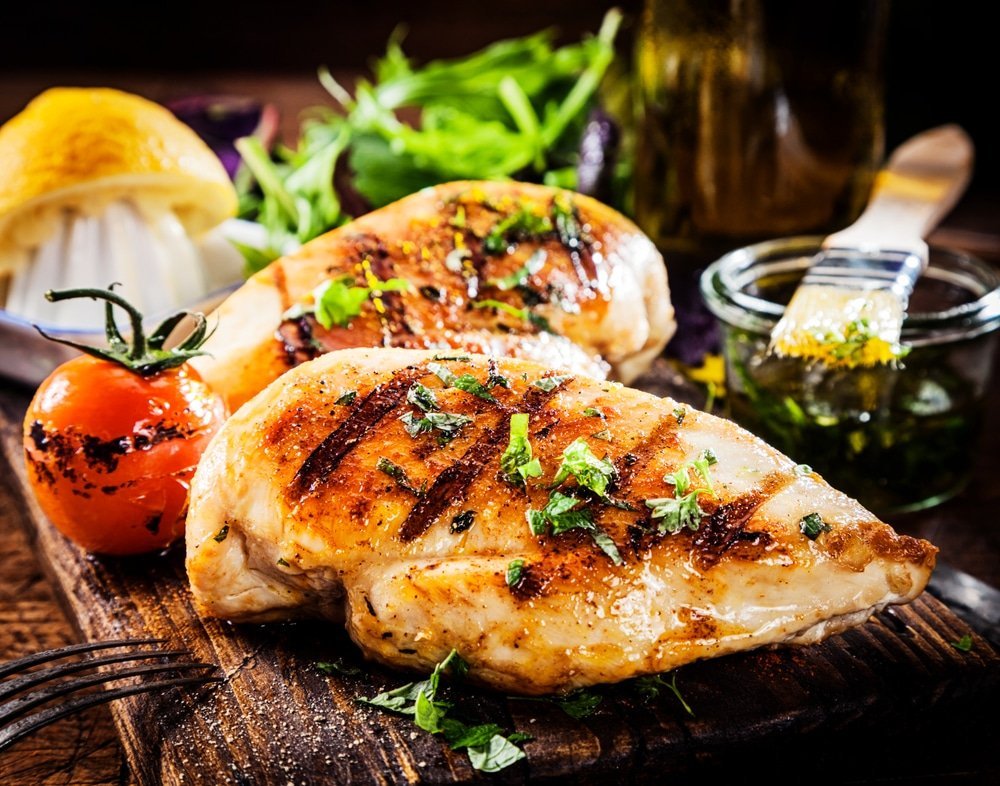
The healthiest way to cook chicken breast is poaching or steaming — no added fat, gentle heat, protein fully preserved. But let’s be honest: poached chicken breast is also how you produce the dry, rubbery sadness that gives healthy eating a bad name. The real question isn’t just “healthiest” but “healthiest while still being food you want to eat”. The answer: cooking methods that add minimal fat while keeping the chicken juicy — because dry chicken gets drowned in sauce, which defeats the purpose. Here’s how to do both.
Ranked: cooking methods from healthiest to least healthy
- Poaching: simmered in water or stock — zero added fat, maximum moisture retention. The healthiest, if done right (see below — most people do it wrong).
- Steaming: no fat, gentle, even cooking. Excellent for meal prep — batch-steam a week’s worth.
- Grilling / griddling: fat drips away, high heat gives flavour through browning. A teaspoon of oil is all you need.
- Baking / roasting: minimal added fat, hands-off, easy to batch. The weeknight workhorse.
- Stir-frying: fast, small amount of oil, lots of veg alongside. Healthy if you control the oil.
- Shallow frying: fine with minimal oil and good technique; less healthy as oil quantity rises.
- Deep frying: delicious, and the least healthy by a mile. A sometimes food.
The NHS Eatwell Guide recommends lean proteins like chicken breast as dietary staples — the cooking method determines whether that lean protein stays lean.
The core problem: chicken breast dries out
Chicken breast is very lean (about 3% fat), which means there’s no margin for error — overcook by 3 minutes and it’s sawdust. Every healthy method below is really a moisture-management strategy:
- Brine it (30 mins): 1 litre water + 60g salt. The salt denatures proteins so they hold water better. Rinse and pat dry before cooking. The single biggest juiciness upgrade.
- Pound it even: chicken breasts are thick at one end, thin at the other — the thin end overcooks while the thick end catches up. Pound to even thickness (or butterfly the thick end) for uniform cooking.
- Use a thermometer: 74°C internal is the safe temperature; pull at 71–72°C and rest 5 minutes (carryover cooking finishes the job). Guessing is how chicken gets overcooked. A £10 probe thermometer is the best kitchen investment after a sharp knife.
- Rest it: 5 minutes tented in foil. Juices redistribute instead of running out on the board.
The best methods in detail
Poaching (healthiest)
Bring a pan of salted water or stock to a gentle simmer (not a rolling boil — boiling makes it rubbery), slide in the brined breasts, and poach 12–15 minutes depending on thickness. Rest, slice. The stock can become soup. Poached chicken shredded into salads, wraps and meal-prep lunches is the backbone of a healthy week.
Baking (easiest)
200°C fan, 20–25 minutes for average breasts, on a tray with a drizzle of oil and seasoning. Cover with foil for the first 15 minutes (traps steam = juicy), uncover for the last 10 (browning = flavour). Thermometer to check. Hands-off and batch-friendly.
Griddling (tastiest healthy option)
R screaming-hot griddle pan, 1 tsp oil rubbed on the chicken (not the pan), 5–6 minutes per side for an even-thickness breast. The char marks aren’t just pretty — the Maillard reaction creates flavour without fat. Rest well. Slice against the grain for maximum tenderness.
Keeping it interesting (the real challenge)
Plain chicken breast five nights a week is a diet, not a life. The healthy move is varying the flavourings, not the method: marinades (yoghurt-based are brilliant — the acidity tenderises), spice rubs (smoked paprika, cumin, garlic), fresh herb crusts, salsa, chimichurri, peanut sauce. A griddled chicken breast with chimichurri is a different meal from the same breast with harissa yoghurt — same health profile, zero boredom.
Pair with what matters: chicken breast is protein, not a complete meal. Build the plate with vegetables and whole grains — see what to eat before and after a workout for protein timing around exercise.
What to avoid
Breading (adds refined carbs and oil), creamy sauces (the sauce often has more calories than the chicken), and “healthy” cooking sprays used with abandon (they’re still oil — measure it). And the biggest one: overcooking “to be safe” — 74°C is safe; 85°C is jerky. Trust the thermometer.
Chicken thighs vs breast: an honest comparison
The healthiest conversation about chicken usually ignores thighs — which is a shame, because the difference is smaller than the fitness industry suggests. Skinless chicken thigh has about 7g fat per 100g vs 3g for breast — meaningful, but thighs are far more forgiving (nearly impossible to dry out), cheaper (£4–£5/kg vs £7–£9/kg), and more flavourful. For curries, casseroles and traybakes, thighs are objectively better — the breast’s leanness is a liability in slow cooking.
The pragmatic approach: breast for quick, lean cooking (griddling, poaching, salads) where its leanness shines; thighs for everything braised, roasted or batch-cooked, where juiciness matters more than the marginal fat difference. Removing the skin from thighs eliminates most of the gap. Nutritionally, both are excellent protein sources — the “best” chicken is the one you’ll actually cook well and enjoy eating, because the healthiest meal is the one that keeps you out of the takeaway app.
Wet brine vs dry brine
Two brining schools compete. Wet brine (salt water soak, 30 mins–4 hours) adds moisture directly — juicier results, but the chicken absorbs water that dilutes flavour slightly, and wet chicken sears poorly (pat very dry before cooking). Dry brine (salt rubbed on, rested uncovered in the fridge 1–24 hours) draws out moisture then reabsorbs it as seasoned juices — more concentrated chicken flavour, drier surface for better searing.
Which to choose: wet brine for poaching and baking (maximum juiciness); dry brine for griddling and roasting (maximum flavour and browning). Dry brining is also less faff — no buckets of salt water, just salt and time. Either beats unbrined by a mile. Salt quantity: about 1 tsp per breast for dry brining, 60g per litre for wet. And don’t brine too long — over 24 hours dry or 6 hours wet gives a hammy, cured texture. Timing matters as much as technique.
The takeaway
Poach or bake for maximum health, griddle for maximum flavour-per-calorie, and always brine, even out, thermometer-check and rest. The healthiest chicken breast is the one cooked so well you don’t need to drown it in sauce — juicy, seasoned, and part of a balanced plate. BBC Good Food’s healthy chicken collection has dozens of flavour variations on these methods.


