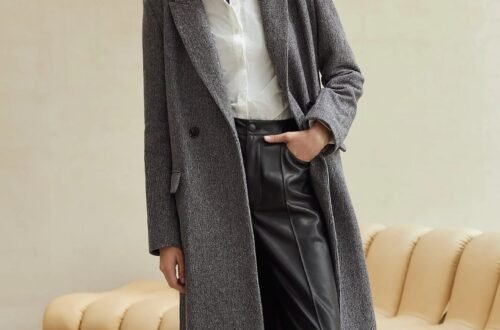
Every style guide has its own “essentials” list, and most are suspiciously long — 47 items isn’t a capsule, it’s a department store. Here’s a genuinely edited list of the wardrobe essentials every woman should own: the pieces that earn their place through sheer versatility, plus honest notes on what to prioritise and what to skip.
The wardrobe essentials every woman should own
A great wardrobe isn’t about quantity — it’s about the right 15–20 versatile pieces in a coherent palette. Here’s the definitive essentials list, how to adapt it to your life, and what to invest in.
The true essentials
1. Dark jeans that fit perfectly. The hardest-working item in any wardrobe — dress up or down, wear three seasons, go everywhere. Worth investing time (and alterations) to get right. See our jeans fitting guide.
2. White shirt. Crisp cotton, slightly oversized — wear it tucked, open over a cami, knotted, under jumpers. The most versatile top ever designed.
3. Black blazer. Tailored, single-breasted, hitting mid-hip — instant polish over everything from dresses to jeans. Our blazer styling guide maximises it.
4. Little black dress (or your version). Not necessarily black, not necessarily little — but one dress that makes you feel invincible for evenings out. Midi length is the most versatile.
5. Quality white tee. Thick enough to be opaque, well-cut — the foundation of a hundred casual outfits. Replace yearly; they’re consumables.
6. Cashmere (or quality) jumper. One beautiful knit in a neutral — wears with everything, feels like luxury daily. M&S cashmere in the sale is the value sweet spot.
7. Trench coat. Timeless, weather-appropriate, works over literally everything. The single best outerwear investment for the UK — see our rain jackets guide.
8. Tailored black trousers. For work, evenings, funerals, interviews — the formal anchor every wardrobe needs.
9. White trainers. Clean, minimal leather — the casual shoe that goes with everything from dresses to tailoring. Our trainers-with-smart guide covers the styling.
10. Black ankle boots. Autumn through spring, day to night — the boot that does everything. Invest here; cheap boots look cheap and hurt.
11. Structured handbag. Medium, neutral (black or tan), structured — the bag that polishes every outfit. See our handbag size guide.
12. Silk scarf. Neck, hair, bag handle — the £20 accessory (charity shops are full of them) that adds polish everywhere.
What didn’t make the list (and why)
No pencil skirt (the midi is more versatile), no “statement necklace” (personal, not universal), no cocktail dress (most women wear theirs twice a decade — rent for occasions instead), no ballet flats (divisive and often unflattering — loafers do the job better). Essentials should be pieces you’d replace immediately if lost — if you wouldn’t, it’s not essential for you.
Building the essentials on a budget
You don’t buy all twelve at once — you accumulate strategically: start with jeans, white tee, trainers, blazer (the highest-impact four); add the shirt, jumper, boots, bag; complete with the dress, trousers, trench, scarf. Buy the best quality you can afford for the hard-wearing items (jeans, boots, blazer, bag, coat) and save on the replaceables (tees, shirts). Second-hand is your friend for the investment pieces — our second-hand guide shows how.
For the systematic approach, our capsule wardrobe guide builds a full wardrobe around these essentials. And remember: the list is a starting point, not a law. Your essentials should reflect your life — a teacher, a lawyer and an artist need different foundations. Take the framework, adapt it ruthlessly, and build the wardrobe that serves your actual days.
The essentials at every budget
The £300 total version: Primark/Matalan for tees and basics (£40), H&M for jeans and trousers (£60), M&S sale for knitwear and shirts (£70), Primark/TK Maxx for shoes (£50), charity shops for blazer, bag and scarf (£30), Asda for the dress (£25), TK Maxx for the coat (£50 in sale)… total roughly £325. It all works — the formulas don’t care about price tags. The £800 version: upgrade the high-impact items — & Other Stories/COS for the blazer and tailoring (£200), good leather ankle boots (£120), quality handbag (£100), M&S cashmere jumper (£70) — and keep the budget basics. The visible quality jump is significant.
The £1,500+ version: investment pieces — a proper wool coat (£300), designer-inspired bag (£200), premium denim (£120), cashmere knits (£150), quality leather boots (£180) — with the same budget basics underneath. Diminishing returns set in past this point for most people; the £1,500 wardrobe doesn’t look five times better than the £300 one, maybe 30% better. Where the money actually shows: coat, shoes, bag, blazer — in that order. These are the largest, most visible, hardest-wearing items. Spend there; save everywhere else.
The honest truth: the £300 wardrobe built on these essentials, with good fit and tailoring, outperforms the £3,000 wardrobe of random impulse buys. Essentials are called essentials because they work — at every price, in every combination, for years. Start where your budget allows, upgrade the high-impact pieces over time, tailor everything, and maintain it all. The list is the same whether you spend £300 or £3,000. That’s what makes it essential.
The 10-year wardrobe: cost analysis
Scenario A — fast fashion cycle: £600/year on clothes (£50/month), everything replaced annually as it falls apart or dates. 10-year cost: £6,000. Wardrobe at year 10: nothing lasting, constant shopping, decision fatigue. Scenario B — essentials approach: £1,200 initial build (the 12 essentials, quality versions), £200/year maintenance and replacement. 10-year cost: £3,000. Wardrobe at year 10: refined, coherent, everything worn, minimal decisions.
The maths: the essentials approach costs half as much over a decade — while looking better throughout. The fast-fashion cycle isn’t cheaper; it’s just cheaper per transaction. This is the most counterintuitive finding in fashion economics: spending more upfront costs less long-term. Why people don’t do it: the initial £1,200 feels like a lot (vs £50/month feeling like nothing), it requires knowing what suits you (the style work from our personal style guide), and it demands patience (building over months, not a single haul).
The hybrid reality: most people land between — quality essentials for the high-impact items (coat, shoes, bag, blazer), affordable basics for the replaceables (tees, shirts), second-hand for the interesting pieces. 10-year cost: ~£4,000, with a wardrobe that’s 90% as good as the full-investment version. The environmental dividend: the essentials wardrobe generates a fraction of the textile waste — fewer purchases, longer life, less landfill. The final argument: the 12 essentials aren’t a shopping list — they’re a financial strategy. Buy once, buy well, maintain, repeat. The decade-long view transforms fashion from an expense into an investment. That’s what “essential” really means.
For building a wardrobe that lasts, Love Your Clothes has practical guides on choosing quality and caring for it — the essentials philosophy in action.