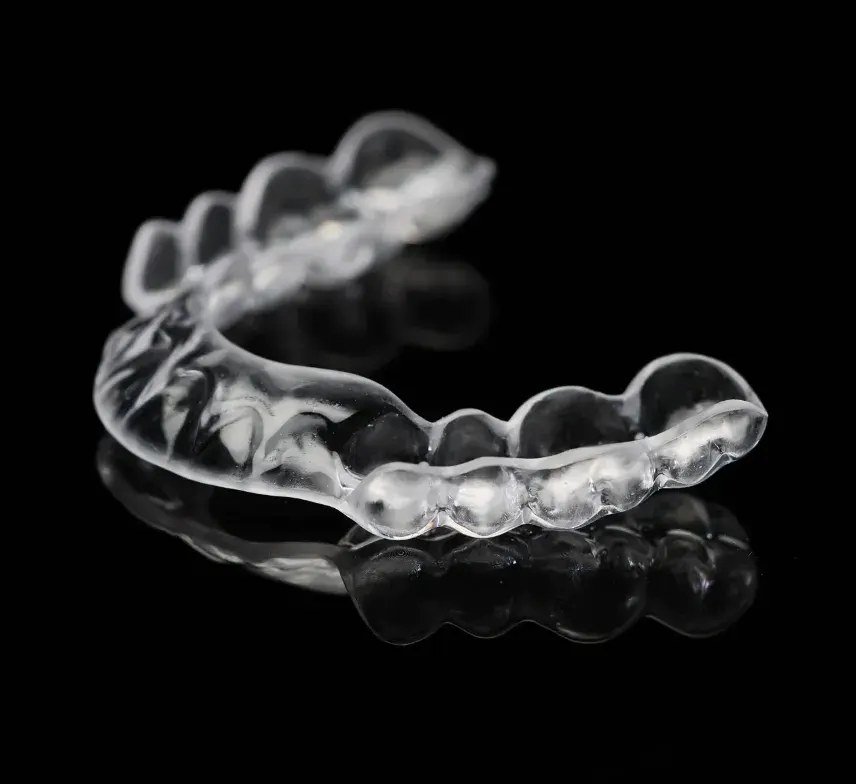
Waking up with a sore jaw, a dull headache, or teeth that feel strangely tender is often the first clue — because the grinding itself happens while you’re unconscious. Sleep bruxism (night-time teeth grinding) affects roughly 1 in 12 adults, and many have no idea they’re doing it until a dentist spots the wear. Here’s how to stop grinding teeth at night, or at least stop it damaging your teeth and wrecking your sleep.
Night grinding is different from daytime clenching. Daytime clenching is a habit you can catch and correct; night grinding is driven by sleep physiology — brief arousals during sleep trigger rhythmic jaw muscle activity. You can’t willpower your way out of something you do unconsciously, which is why the strategies focus on protection, muscle relaxation and addressing triggers.
Signs you’re grinding your teeth at night
Since you can’t observe yourself, look for the evidence:
- Morning jaw soreness or tightness — the classic sign, often easing within an hour of waking.
- Dull morning headaches, particularly around the temples.
- Worn, flattened or chipped teeth — your dentist can spot this instantly; it’s often how grinding is discovered.
- Tooth sensitivity with no obvious decay, from enamel wear.
- A partner hearing grinding sounds — it can be surprisingly loud.
- Jaw clicking or limited opening in the morning.
- Indentations on the sides of your tongue or a ridged inner cheek from chronic clenching pressure.
If several of these sound familiar, mention it at your next dental check-up — or book one. Dentists diagnose bruxism in about thirty seconds, and early intervention saves a fortune in cracked teeth and crowns later.
How to stop grinding teeth at night: what works
1. Get a proper mouth guard. This is the single most effective intervention. A custom occlusal splint from your dentist (£150–£400 privately; sometimes available on the NHS if bruxism is causing damage) cushions the teeth and — importantly — changes the jaw muscle feedback loop, often reducing grinding intensity itself. Boil-and-bite guards from pharmacies (£10–£25) are a reasonable stopgap but fit less well and some people chew through them; avoid the ultra-cheap ones that can worsen bite problems.
2. Tackle the stress link. Stress and anxiety are the biggest modifiable drivers of bruxism — grinding often worsens during pressured periods. A wind-down routine matters more than people expect: screens off, jaw consciously relaxed, perhaps the techniques in our mindfulness for stress guide. If grinding started during a stressful chapter, that’s diagnostic information, not coincidence.
3. Cut evening stimulants. Caffeine after midday and alcohol in the evening both fragment sleep architecture and are associated with worse bruxism. Alcohol is the sneakier culprit — it feels relaxing but disrupts the sleep stages where grinding occurs. Nicotine too, if relevant.
4. Relax the jaw before bed. Warm compress on the jaw for 10 minutes, gentle jaw stretches (open wide, move side to side), and consciously resting your tongue on the roof of your mouth with teeth slightly apart — the “lips together, teeth apart” mantra. It sounds minor; regulars report it genuinely helps.
5. Fix daytime clenching. Many night grinders clench by day too — while concentrating, driving, or working out. Set phone reminders to check: teeth apart? If you catch yourself clenching at your desk, our desk posture guide may help, since forward head posture increases jaw tension.
What about Botox for bruxism?
Botox injections into the masseter (jaw) muscles are increasingly offered privately (£200–£400, lasting 3–4 months) for severe grinding. It weakens the grinding muscles without affecting normal function much. The evidence is promising for refractory cases, but it’s not first-line — try a guard and lifestyle measures first, and choose a practitioner with specific bruxism experience.
Protecting your teeth in the meantime
While you work on the causes, protect the asset: don’t skip dental check-ups (grinding damage compounds silently), avoid chewing ice or pens, and tell your dentist about the grinding before any major dental work — crowns and veneers placed on an unprotected grinder have a rough life. If morning headaches are part of your pattern, our guide to stopping recurring headaches covers the broader picture.
The realistic goal for most people isn’t zero grinding — it’s grinding that no longer damages teeth, hurts jaws or disrupts sleep. A well-fitted guard plus stress management gets most grinders there. Your teeth have to last decades; a few hundred pounds of prevention now beats thousands in reconstruction later.
Daytime habits that reduce night grinding
Night grinding doesn’t start at bedtime — it’s influenced by the whole day. The tongue trick: train yourself to rest with lips together, teeth apart, tongue on the roof of the mouth. Set phone reminders hourly for a week — “teeth apart?” — until the posture becomes default. This alone reduces daytime clenching dramatically, and daytime clenching predicts night grinding. Soften the diet: if your jaw aches, give it a rest — cut up chewy foods, avoid gum (chronic gum-chewing trains the grinding muscles), and don’t use your teeth as tools.
Posture check: forward head posture (the desk-and-phone hunch) increases jaw muscle tension measurably. Fixing your workstation — see our desk posture guide — often reduces jaw symptoms as a side effect. Magnesium: some evidence suggests magnesium deficiency contributes to muscle tension including bruxism; food sources (nuts, seeds, leafy greens, dark chocolate) are preferable to supplements unless you’re deficient — see our vitamins guide.
The stress audit: track grinding severity against daily stress for two weeks (morning jaw soreness rated 1–10). Most grinders find a clear correlation — and identifying your triggers (deadlines? difficult conversations? Sunday-night dread?) lets you intervene upstream. Stress management isn’t a vague wellness platitude here; it’s a direct treatment for the condition. Our work stress guide and mindfulness guide cover evidence-based approaches. Treat the day, and the night often follows.
Mouth guards compared: which type for you?
Custom dentist splint (£150–£400 private): moulded to your bite, most comfortable, most effective, lasts years. The gold standard — worth it if you grind nightly or already have tooth damage. Some NHS practices provide them if bruxism is causing clinical damage; ask your dentist. Boil-and-bite (£10–£25): softened in hot water, moulded to your teeth at home. Reasonable fit, reasonable protection, needs replacing every few months. The sensible starting point — try this before committing to custom.
Stock guards (£5–£10): one-size, bulky, often uncomfortable — and a poor fit can worsen jaw problems. Only as a very temporary measure. What to avoid: guards that change your bite significantly (some over-the-counter designs reposition the jaw — fine short-term, problematic long-term), and anything that causes morning bite changes that don’t resolve within 30 minutes (a sign the guard is altering your occlusion — see your dentist).
Getting used to it: wear the guard for an hour before bed for the first few nights (reading, TV) — falling asleep with a foreign object in your mouth is the hurdle. Most people adapt within a week. Care: rinse after use, brush gently with a toothbrush (no toothpaste — it’s abrasive), store dry in a ventilated case, and replace when worn through. A guard with holes isn’t guarding. The cost-benefit: a £200 custom guard preventing one cracked tooth (£500+ for a crown) pays for itself twice over. Teeth don’t regenerate — protection is always cheaper than repair. Get the guard, wear it nightly, and let your dentist monitor the wear patterns at check-ups.
For the clinical picture — including when grinding needs professional treatment — the NHS page on teeth grinding covers causes, treatments and when to see your dentist.