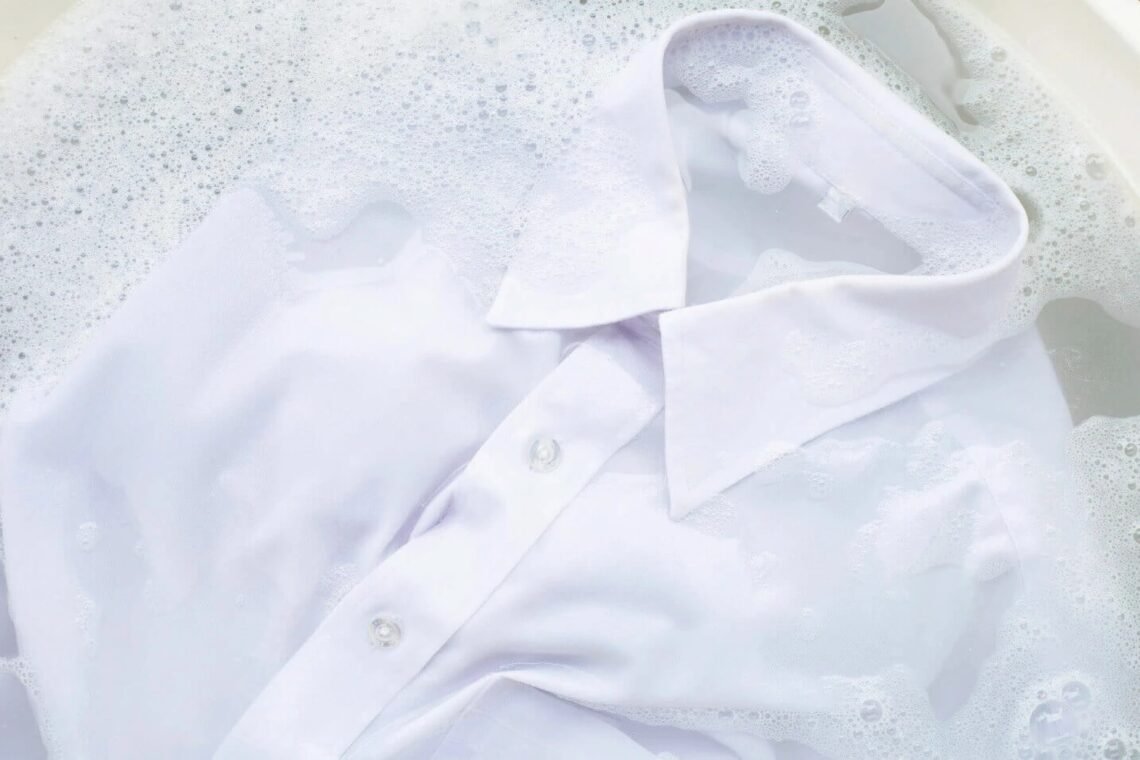
White shirts are wardrobe essentials and stain magnets in equal measure — the coffee, the turmeric, the mysterious yellow underarm marks. But most stains aren’t death sentences. Here’s the best way to remove stains from white shirts, organised by stain type, with the golden rules that prevent well-meaning rescue attempts from making things worse.
How to remove stains from white shirts
White shirts show everything — but most stains come out if you act fast and use the right method. Here’s the stain-by-stain guide, the products that work, and the mistakes that set stains permanently.
The golden rules of stain removal
Act fast: Fresh stains are dramatically easier to remove than set ones. Blot (never rub — rubbing spreads and grinds the stain in) immediately with a clean cloth. Cold water first: Hot water sets protein stains (blood, sweat, egg, dairy) permanently — always start cold. Test discreetly: Try any treatment on an inside seam first. Don’t tumble dry until the stain is gone — heat sets stains irreversibly. If a stain survives washing, treat again rather than drying.
Stain-by-stain guide
- Sweat/yellow underarm marks: The classic. Make a paste of bicarbonate of soda, hydrogen peroxide (3%) and a drop of washing-up liquid; apply, leave 30–60 minutes, wash normally. For prevention, let antiperspirant dry fully before dressing and consider underarm shields for precious shirts.
- Coffee/tea: Blot, rinse cold, then treat with a mix of washing-up liquid and white vinegar. Wash as normal. Old coffee stains respond to soaking in oxygen bleach (sodium percarbonate — the active ingredient in Vanish-type products).
- Red wine/tomato: Blot, cover with salt (it draws out the liquid), then treat with white vinegar or oxygen bleach soak. White wine on red wine is a myth — use salt and cold water.
- Grease/oil: Dish soap is designed for this — apply directly, work in gently, leave 15 minutes, wash hot (whites can take it). For set grease stains, an overnight oxygen-bleach soak usually shifts them.
- Ink: Dab with rubbing alcohol or hand sanitiser on a cotton pad (it dissolves ballpoint ink), working from outside in. Then wash normally. Test first — alcohol can affect some dyes, though white shirts are low-risk.
- Blood: Cold water only, always — hot water cooks the protein in permanently. Hydrogen peroxide on dried blood, then cold wash.
- Turmeric/curry: The nightmare stain. Scrape off excess, treat with washing-up liquid and cold water immediately, then sun-dry — UV light genuinely bleaches turmeric stains. Oxygen bleach soak for stubborn cases.
The products that actually work
You need three: oxygen bleach (sodium percarbonate — sold as Vanish Oxi Action, or buy pure sodium percarbonate online for pennies; it’s the workhorse for whites), washing-up liquid (for grease), and white vinegar (for deodorant marks and as a rinse aid). That’s it — the specialist stain removers are mostly these three at luxury prices. For whites specifically, an occasional oxygen-bleach soak (a few hours in hot water) revives greyed shirts dramatically.
Keeping white shirts white
Prevention beats cure: wash whites separately (one grey sock ruins ten white shirts), don’t overload the machine (detergent needs room to work), use enough detergent (under-dosing greys whites over time), dry in sunlight when possible (natural bleaching), and store properly — our storage principles apply. Replace white tees yearly; they have a natural lifespan and greyed ones drag down every outfit (see our looking expensive guide — dingy whites are the fastest way to look cheap).
The mindset: stains are maintenance, not disasters. Quick action, cold water, the right product for the stain type, and never tumble-dry a stain you haven’t beaten. Your white shirts will thank you with years of crisp service.
The laundry room essentials: what to stock
The core kit (£20 total): oxygen bleach (sodium percarbonate — buy it pure online, £8/kg, lasts a year), washing-up liquid (the grease fighter), white vinegar (deodorant marks, rinse aid, odour remover), bicarbonate of soda (deodoriser, gentle abrasive), and a soft toothbrush (for working treatments into fabric). With these five, you can handle 95% of stains — the specialist products are mostly these at luxury prices.
The nice-to-haves: a stain remover pen for the handbag (£3 — for immediate action when out), colour-run remover sheets (for the inevitable red-sock incident), and a drying rack (tumble dryers set stains and wear clothes faster — air drying is gentler and free). Washing wisdom for whites: wash whites separately (non-negotiable), don’t overload (detergent needs room), use the right temperature (40°C for most whites — hot enough to clean, cool enough to protect), and add oxygen bleach to the drum monthly for a maintenance brightening wash.
When to give up: some stains are permanent — set-in turmeric on white cotton, bleach marks (ironic, but bleach removes colour, creating a stain no treatment fixes), and mysterious yellowed storage stains on vintage pieces. Before discarding: try dyeing (a stained white shirt becomes a navy or black shirt — Dylon, £5, washing machine method), repurposing (stained shirts become cleaning rags — the circle of life), or the tailor (a stain on a hem becomes a shorter shirt). The stain-removal mindset isn’t about perfection — it’s about extending the useful life of clothes. Every stain beaten is money saved and waste avoided. Stock the kit, act fast, and never tumble-dry a stain you haven’t defeated.
Dealing with set-in stains: the last resorts
When normal treatment fails: the stain has been heat-set (tumble dried) or is months old. Options, in escalating order: 1. Extended oxygen-bleach soak: 6–8 hours in hot water with a full scoop — this rescues stains that survived normal washing. 2. Sun-bleaching: dampen the stain, lay in direct sunlight for hours — UV breaks down many organic stains (turmeric, tomato, berry). It sounds like folklore; it works. 3. Glycerine treatment: for old grease and oil — rub glycerine into the stain, leave an hour, then wash with the hottest water the fabric allows.
4. Dye it: a stained white shirt becomes a navy, black or burgundy shirt — Dylon machine dye (£5–£7) covers most stains completely. The shirt gets a second life in a new colour. 5. Disguise it: embroidery over the stain (visible mending is fashionable), a strategically placed brooch or pocket square, or shortening (a stain near the hem disappears with a crop). 6. Repurpose: cleaning rags, gardening shirt, pyjamas — the stain doesn’t matter if the context changes.
When to admit defeat: bleach marks (colour removed — no treatment restores it, though dyeing the whole garment works), scorched fabric (the fibres are damaged, not just stained), and mysterious stains that survived everything above. The prevention lesson: every set-in stain was once a fresh stain that could have been saved. The golden rules from the main article (act fast, cold water, don’t tumble dry) exist precisely to prevent this section from being needed. But when prevention fails, the escalation ladder above saves more garments than you’d expect. The shirt isn’t dead until you’ve tried the sun.
For stain-by-stain removal guides, Good Housekeeping’s housekeeping section has tested methods for everything from red wine to grass.