
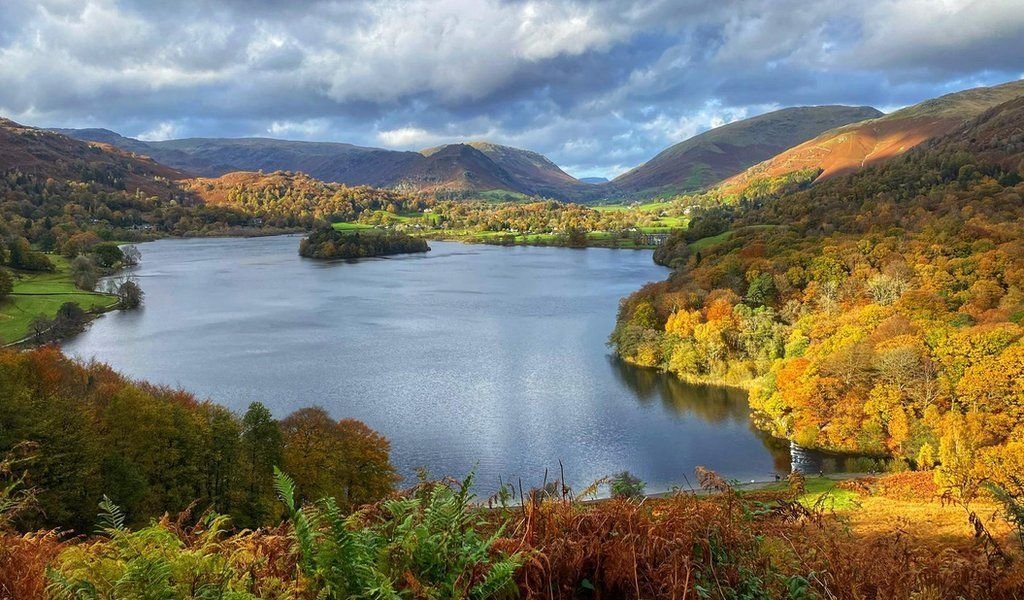
The Lake District in the rain is still beautiful — but it’s a different beautiful from the Lake District in golden evening light, and choosing when to visit shapes the entire trip. England’s largest national park is a year-round destination, but each season offers a radically different experience: spring lambs and daffodils, summer crowds and long days, autumn colour and quiet, winter drama and empty fells. If you’re asking about the best time of year to visit the Lake District, the honest answer depends on what you want — but there’s a clear sweet spot most visitors miss.
The Seasons, Honestly Assessed
Spring (April–May): the sweet spot
Arguably the best time. Daffodils (Wordsworth wasn’t exaggerating) carpet the valleys in March/April, lambs appear in the fields, the fells turn vivid green, and — crucially — the summer crowds haven’t arrived. Daylight is generous, accommodation is cheaper, and the walking is superb. April can still be chilly on the high fells (pack layers), but May is often glorious. If you can only visit once, May is the answer.
Summer (June–August): glorious but crowded
The longest days (sunset after 9:30pm in June), the warmest weather, all attractions open — and the most people. August in Bowness, Ambleside, and Keswick is genuinely heaving; popular walks (Helvellyn, Scafell Pike) become processions; accommodation books out months ahead and prices peak. Go in June rather than August if summer’s your window — same daylight, half the crowds. And always have a rain plan: even in “summer,” the Lakes get 200+ rain days a year. It’s called the Lake District for a reason.
Autumn (September–October): the connoisseur’s choice
The second sweet spot. The crowds vanish after the school holidays, the bracken turns bronze and gold, the light goes golden, and the air gets that crisp clarity. September often has the year’s most settled weather (seriously — early autumn high pressure is a thing). October brings proper autumn colour in the valleys. Accommodation prices drop. This is when the locals walk — join them.
Winter (November–February): dramatic and empty
Winter in the Lakes is not for everyone, but it’s magnificent for the right visitor: snow-dusted fells, mist in the valleys, roaring pub fires, and near-empty trails. Daylight is short (sunset ~4pm in December), many attractions close, and high-fell walking needs proper winter skills and equipment (ice axe, crampons, navigation — the Lake District National Park Authority has safety guidance). But valley walks, cosy villages, and the sheer drama of a winter storm over Windermere have their own magic. Book a cottage with a wood burner and embrace it.
What You Want to Do Matters
- Walking/hiking: April–June and September–October are prime. Summer is fine but start early to beat crowds and heat. Winter high fells: experts only.
- Lake cruises and attractions: Easter–October for full operation; many close or reduce hours in winter.
- Photography: autumn and winter light is unbeatable; sunrise/sunset times are civilised (unlike June’s 4:30am dawn).
- Family holidays: school holidays dictate it, but late May half-term beats August on every measure (weather often as good, crowds far smaller).
- Romantic breaks: autumn or winter — misty lakes, fireplaces, empty restaurants. The Lakes do cosy better than anywhere in England.
- Budget trips: November–March (excluding Christmas/New Year) for the cheapest cottages and B&Bs — often half the August price.
Practical Tips Whatever the Season
- Book accommodation early for May–September — the good places go months ahead. Our last-minute holiday tactics rarely work in the Lakes in summer.
- Pack for rain, always. Waterproof jacket and proper footwear are non-negotiable in every season. The weather changes hourly; layers are everything.
- Base yourself well: Keswick (best for walking, livelier), Ambleside (central, charming), Bowness/Windermere (lakeside, touristy), Coniston (quieter, wilder). Each has a different character — choose to match your trip.
- Use the buses and boats. The 555/599 bus routes and Windermere lake cruises mean you can walk linear routes without car-shuffling. Parking at popular trailheads fills by 10am in summer — the bus removes the stress.
- Eat well: the Lakes’ food scene is superb — from Michelin-starred L’Enclume in Cartmel to the legendary pie shops and proper pubs. Book the good restaurants ahead.
For walkers heading further north, our Scotland road trip guide covers the next level of British mountain adventure.
A Sample 3-Day Itinerary (Any Season)
Whatever the season, here’s a long weekend that captures the Lakes: Day 1 — arrive and settle. Drive or train to your base (Keswick for walkers, Bowness for lake-and-town). Afternoon: a gentle lakeside walk (Derwentwater’s launch-and-walk circuit from Keswick is perfect — take the launch one way, walk back). Evening: pub dinner, early night. Day 2 — the big walk. Pick one classic: Helvellyn via Striding Edge (experienced walkers only, check conditions), Catbells (the perfect half-day fell — big views, modest effort), or the Fairfield Horseshoe (a full-day circuit). Pack waterproofs regardless of forecast, start early, and be off the high fells by mid-afternoon in winter. Day 3 — culture and water. Morning: a lake cruise (Windermere or Ullswater — the Ullswater steamer to Howtown and walk back is the classic), afternoon: Dove Cottage and the Wordsworth Museum at Grasmere (book ahead), gingerbread from the Grasmere shop, and home. Three days, three faces of the Lakes — water, fells, and words.
A final practical note: the Lakes’ weather is famously changeable, so build one flexible day into every trip — a day with no fixed plans that becomes a walk if it’s glorious and a museum-and-pub day if it’s not. The flexible day is what separates relaxed trips from rained-off ones.
Check the forecast, pack the waterproofs, and go — the Lakes reward the visitor whatever the sky is doing.
The takeaway: the best time to visit the Lake District is May (spring beauty, no crowds) or September–October (golden light, settled weather, empty trails) — with summer for long days if you accept the crowds, and winter for drama and cosiness if you accept the limitations. Whatever the season, pack waterproofs, book ahead, and let the weather do what it wants. The Lakes are beautiful in the rain too — that’s rather the point.


