
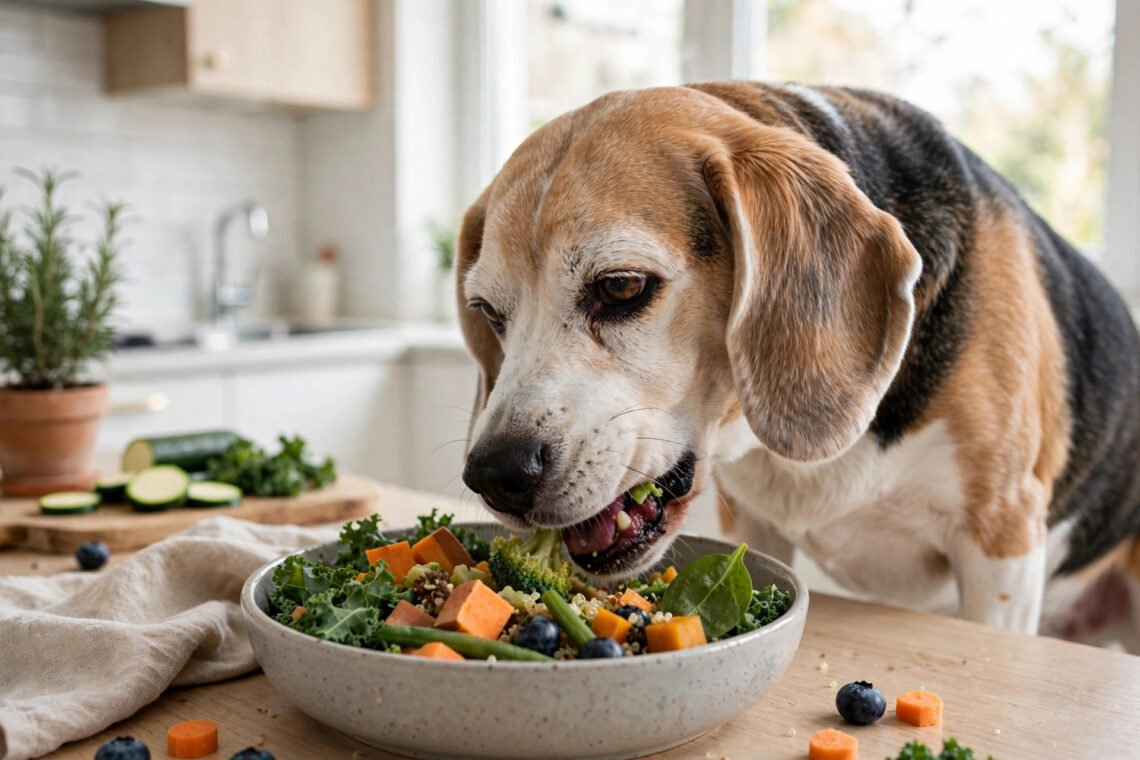
The muzzle is greying, the walks are shorter, and the food that suited him at three no longer seems right at eleven. Choosing healthy food for a senior dog in Manchester — or anywhere — is one of the most impactful things you can do for an ageing companion, because nutrition directly affects joint health, weight, digestion, cognitive function and energy. Yet the senior dog food aisle is a maze of “senior”, “mature” and “7+” labels with no legal definition behind them. This guide cuts through the marketing: what ageing dogs actually need, how to read labels, and how to transition safely.
Dogs are living longer than ever — improved veterinary care means many medium breeds now reach 13–15 years — so the senior life stage can last a third of a dog’s life. Feeding an eleven-year-old like a three-year-old is one of the most common nutritional mistakes owners make, and it shows up as weight gain, stiffness and digestive trouble.
What Changes as Dogs Age
Metabolism slows, typically by 20–30% compared to young adulthood, while appetite often does not — the classic recipe for the portly senior. Muscle mass declines (sarcopenia), making high-quality protein more important, not less, despite the outdated myth that seniors need low protein. Kidney function gradually reduces, digestion becomes less efficient, joints wear, and many older dogs develop cognitive changes (canine cognitive dysfunction) that nutrition can modestly support.
Dental issues affect eating: sore mouths make hard kibble painful, so texture matters. Sense of smell fades, reducing food appeal — warming food slightly releases aroma and helps. And individual conditions rewrite the rules entirely: kidney disease needs restricted phosphorus, heart disease needs controlled sodium, pancreatitis-prone dogs need low fat. There is no universal “senior diet”, only the right diet for your specific ageing dog — which is why a vet or veterinary nutritionist’s input beats any label. The PDSA’s dog feeding guidance covers life-stage nutrition principles clearly.
Reading Labels Like a Nutritionist
Ignore the front of the bag — “senior”, “natural” and “premium” are unregulated marketing terms. Turn to the guaranteed analysis and ingredients. Look for a named animal protein (chicken, salmon, lamb — not “meat derivatives”) as the first ingredient, and protein levels around 25–30% for most seniors — adequate to preserve muscle without overloading kidneys in healthy dogs. Fat around 10–15% suits most seniors; higher only for very active older dogs or hard keepers.
Check for joint-supporting additions: glucosamine, chondroitin and omega-3 fatty acids (EPA/DHA from fish oil) have reasonable evidence for joint comfort — meaningful doses matter, and many “joint care” foods contain token amounts, so compare milligrams. Fibre (beet pulp, chicory) aids the sluggish senior gut. Antioxidants (vitamins E and C, selenium) and L-carnitine support ageing metabolism. Avoid foods where the first ingredients are cereals with vague protein sources, and be sceptical of grain-free marketing — the FDA’s investigation into links between grain-free diets and canine heart disease (DCM) means grain-free needs a veterinary reason, not a fashion one. The RSPCA’s dog diet guidance reinforces label-reading fundamentals.
Wet, Dry or Raw: What Suits Seniors
High-quality complete wet food suits many seniors brilliantly: softer for sore mouths, smellier (more appealing), higher moisture (supporting kidneys and hydration — older dogs often drink too little). Complete dry food is convenient, economical and fine for seniors with good teeth, especially softened with warm water. Many owners mix the two and get the best of both.
Raw feeding for seniors is contentious: proponents cite digestibility, but the bacterial risks (Salmonella, Campylobacter) matter more in older dogs with weaker immune systems, and achieving balanced nutrition — especially calcium/phosphorus ratios for ageing kidneys — is genuinely difficult without professional formulation. If you feed raw, use a commercially prepared complete raw food (which meets FEDIAF nutritional standards) rather than DIY, and discuss it with your vet. Home-cooked diets need the same professional formulation — good intentions do not balance minerals.
Transitioning and Troubleshooting
Never switch foods abruptly — senior digestive systems punish haste. Transition over 10–14 days (longer than the 7 days for younger dogs): 25% new food for several days, then 50%, then 75%, watching stools throughout. Keep a brief log of what you fed and the results — patterns are easier to spot on paper than from memory, and the notes are useful if you need veterinary advice. If soft stools persist beyond the transition, the food may not suit — try another rather than persevering.
Common senior feeding problems have solutions. Going off food: warm it, try wet food, hand-feed a little to start, and see the vet if appetite loss lasts more than a day or two (it can signal pain or illness, not fussiness). Weight gain: measure food with scales, not scoops (scoops over-deliver by 20%+), cut treats to 10% of calories, and ask your vet about the target weight. Weight loss: more concerning in seniors — vet check first, then consider higher-calorie senior or recovery foods. Excessive thirst or urination alongside appetite changes warrants a prompt vet visit; diabetes and kidney disease are manageable when caught early.
Feeding an older dog well is part of giving them a comfortable home life — alongside practical comforts covered in making your home cosier on a budget (warm beds, draught-free corners matter enormously to arthritic dogs), and if you travel with your senior companion, pet-friendly hotels across the UK increasingly cater to older dogs with ground-floor rooms.
The Bottom Line
To choose healthy food for a senior dog: prioritise named-protein, moderate-fat complete foods with joint-supporting omega-3s and adequate fibre; ignore unregulated “senior” marketing and read the actual analysis; match texture to their teeth; transition over 10–14 days; and involve your vet, especially for dogs with kidney, heart or weight conditions. The right nutrition will not make your dog young again, but it will make their senior years more comfortable, more mobile and more enjoyable — and that is worth every bit of label-reading effort.
Frequently Asked Questions
Do senior dogs need less protein?
No — this is an outdated myth. Healthy senior dogs need adequate high-quality protein (around 25–30%) to preserve muscle mass. Only dogs with diagnosed kidney disease need protein restriction, directed by a vet.
What age should I switch my dog to senior food?
Roughly 7–8 years for most breeds, earlier (5–6) for giant breeds and later (9–10) for small breeds. But switch based on the individual dog’s condition and your vet’s advice, not just the birthday.
Is wet or dry food better for older dogs?
Wet food often suits seniors better — softer for dental issues, more aromatic, and higher in moisture supporting kidney health. Many owners successfully mix both.
How do I help my senior dog lose weight safely?
Weigh food precisely, reduce treats to 10% of daily calories, and ask your vet for a target weight and safe rate of loss (typically 1–2% of body weight per week). Never crash-diet an older dog.
My old dog has gone off his food — what should I do?
Try warming wet food to release aroma and offering small frequent meals. If appetite loss lasts more than 24–48 hours, see your vet — in seniors it often signals pain, dental problems or illness rather than fussiness.


