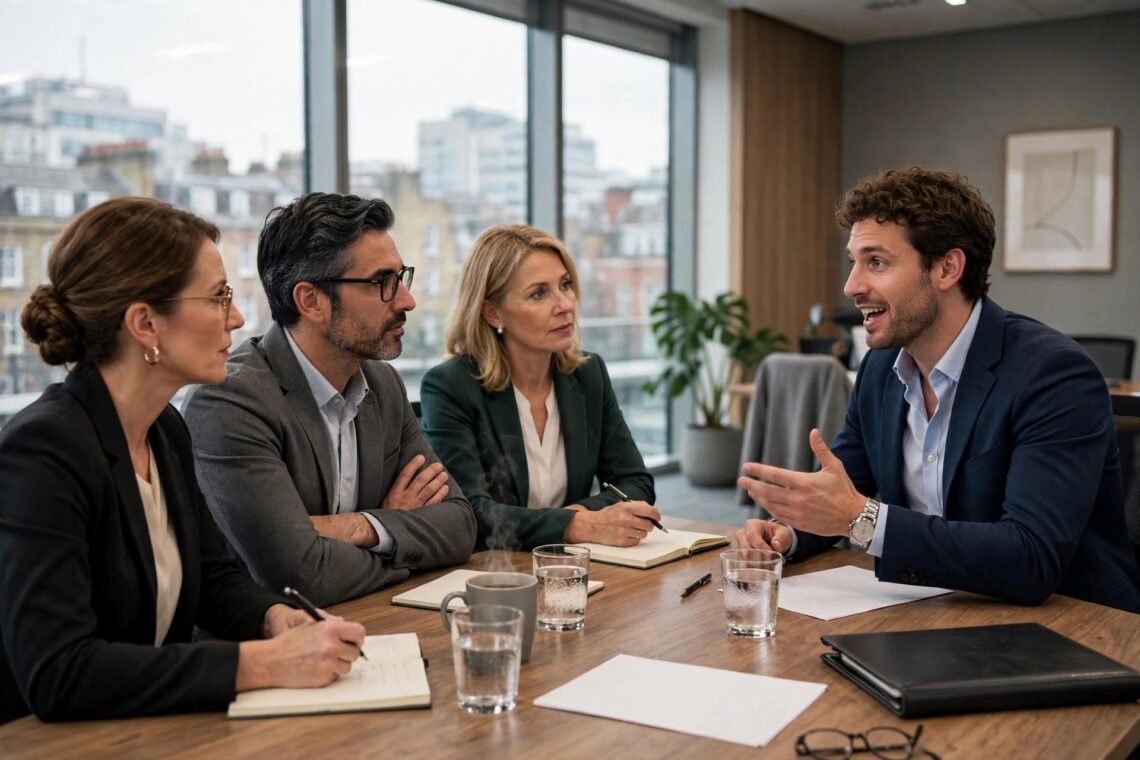
A panel interview — three, four, sometimes six people arranged in a row, all watching you — is one of the most intimidating formats in hiring. It feels like an interrogation because, structurally, it almost is. But here’s the reassuring truth: panel interviews are highly predictable, and preparation for them is largely free. The real cost isn’t money — it’s time, energy, and the opportunity cost of getting it wrong. Understanding what preparation actually requires lets you invest wisely and walk in confident rather than merely hopeful.
Why Panels Exist (and What They’re Really Testing)
Employers use panels for senior, cross-functional, or public-sector roles where multiple stakeholders need confidence in the hire. Each panellist typically represents a different lens: the hiring manager assesses competence, HR assesses fit and values, a peer assesses collaboration, and a senior leader assesses judgement. Understanding this division is your first advantage — you can tailor each answer’s emphasis to who’s asking, and make eye contact around the whole table rather than fixating on the friendliest face.
Panels also test composure under pressure deliberately. Can you handle multiple questioners, occasional interruptions, and the odd curveball without flustering? The format reveals how you perform in meetings, stakeholder sessions, and client presentations — which is often exactly the point. Knowing this reframes the anxiety: they’re not trying to catch you out; they’re previewing your working style. Practising with AI interview tools is a free, effective way to rehearse this dynamic before the real thing.
The Time Cost: What Preparation Really Takes
For a serious panel interview, budget six to ten hours of preparation spread over a week. That breaks down roughly as: two hours researching the organisation, role, and panellists; two hours preparing your stories and examples; two hours practising delivery out loud; and one to two hours on logistics and questions to ask them. That sounds like a lot, but it’s the single highest-return time investment in your job search — a strong panel performance can be worth tens of thousands in salary over the role’s lifetime.
The research phase is non-negotiable. Read the organisation’s annual report, recent news, and strategy documents. Look up each panellist on LinkedIn — their background tells you what they’ll care about. A finance director will probe numbers; an operations lead will probe process. Prepare two or three STAR-format stories (Situation, Task, Action, Result) per key competency in the job description, and rehearse them until they sound conversational rather than memorised. Generic answers die in panel rooms; specific stories survive.
The Financial Cost: Mostly Optional
Here’s the good news: effective preparation costs little or nothing. The essentials — research, STAR stories, practice — are free. Interview coaching (£75–£200 per session in the UK) can help if you’re rusty or targeting a major step up, but it’s a luxury, not a necessity. New interview attire might cost £50–£150 if your wardrobe needs it; otherwise, wear what you own. Dressing right for your industry matters more than dressing expensively.
Travel is the real variable cost — panels are often in person, sometimes at short notice. Budget for transport and, if needed, accommodation. Some employers reimburse candidate expenses; it’s perfectly reasonable to ask HR about their policy. Don’t let cost stop you attending: the expected value of a strong interview dwarfs the train fare. And remember that in the UK, GOV.UK guidance confirms you can’t generally be charged for attending interviews — any employer asking for payment is a red flag.
Mastering the Panel Dynamic
The mechanics of panels trip up even strong candidates. Key techniques: when a panellist asks, begin your answer addressing them, then sweep eye contact around the table as you continue — this includes everyone without seeming evasive. If two panellists ask follow-ups simultaneously, acknowledge both and answer in turn. Take brief notes if several questions come at once; it shows thoroughness, not weakness.
Prepare for the classic panel pitfalls. The silent panellist who’s just observing? Don’t ignore them — include them in your eye contact. The “bad cop” with aggressive follow-ups? Stay calm and factual; they’re testing composure, and getting defensive fails the test. Contradictory questions from different panellists? Acknowledge the tension honestly: “That’s an interesting tension — in my experience…” Panels reward candidates who treat the room as a conversation among professionals, not an inquisition to survive.
Virtual panels
Video panels are increasingly common and bring their own demands: stable connection, professional background, and the discipline to look at the camera rather than the faces. Test your tech the day before, have water nearby, and keep notes out of camera shot for reference. The Acas guidance on recruitment is worth reading for understanding fair process — including your right to reasonable adjustments if you need them.
Questions That Win Panels Over
Your questions at the end carry extra weight in panels because each panellist hears what you ask the others. Prepare four or five and choose based on the conversation. Strong options: “What does success look like in the first six months?” (to the hiring manager), “How would you describe the team culture day-to-day?” (to the peer), “What’s the biggest challenge facing the organisation this year?” (to the senior leader), and “What reservations do you have about my fit for this role?” — the brave question that surfaces objections while you can still address them.
Avoid questions answerable from the website, anything about salary in round one (unless they raise it), and generic filler. Your questions should demonstrate that you’ve thought seriously about the role’s realities. End by thanking each panellist by name — it signals attention and confidence, and in a close decision, being the candidate they liked matters enormously.
Frequently Asked Questions
How long do panel interviews usually last?
Typically 45 minutes to an hour and a half, depending on seniority. Public sector panels often run longer with structured scoring. Ask HR for the format and timing in advance — knowing the structure reduces anxiety significantly.
Should I bring anything to a panel interview?
Bring copies of your CV (one per panellist is a classy touch), a notebook, your prepared questions, and any work samples or portfolio relevant to the role. A small bottle of water is sensible — panels are thirsty work.
What if I don’t know an answer?
Say so honestly and think aloud: “I haven’t faced exactly that, but here’s how I’d approach it…” Panellists respect intellectual honesty far more than bluffing — and thinking aloud demonstrates the problem-solving they’re actually assessing.
How do I follow up after a panel?
A brief thank-you email to the hiring manager or HR contact within 24 hours, referencing something specific from the conversation. Don’t email every panellist individually unless you have their details — one gracious note routed correctly is enough.
The Bottom Line
Preparing confidently for a panel interview costs you a week of evenings, not a fortune — six to ten focused hours, mostly free, with optional spending on coaching or clothes. The investment pays for itself many times over because panels decide senior hires, and senior hires decide salaries. Research each panellist, build your STAR stories, master the room dynamics, and ask questions that show you’re already thinking like an insider. Walk in seeing the panel not as a firing squad but as your first meeting with future colleagues — because for the candidate who prepares properly, that’s exactly what it becomes.