There is a special frustration in loving racing games while being thoroughly average at them: watching rivals glide through corners you keep slamming into, losing positions on the final lap to drivers who seem to brake impossibly late. The good news is that racing games reward learnable skills more than raw talent, and you can improve dramatically on your own — no coach, no teammates, no expensive wheel required.
This guide breaks down the techniques that separate quick drivers from slow ones, how to practise them efficiently by yourself, and the settings tweaks that instantly make any racing game more driveable.
Why you are slow (it is probably the corners)
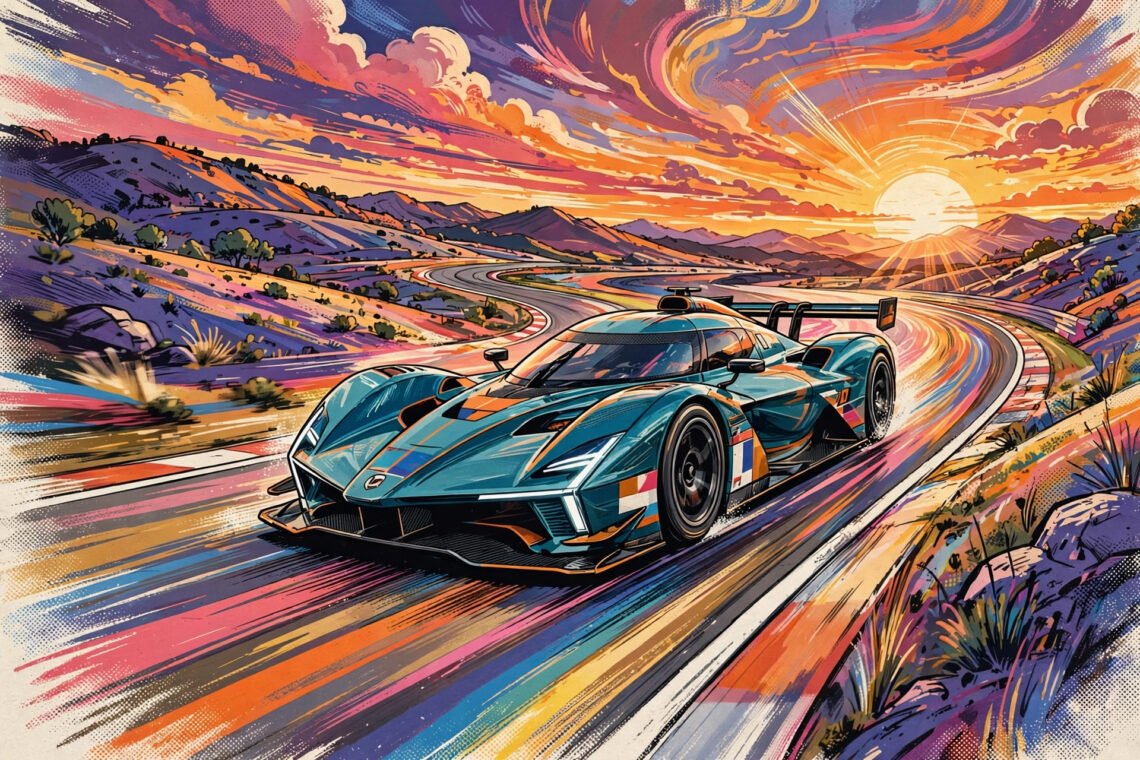
Beginners obsess over top speed; fast drivers obsess over cornering. On any circuit, you spend far more time turning than accelerating, so corner speed is where lap time lives. The single most important concept is the racing line: the path through a corner that straightens it as much as possible — enter wide, clip the apex (the inside point of the turn), and exit wide.
Most beginners turn in too early, which forces a tight, slow line and a bad exit. Practise deliberately missing the apex late rather than early; you will feel the car carry more speed onto the straight. Within a week of conscious practice, this alone can cut seconds per lap.
Braking: the skill nobody practises
Amateur drivers brake too gently and too long, coasting through the braking zone. Fast drivers brake hard and late, then release progressively as they turn in — a technique called trail braking. The goal is to finish nearly all your braking in a straight line before the corner, because tyres have a fixed budget of grip: ask them to brake and turn at full force simultaneously and they will give you neither.
Try this drill: pick one corner, and move your braking point one car-length later each lap until you overshoot. Then back off slightly. You have just found your limit — and limits are where learning happens.
Smoothness beats aggression
Watch replays of fast drivers and notice how calm their inputs look. Jerky steering, stabbing the throttle, slamming the brakes — every sudden input unsettles the car and wastes grip. Practise making every input gradual: squeeze the throttle rather than stamping on it, unwind the steering smoothly on corner exit.
This matters even more if you are playing casually. Our picks of the best video games for casual players include several racers that are perfect for low-pressure practice, since you can restart endlessly without anyone watching.
Assists: use them strategically, not shamefully
Every modern racer offers driving assists — traction control, ABS, racing line guides, automatic gears. There is no honour in switching everything off on day one; assists exist to teach you. The smart approach is a ladder: start with the racing line and braking assists on, learn the circuits, then remove one assist at a time as your consistency improves.
Manual gears are worth learning eventually — they give you control over engine braking and corner-exit power — but only once your lines and braking are solid. One skill at a time.
Practise like you mean it
Mindless grinding does not improve you; deliberate practice does. Structure your solo sessions:
- One circuit, one car. Changing both constantly means you never learn either. Master one combination, then branch out.
- Time trial mode is your gym. No traffic, no pressure, instant restarts, and ghost data showing exactly where faster drivers gain time.
- Chase the ghost. Load a ghost a second or two faster than your best and follow it. You will see precisely where your lines differ.
- Short sessions. Thirty focused minutes beats three distracted hours. Quit while you are improving, not when you are tilted.
Mobile racers count too — many of the best free mobile games with no adverts include solid racing titles where the same fundamentals apply.
Settings that make you faster immediately
Before blaming your talent, check these: turn off motion blur and camera shake (they hide what the car is doing), use a bonnet or cockpit camera for better spatial judgement, reduce steering deadzones on controllers, and if your game offers it, enable performance mode for higher frame rates — smoother visuals genuinely improve reaction times. For real-world driving inspiration, the BBC’s Formula 1 coverage and Top Gear’s gaming section both analyse the techniques the pros use.
Learn the car before the circuit
Every racing game groups cars into classes or performance tiers, and beginners often grab the fastest car available — then wonder why it feels undriveable. Slower cars are actually faster teachers: their limits arrive at lower speeds, so you learn weight transfer, braking points and racing lines without everything happening in a blur. Spend your first week in a modest car class, and you will carry those fundamentals upward when you graduate to faster machinery.
Upgrades deserve the same patience. It is tempting to max out engine power first, but tyres and brakes improve lap times far more reliably than horsepower — extra power you cannot deploy through corners is just extra speed into the barriers. Upgrade grip first, power last, and re-learn your braking points after every significant change, because a car that stops better can brake later everywhere.
Conclusion
Getting faster at racing games solo comes down to four things: learn the racing line, brake later and harder in straight lines, keep your inputs smooth, and practise deliberately in time trial with a ghost to chase. Respect the learning curve, stay in slower car classes until the fundamentals feel automatic, and upgrade grip before power. Do that consistently for a few weeks and the drivers who used to disappear into the distance will start appearing in your mirrors instead.
Frequently Asked Questions
Do I need a steering wheel to get good at racing games?
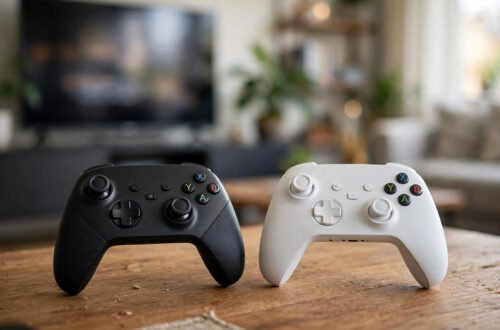
No. World-record lap times are set on controllers regularly. A wheel adds immersion and fine control that helps at the very top level, but every fundamental — lines, braking, smoothness — can be learned and mastered on a standard pad.
What is the easiest racing game for a beginner?
Arcade-style titles like Mario Kart 8 Deluxe or Forza Horizon 5 are the friendliest entry points, with forgiving physics and generous assists. Simulation racers like Gran Turismo 7 or Assetto Corsa reward the techniques in this guide more deeply once you are ready.
How long does it take to get noticeably better?
Most players see clear improvement within two to three weeks of focused practice — typically 30 minutes a day on one circuit. Reaching genuinely competitive online pace usually takes a few months.
Should I use automatic or manual gears?
Start with automatic while you learn lines and braking. Switch to manual once those feel natural — it gives you more control over corner exits and is essential for competitive play, but it is a distraction before the fundamentals are in place.
Why am I fast in practice but slow in races?
Race traffic changes everything: dirty air, defensive lines, and pressure. Practise racing the AI at increasing difficulty rather than only hot-lapping — racecraft (overtaking, defending, tyre management) is a separate skill from raw pace.