
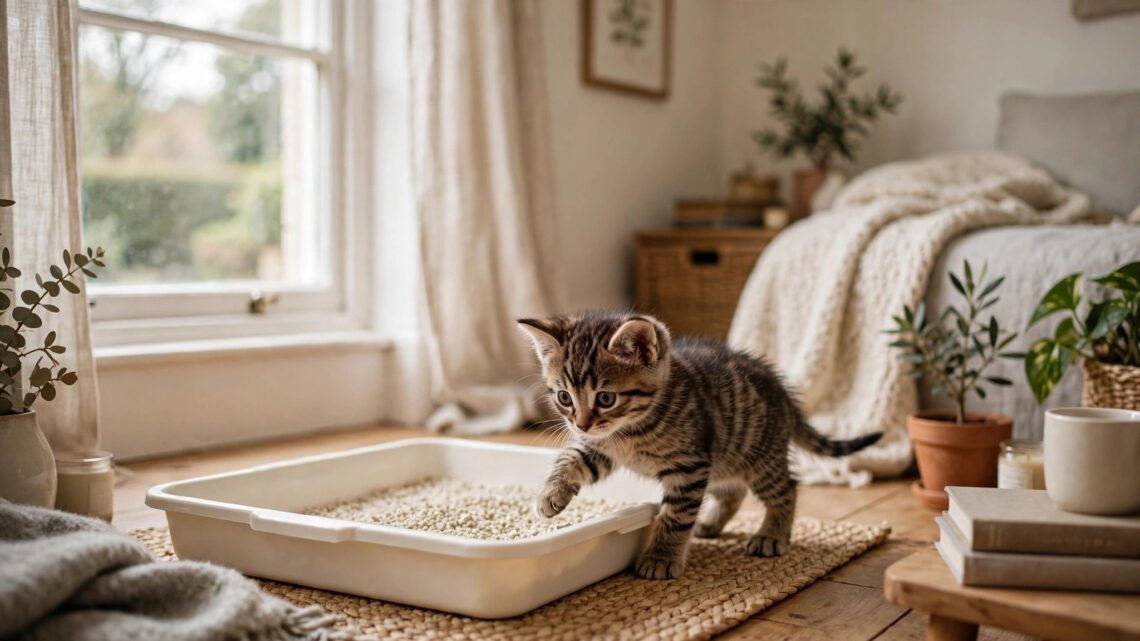
The kitten is eight weeks old, impossibly small, and has just weed on your favourite rug. Again. Take a breath: litter training a kitten is one of the most reliably successful projects in pet ownership — most kittens grasp it within days, and a full week is a realistic target for a complete beginner. The secret is that you are barely training at all. You are arranging the environment so the kitten’s powerful natural instincts do the work for you. This guide gives you the exact one-week method, the mistakes that cause most failures, and what to do when it goes wrong.
Why kittens are easy (instinct does 90% of the work)
Cats are fastidious by nature: in the wild, burying waste hides their scent from predators. Kittens learn toileting from their mother between three and seven weeks old, so an eight-week-old kitten from a decent breeder or rescue usually arrives pre-trained — your job is simply to show them where the facilities are in the new territory. This is why the method works so fast: you are not teaching a behaviour, you are relocating one. The Cats Protection charity notes that most litter problems in kittens are environmental — wrong tray, wrong litter, wrong location — rather than behavioural. Get the setup right on day one and the week largely runs itself.
The setup: tray, litter, location
Get this right and you win. The tray: one per cat plus one extra is the golden rule — for a single kitten, two trays. They should be large (kittens grow fast; a cramped tray gets rejected), with low sides for tiny legs to climb. The litter: start with whatever the breeder or rescue used — familiarity beats optimisation — then transition gradually if you want to change type. Non-clumping or paper-based litter is safest for kittens under twelve weeks, who may taste it. Location: quiet, accessible, away from food and water (cats will not toilet near their food), and — the mistake everyone makes — not in the laundry room behind a closed door the kitten cannot open. For the first week, confine the kitten to one room with the tray: a small territory means the tray is always within waddling distance. A kitten that cannot find the tray in time is not being naughty; it is being a baby. Kitten-proofing your home follows the same principles as childproofing — the first week’s single-room setup doubles as both.
The day-one ritual
When the kitten arrives, place them gently in the tray before anything else — before the tour, before the cuddles. Let them sniff, scratch, step out. After every meal, every nap, and every play session, carry them to the tray: these are the moments kittens need to go, driven by the gastrocolic reflex. If they go, praise calmly. If they wander off, no drama — try again in twenty minutes. Repetition, not instruction, is the teacher.
The one-week schedule
Days 1–2: single room, tray always accessible, post-meal/nap/play placements. Expect accidents — clean them with an enzymatic cleaner (ordinary cleaners leave scent markers that invite repeats). Days 3–4: the kitten should be seeking the tray independently; now gradually expand territory one room at a time, adding the second tray in the new area. Days 5–6: full supervised house access, trays in their permanent spots. Day 7: assess — consistent tray use for 48 hours means trained. Throughout: scoop twice daily minimum. Cats are clean animals; a dirty tray is the number one cause of “suddenly” toileting elsewhere, and kittens are less tolerant of it than adults. Never punish accidents — rubbing a kitten’s nose in it teaches fear of you, not love of the tray, and anxious cats develop worse toileting problems.
When it goes wrong: troubleshooting
Accidents in one specific spot: clean enzymatically, then temporarily place a tray on that exact spot — you can move it inches per day toward the desired location. Kitten toileting next to the tray: the tray may be too small, too dirty, or the litter depth wrong (2–3 inches is ideal). Sudden regression after success: check for stress (new pet, visitors, moved furniture) or medical issues — straining, crying, or blood means a vet visit promptly, as urinary issues in male kittens can become emergencies. Eating the litter: switch to non-clumping paper-based immediately. And if you have outdoor space ambitions later, making the garden safe and secure matters before any supervised outdoor adventures — but keep kittens indoors until vaccinated and neutered, per RSPCA guidance.
The first vet visit and settling in: week two and beyond
Litter training is week one; week two is about everything else the new kitten needs. Book the vet visit within the first fortnight: a health check, vaccination schedule (first jabs around nine weeks, second at twelve), microchipping (a legal requirement for cats in England), and a neutering plan (usually around four to six months — unneutered cats spray, roam and reproduce with impressive efficiency). Use the visit to ask every “silly” question you have — vets expect and welcome them from new owners. Meanwhile, expand the kitten’s world gradually: new rooms, new sounds (the hoover, the doorbell), new people — gentle, positive exposures now prevent a fearful adult cat later. Start the handling habits that pay off for life: touching paws (for future claw clipping), looking at teeth, brief carrier sessions with treats inside. And begin the scratching-post training early — place posts near sleeping spots and reward use lavishly, because a kitten that learns the post at ten weeks never learns the sofa. The litter tray was the first lesson; these are the next ones. Get them right and you will have not just a trained kitten, but a confident, healthy, well-adjusted cat — which is the actual goal underneath all of it.
Frequently Asked Questions
How long does litter training realistically take?
Most kittens are reliably trained within 3–7 days with the right setup. Older kittens or those from poor early environments may take two to three weeks. Patience beats speed — rushing the territory expansion causes most setbacks.
What is the best litter for kittens?
Whatever they were using before, initially. For new purchases with young kittens, non-clumping paper or wood-based litter is safest (clumping litter can be dangerous if ingested). Transition gradually over a week if changing type.
Should I use a covered or open tray?
Open trays for kittens — covered trays trap smells (which puts cats off) and can feel threatening to a small animal. Some cats prefer covered trays as adults; let the cat decide later.
My kitten uses the tray but misses — help?
Usually a tray-size issue: get a bigger tray with higher sides (but still low enough to enter). Position it away from walls on at least two sides so the kitten can circle and choose its spot.
One week, two trays, zero punishment: that is the whole programme. By next weekend, the rug incidents will be a funny story rather than a pattern — and you will have discovered the great secret of cat ownership, which is that the cat trains you far more than you train the cat. Enjoy it — the purring supervisor on your laptop is part of the package now.


