There’s a special serenity in pressing a button and having the world go quiet — the aeroplane engine drone fading, the train rumble dissolving, the open-plan office chatter melting away. Noise-cancelling headphones have gone from business-traveller luxury to everyday essential, and in 2026 the technology is better and cheaper than ever.
But choosing the right pair for travel specifically — not for the office, not for home — involves trade-offs the generic “best headphones” lists gloss over. Here’s what actually matters at 35,000 feet and on the 07:42 to Paddington.
How Noise Cancellation Works (The 30-Second Version)
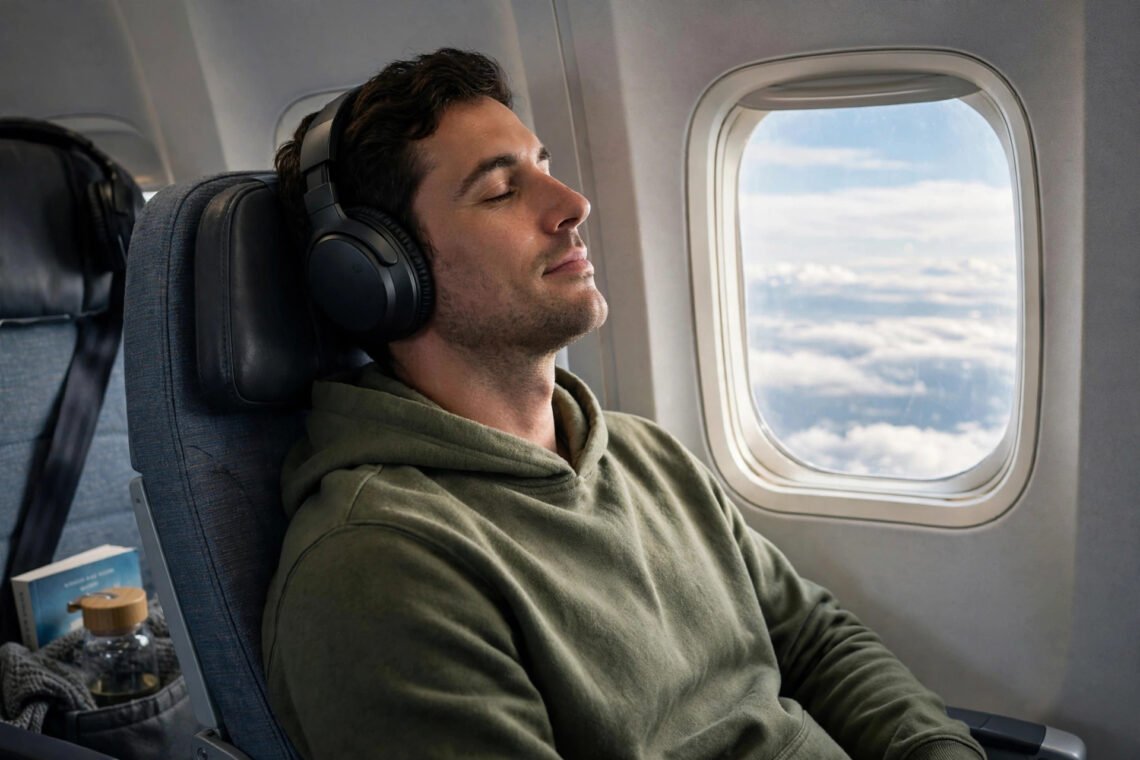
Active noise cancellation (ANC) uses microphones to sample ambient sound, then generates inverse sound waves that cancel it out — most effective against constant low-frequency drone (engines, air conditioning, train rumble) and less effective against sudden sharp sounds (announcements, crying babies — sorry). This is why ANC feels miraculous on planes and merely good in offices.
For travel, ANC quality is the primary spec — it determines whether you arrive rested or frazzled. The best 2026 models cancel an astonishing amount of cabin noise; the differences between flagship and mid-range are audible on long flights. Which? lab tests measure ANC objectively — worth checking, since marketing claims are meaningless.
Travel-Specific Priorities (Beyond Sound Quality)
Battery life: the long-haul test
London to Singapore is 13 hours; with connections and delays, you need 30+ hours of ANC playback to be safe. Most flagships now offer 30–40 hours; budget models 20–30. Also check: does it work wired with ANC on when the battery dies? (The good ones do — essential for in-flight entertainment systems.) And how fast is charging? 10 minutes for 5 hours is now standard on better models — a lifesaver during tight connections.
Comfort for 8+ hours
Headphones that feel fine for an hour can become torture by hour six. For travel: clamping force matters more than weight, earcup depth must clear your ears fully, and headband padding should distribute pressure. If you wear glasses, test with them on — it’s the most common comfort dealbreaker. Arriving rested starts with gear that disappears on your head.
Foldability and case
Over-ears that fold flat survive backpacks; bulky non-folding ones don’t. A hard case (included with most decent pairs) is non-negotiable for travel — crushed headphones in overhead bins are a tragedy. Weight under 260g is the comfort sweet spot for all-day wear.
Multipoint connection
Connects to phone and laptop simultaneously — switch from in-flight movie to landing call without re-pairing. Once you’ve had it, you can’t go back. Verify it actually works well (some implementations are flaky); it’s a genuinely transformative travel feature.
The 2026 Tiers: What Your Money Buys
Flagship (£250–£380): Sony WH-1000XM series, Bose QuietComfort, Apple AirPods Max, Sennheiser Momentum 4 — the best ANC, best comfort, best features. Worth it if you fly monthly or value the last 10% of quiet. Mid-range (£120–£200): the value sweet spot — 80–90% of flagship ANC, excellent battery, minor compromises in materials and microphones. For most travellers, this is the smart buy. Budget (£50–£100): usable ANC that’s genuinely effective against engine drone, but weaker against variable noise, with comfort and build compromises. Fine for occasional flyers.
Avoid: no-name ANC (the cancellation is often fake or nauseating — bad ANC causes pressure sensations), and gaming headsets for travel (bulky, poor ANC, terrible battery claims). The BBC’s tech reviews regularly test mainstream models against the marketing claims — worth a read before committing, since real-world ANC performance varies more than spec sheets suggest.
The Plane-Specific Tricks
Bring the airline adapter (dual-pin) for wired in-flight entertainment — Bluetooth transmitters that plug into the seatback are even better (£25–£40, pair your own headphones to any plane). Download content offline — plane Wi-Fi remains unreliable. And know the transparency mode: the ability to hear announcements without removing headphones is a small feature with outsized travel value. Surviving long layovers is dramatically easier with good ANC and downloaded podcasts.
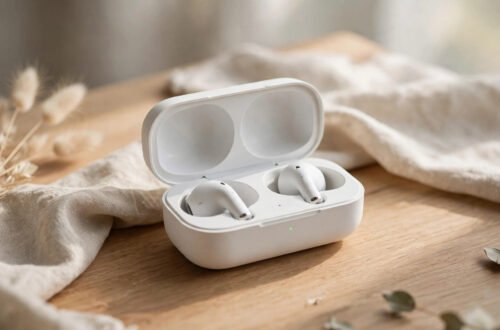
One more: earbuds versus over-ears for travel — earbuds win on portability and sleeping (side-sleepers can’t wear over-ears); over-ears win on ANC power and long-session comfort. Frequent flyers often own both: over-ears for the journey, earbuds for the destination.
Protecting Your Hearing on the Move
One underrated benefit of good ANC deserves its own mention: hearing protection. On a plane or train without noise cancellation, most people crank the volume to overcome background noise — regularly hitting 85dB+, the level where hearing damage begins with prolonged exposure. Good ANC lets you listen 15–20dB quieter, which isn’t just more pleasant — it’s genuinely protective over thousands of travel hours.
The NHS recommends keeping personal audio below 60% volume for limited periods, but the real-world trick is simple: with ANC on, set the volume to the lowest level where you can hear clearly, and leave it there. Your future self — still enjoying music at 70 — will thank you. Travel is one of the highest-noise-exposure activities most people do regularly; treating it as such is just sensible.
Key Takeaways
- ANC is a travel superpower: most effective against exactly what travel produces — engine drone, train rumble, cabin hum.
- Demand 30+ hours battery for long-haul safety, fast charging (10 min ≈ 5 hours), and wired-with-ANC fallback for seatback screens.
- Comfort is an 8-hour test: clamping force and earcup depth matter more than weight — test with glasses on.
- Insist on: folding design, hard case, and multipoint connection (phone + laptop simultaneously).
- Buy mid-range (£120–£200) unless you fly constantly — 80–90% of flagship ANC at half the price; add a Bluetooth plane adapter.
The Bottom Line
The right noise-cancelling headphones for travel in 2026: prioritise ANC quality and 30+ hour battery, demand comfort for 8-hour wears (test with glasses), insist on folding design with a hard case and multipoint connection, and buy mid-range (£120–£200) unless you fly constantly. Add an airline Bluetooth transmitter and downloaded content, and the journey becomes the quietest part of your trip.
Frequently Asked Questions
Are noise-cancelling headphones worth it for travel?
Enormously — ANC is most effective against exactly the sounds travel produces (engine drone, train rumble, cabin hum). Regular travellers consistently rate them their highest-value travel purchase after the ticket itself.
Do noise-cancelling headphones work on planes?
Yes — brilliantly. Constant engine drone is the ideal target for ANC technology. Pair with downloaded content and (for seatback screens) a Bluetooth transmitter or wired connection for the full experience.
How long do noise-cancelling headphones last on a charge?
Flagship over-ears: 30–40 hours with ANC on. Mid-range: 25–35 hours. Budget: 20–30 hours. Fast charging (10 min ≈ 5 hours) is standard on better models — crucial for tight connections.
Can you sleep with noise-cancelling headphones on a plane?
Back-sleepers yes; side-sleepers will find over-ears uncomfortable — earbuds are better for sleeping. Many travellers carry both: over-ears for waking hours, earbuds for sleep.
What’s better for travel: earbuds or over-ear headphones?
Over-ears: stronger ANC, better long-session comfort, better battery. Earbuds: pocketable, sleep-friendly, more discreet. The ideal travel kit is often both — over-ears for the journey, earbuds for everything else.
Is noise cancellation safe for your ears?
Yes — ANC itself is safe; it reduces sound reaching your ears rather than adding any. The real hearing benefit is indirect but significant: with background drone cancelled, you listen 15–20dB quieter than you would otherwise, which is genuinely protective over thousands of travel hours. Keep volume at the lowest clearly-audible level and take listening breaks on very long journeys, as you would with any headphones.