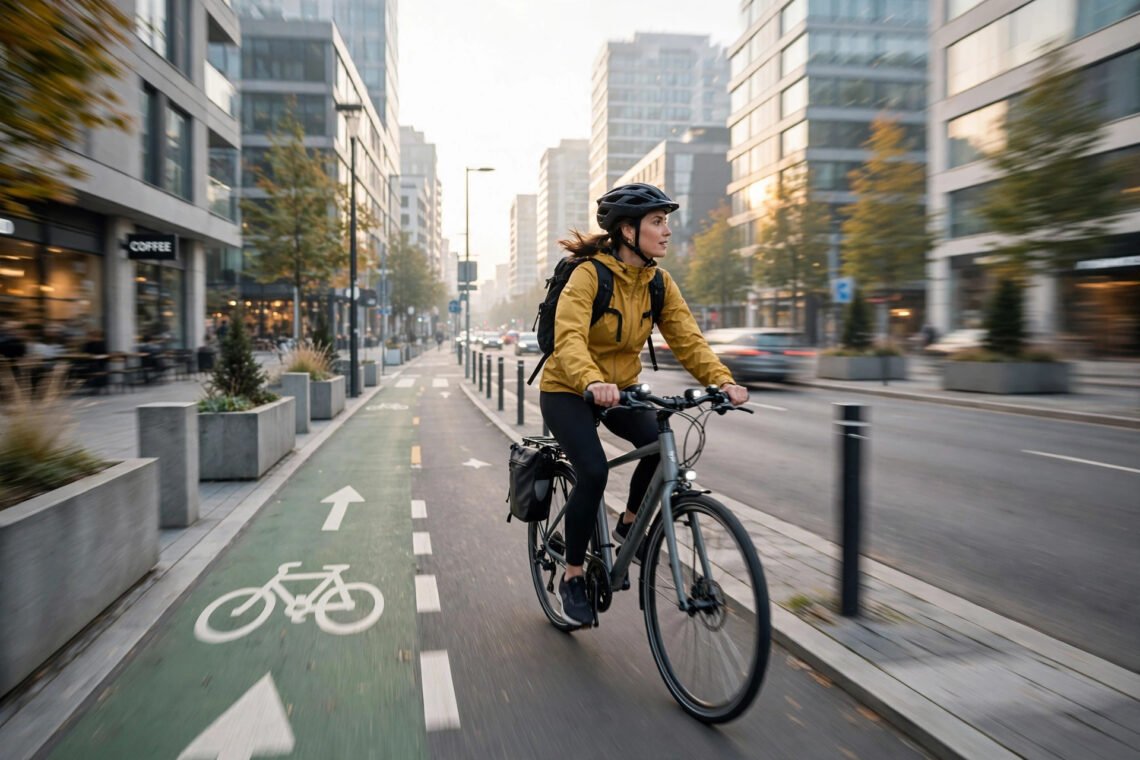
Every January, thousands of Britons resolve to cycle to work. By March, most of the bikes are back in the shed — defeated not by fitness, but by buying the wrong bike for the job. A full-suspension mountain bike for a flat five-mile commute. A delicate road racer for potholed city streets. A “bargain” that weighs as much as a small car.
Choosing the right bike for city commuting in 2026 isn’t about spending more — it’s about matching the machine to your route, your storage, and your tolerance for maintenance. Here’s how to get it right first time.
Start With Your Route, Not the Bike Shop
Before looking at a single bike, answer three questions. How far? Under 3 miles, almost anything works; 3–8 miles is the sweet spot where bike choice matters; over 8 miles, comfort and efficiency become critical. How hilly? Flat cities (Cambridge, Hull, most of London) suit single-speeds and hub gears; hilly ones (Sheffield, Bristol, Edinburgh) demand proper gearing. Where does it sleep? A bike you must carry up three flights of stairs needs to be light; a bike locked outside needs to be ugly enough not to steal.
Ride or walk your route once and note the surfaces: smooth cycle lanes, cobbles, potholes, and any unlit stretches. This 20-minute reconnaissance prevents the classic error of buying for the commute you imagine rather than the one you have.
The Four Bike Types That Suit Commuting
Hybrid: the default right answer
For most UK commuters, a hybrid — flat handlebars, medium-width tyres, mudguard and rack mounts — is the sweet spot. Comfortable upright position for traffic visibility, tough enough for potholes, efficient enough for 8-mile rides. Expect £400–£800 for a solid one from the major brands in 2026. If you only remember one recommendation from this article, make it this.
Folding bike: the multi-modal weapon
If your commute mixes train and bike, a folder (Brompton being the British icon, with good rivals now) is transformative — it goes under your desk, onto any train, into any office. The trade-off is smaller wheels (twitchier handling) and premium prices (£800+). For mixed commutes, nothing beats the door-to-door flexibility.
E-bike: the hill-and-sweat eliminator
E-bikes have matured enormously: reliable motors, 40–80 mile ranges, and prices from around £1,000. They flatten hills, erase the arrive-sweaty problem, and — crucially — get non-cyclists cycling. Studies show e-bike owners ride more often and further than conventional bike owners. The gov.uk e-bike guidance confirms the key legal point: UK e-bikes are limited to 15.5mph assistance and need no licence, tax, or insurance.
Single-speed: the low-maintenance minimalist
For flat cities, a single-speed is cheap (£250–£400), nearly maintenance-free, and light enough to carry. The catch: one gear means you are the gearbox, so hills become character-building. Fine for Cambridge; punishing for Sheffield.
What to Avoid
Full-suspension mountain bikes for city riding — heavy, inefficient, and the suspension bobs away your pedalling effort on tarmac. Ultra-cheap “bike-shaped objects” under £200 new — the components fail fast and the “bargain” needs £150 of repairs by autumn. Race-bred road bikes as a first commuter — the aggressive position is miserable in traffic and the skinny tyres hate potholes. And buying without a test ride: frame sizing varies between brands, and 15 minutes in the saddle reveals more than 15 reviews.
The Accessories That Actually Matter
Budget £100–£200 beyond the bike: a Gold-rated D-lock (insurance often requires it — check the Sustrans commuting resources for lock guidance), lights (legally required after dark; USB-rechargeable sets are cheap and bright), mudguards (the difference between arriving dry and arriving striped), and a helmet if you want one — not legally required in the UK, but most commuters wear one.
Don’t forget the Cycle to Work scheme: it lets you buy through your employer with tax and National Insurance savings of 25–39%, and the £1,000 scheme limit was effectively lifted years ago, so e-bikes qualify. If you work from home some days, even two cycling days a week delivers meaningful fitness.
New vs Second-Hand
The second-hand market (eBay, Facebook Marketplace, local bike shops’ trade-ins) offers superb value — a £700 bike for £300 after two years. But beginners should be cautious: check for frame cracks, worn chains, and true wheels, or bring a knowledgeable friend. Many local bike shops offer a pre-purchase inspection for £20–£30, which is money well spent. If buying new, September–October brings discounts as shops clear stock.
Security: Locking It Right, Every Time
The best bike is the one that doesn’t get stolen. In UK cities, that means: two locks for high-risk areas (a Gold-rated D-lock through frame and rear wheel, plus a cable through the front), lock to immovable objects (proper Sheffield stands, not railings you can lift the bike over), and take accessories with you (lights, saddlebags, and quick-release wheels are the most stolen components).
Register your frame number on BikeRegister (the police-backed national database — free and genuinely used to return stolen bikes), photograph your bike including the frame number, and check your home insurance covers it away from home (many policies need a specified add-on for bikes over £500). A £60 lock protecting a £600 bike isn’t paranoia — it’s the cheapest insurance you’ll ever buy, and it works: most bike theft is opportunistic, and thieves walk past well-locked bikes toward easier targets.
Key Takeaways
- Hybrid bikes (£400–£800) are the default right answer for most UK commuters — comfortable, pothole-tough, and efficient.
- Folding bikes win for train-mixed commutes; e-bikes (15.5mph assist, no licence needed) eliminate hills and sweat; single-speeds suit flat cities.
- Avoid: full-suspension mountain bikes for tarmac, sub-£200 new “bike-shaped objects,” and buying without a test ride.
- Budget £100–£200 for accessories: Gold-rated D-lock, USB-rechargeable lights (legally required after dark), mudguards, and a helmet if you want one.
- Use Cycle to Work: 25–39% savings via salary sacrifice, and e-bikes qualify — the single biggest discount available.
The Bottom Line
The right bike for city commuting in 2026 is almost certainly a hybrid for most riders, a folder for train-mixers, or an e-bike if hills or sweat are dealbreakers — bought in your size, after a test ride, with a good lock and lights. Match the bike to your actual route, buy through Cycle to Work if you can, and remember: the best commuter bike isn’t the most expensive one. It’s the one that’s still being ridden in March.
Frequently Asked Questions
How much should I spend on a commuter bike?
£400–£800 buys a reliable new hybrid that will last years with basic care. Below £250 new, component quality drops sharply. Second-hand, £250–£400 finds excellent two-year-old bikes.
Are e-bikes worth it for commuting?
For hilly routes, longer commutes, or anyone who arrives sweaty, yes — e-bike commuters ride more consistently than conventional cyclists. Prices start around £1,000, and Cycle to Work scheme savings apply.
Do I need a helmet to cycle in the UK?
No — helmets aren’t legally required for cycling in the UK. Lights and reflectors are required after dark. Most commuters choose to wear a helmet, but the law leaves it to you.
Can I take a bike on the train?
It depends on the operator: many require reservations for full-size bikes at peak times, while folding bikes are generally allowed anytime. Check your specific train company’s cycle policy before committing to a mixed commute.
What’s the best bike lock for city commuting?
A Sold Secure Gold-rated D-lock is the standard insurers and police recommend. Lock through the frame (not just a wheel) to something immovable, and consider a second cable for the front wheel in high-theft areas.