
You are standing at the fish counter, wanting to do the right thing, confronted by labels saying “responsibly sourced,” “dolphin friendly,” “sustainably caught” — and absolutely no idea which of them means anything. Choosing sustainable seafood in 2026 feels like an exam you did not revise for: the advice changes, the labels multiply, and the fish you thought was fine turns out to be the problem. Most people get it wrong in predictable ways. This guide explains what most shoppers misunderstand, how to choose genuinely sustainable seafood, and the simple rules that cut through the label fog.
Mistake 1: trusting the label instead of the list
The biggest error is treating all eco-labels as equal. Some are rigorous and independently audited; others are industry self-certification with the stringency of a participation trophy. “Dolphin friendly” on tuna, for instance, addresses one specific fishing method’s dolphin bycatch — it says nothing about the tuna stock itself. “Responsibly sourced” is often a retailer’s own scheme with criteria they set themselves. What actually works: consulting the independent ratings — the Marine Conservation Society’s Good Fish Guide, which rates species and fishing methods with traffic-light simplicity — rather than decoding packaging in the aisle. The Marine Conservation Society updates its ratings as stocks and science change, which matters because sustainability is not a fixed property of a species: the same fish can be green-rated from one fishery and red-rated from another. Bookmark the guide on your phone; it is the single highest-value sustainable-seafood tool in Britain.
Mistake 2: only eating the “big five”
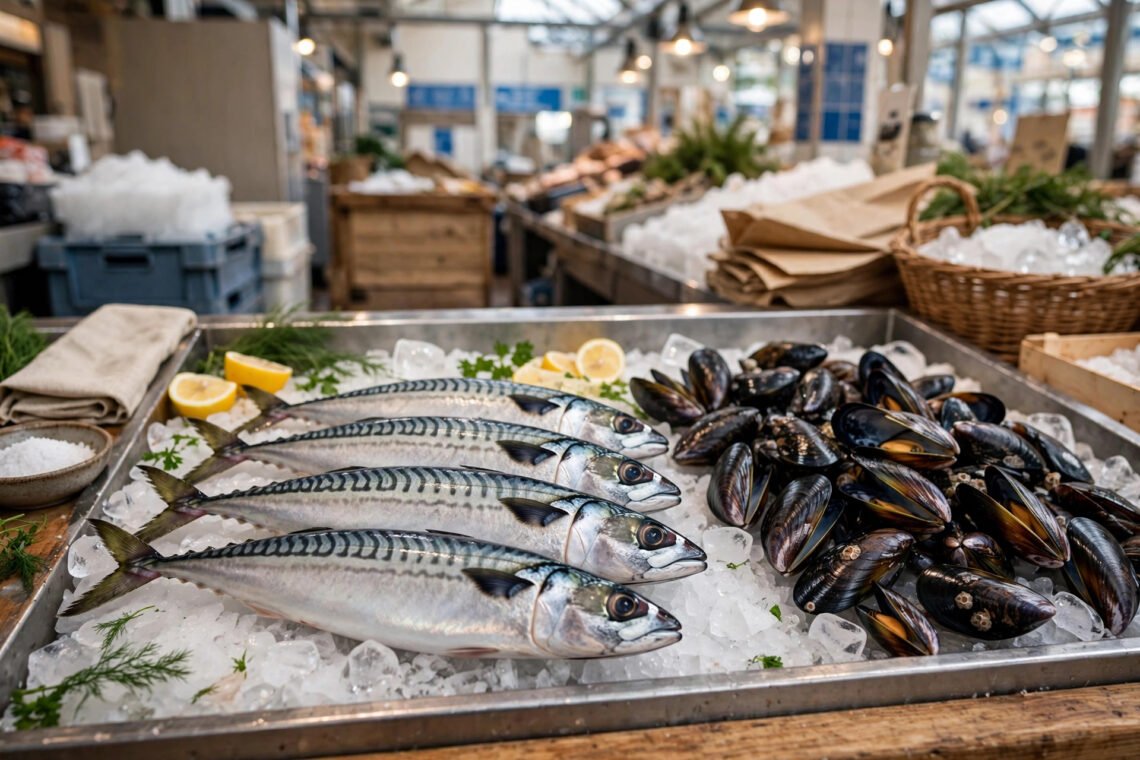
Britons eat overwhelmingly from five species: cod, haddock, salmon, tuna and prawns. This concentration is itself unsustainable — it hammers those stocks while abundant, delicious alternatives go unfished. The fix most experts recommend: diversify. Hake, coley, mackerel, mussels, sardines — often cheaper, frequently better-rated, and a genuine culinary adventure. Mussels and oysters are the sustainability superstars: farmed without feed, they actually clean the water they grow in. The “big five” habit is cultural, not culinary — your grandparents ate a far wider range of fish, and the recipes still exist. Reducing food waste in your kitchen pairs naturally with this: the most sustainable fish is the one you actually eat rather than binning, so buy quantities you will use and learn the simple freshness tests.
Farmed versus wild: the nuance everyone misses
“Farmed is bad, wild is good” is wrong in both directions. Well-managed aquaculture — mussels, oysters, some trout and responsibly certified salmon — can be excellent. Poorly managed farming — overcrowded pens, sea-lice chemicals, escaped fish — is dire. Similarly, wild-caught spans from pristine (pole-and-line tuna) to destructive (bottom trawling on sensitive seabeds). Judge the method and the management, not the category. Certification helps here: look for independently audited standards and check what they actually certify.
Mistake 3: ignoring the method and the origin
Two identical-looking fillets can have opposite footprints depending on how and where they were caught. Pole-and-line versus purse-seine tuna; pot-caught versus trawled crab; line-caught versus beam-trawled flatfish — the method determines bycatch, seabed damage and fuel use. Origin matters equally: the same species from a well-managed fishery versus an overfished one. Practical rule: if the label or fishmonger cannot tell you the catch method and origin, treat that as information — the transparent supply chains are the ones proud to show their workings. Ask your fishmonger; a good one loves this conversation. Supermarkets’ own-brand ranges vary enormously by species — the MCS guide rates specific retailer lines, which removes the guesswork.
Mistake 4: thinking individual choice does not matter
The defeatist error. UK consumer demand demonstrably shifts retailer sourcing — the collapse of unsustainable species from supermarket shelves over the past two decades happened because shoppers changed, then retailers followed, then fisheries improved to regain the market. Your choices aggregate. And the household level connects to everything else: practical eco-friendly choices at home compound — the family that eats diversely, wastes less and chooses certified fish is doing more for the oceans than any single grand gesture. The Defra’s fisheries guidance explains the regulatory side: quotas, marine protected areas and landing obligations that your purchasing choices reinforce.
Cooking the unfamiliar: making variety delicious
The biggest barrier to seafood diversity is not principle — it is not knowing what to do with a coley. The fix is simpler than the fish counter suggests: most underused species cook exactly like the familiar ones. Coley and hake: treat like cod — battered, baked, curried. Mackerel: grilled or pan-fried with sharp flavours (gooseberry, rhubarb and mackerel is a classic British pairing). Sardines: grilled whole with lemon and garlic, or on toast — the weeknight supper of champions. Mussels: steamed with white wine and shallots in fifteen minutes, cheaper than any takeaway. The technique that unlocks everything: learn the “10-minute rule” — fish cooks roughly 10 minutes per inch of thickness at 200°C, and the number one error is overcooking, not undercooking. Buy a fish thermometer (£10) and cook to 60–63°C internal; perfectly cooked “cheap” fish beats overcooked premium fish every time. Ask the fishmonger for cooking advice with the purchase — a good one will give you the recipe with the fish, and the conversation builds the relationship that makes future experiments easy. The sustainable choice and the delicious choice turn out to be the same choice: the fish you cook well, eat fully, and buy again.
Frequently Asked Questions
What is the most sustainable fish to eat in the UK?
Mussels and oysters top almost every ranking — farmed without feed, improving water quality. Among finfish, responsibly sourced mackerel, hake and coley are consistently strong choices. Check the current MCS ratings, as stocks change.
Is farmed salmon sustainable?
It depends entirely on the farm: certified responsible farms with low sea-lice treatments and good feed ratios are reasonable; uncertified intensive farms are problematic. Look for credible certification and be willing to pay the premium — cheap salmon usually means corners cut.
Should I just stop eating fish?
Not necessary — and for many, fish is a valuable protein source. The evidence supports eating seafood selectively and diversely rather than abstaining. The goal is sustainable fisheries, which need customers buying the right fish, not no customers at all.
Are tinned fish sustainable?
Often yes — tinned mackerel, sardines and certified pole-and-line tuna are among the most sustainable and affordable options available. Check the label for catch method; the best tinned brands state it clearly.
Check the guide, diversify beyond the big five, ask about method and origin, and trust that your choices aggregate. Sustainable seafood is not about perfection or guilt — it is about four habits at the fish counter. The oceans will not notice one shopper; they will notice ten million. Start with one swap this week — the mackerel instead of the cod, the mussels on Friday. Small changes, repeated by millions, are how food systems transform. Your fish counter is a ballot box; vote accordingly. And bring a friend next time — sustainable habits spread fastest through shared meals and shared discoveries. The ocean-friendly shop is easier, cheaper and tastier than its reputation suggests. Check the ratings, trust your fishmonger, and enjoy the delicious side of doing the right thing.


