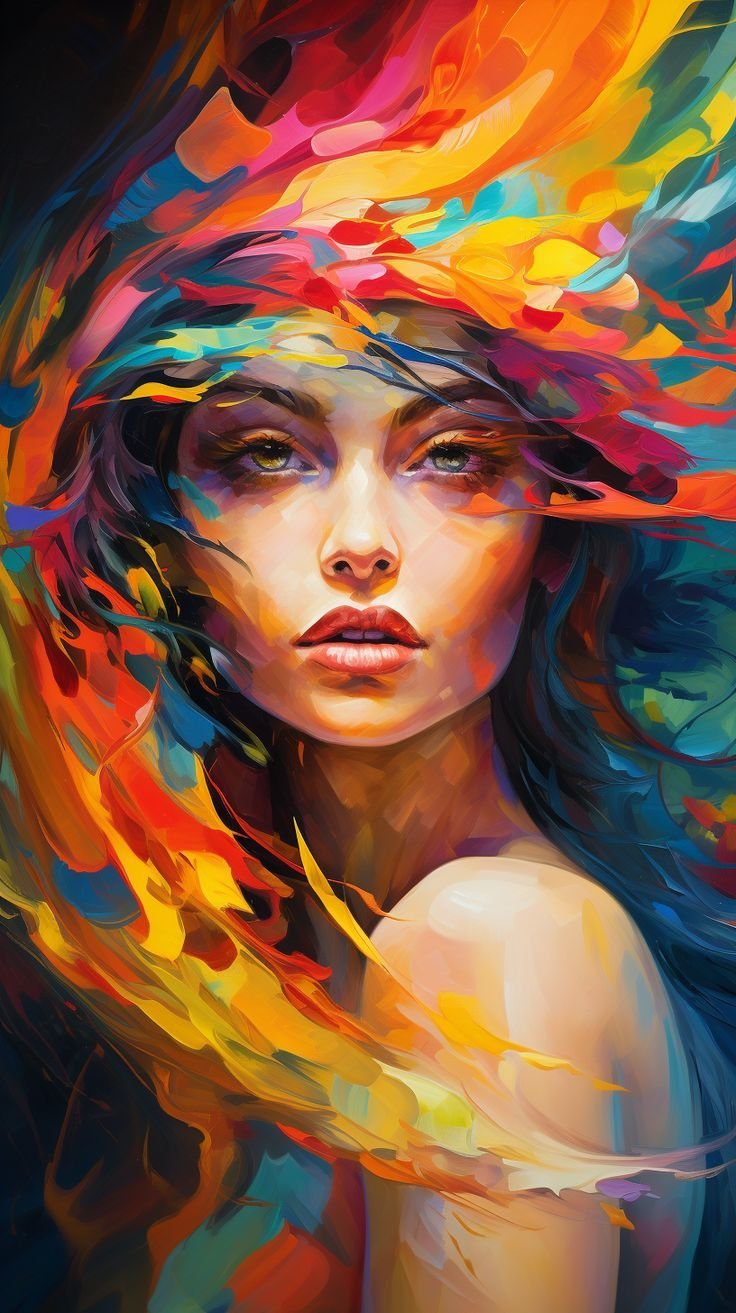
A picture generated from a text prompt just won an art competition. A portrait “painted” by an algorithm sold at auction for hundreds of thousands of pounds. Your nephew made a stunning fantasy landscape on his phone in thirty seconds. So here’s the question everyone’s arguing about: is AI art real art, or just computer-generated images with good PR? The answer depends entirely on what you think art is — which is why the debate gets so heated.
What AI Art Actually Is
Let’s demystify the technology first. AI image generators (Midjourney, DALL-E, Stable Diffusion and their cousins) are generative AI models trained on billions of image-text pairs. When you type “a fox in a misty forest at dawn, oil painting style”, the system doesn’t search for an existing picture — it generates a new image by progressively refining random noise, guided by the patterns it learned during training. Every image is technically original, in the sense that no identical image existed before.
The key controversy: those training images were overwhelmingly scraped from the internet without the original artists’ permission. Many artists consider this mass appropriation of their work — their styles, their compositions, their labour — to train commercial products. Lawsuits are working through courts in the UK, US and EU, and the legal picture is genuinely unresolved. If you want the technical background, our beginner’s guide to generative AI explains how these models learn.
The Case For: Yes, It’s Real Art
Supporters make several serious arguments:
- Art has always absorbed new technology. Photography was dismissed as mechanical cheating when it arrived; now it’s unquestionably art. Digital painting, sampling in music and Photoshop all faced the same accusations.
- Prompting is a creative skill. Getting a great image from an AI takes vision, iteration, taste and curation — choosing the right words, refining through dozens of attempts, selecting the best result. The creativity moved upstream, but it’s still there.
- The viewer test. If an image moves you, surprises you, makes you think — does the tool that made it actually matter? Much beloved art was made with heavy technical assistance, from Renaissance workshops to darkrooms.
- It democratises creation. People with vivid imaginations but no traditional training can now visualise their ideas. Disabled artists who can’t hold a brush can create. That’s a genuine expansion of who gets to make art.
The Case Against: No, It’s Something Else
Critics are equally serious:
- There’s no human experience behind it. Art, in this view, is communication from one consciousness to another — the artist’s grief, joy or vision made tangible. An AI has no experiences, so its output is decoration, not expression. A beautiful image with nothing to say.
- It’s derivative by design. The model can only remix patterns from its training data. It cannot have an original vision because it has no vision at all — only statistics. Every “new” image is a sophisticated collage of human art it was trained on.
- The labour question. Even if the output qualifies as art, the process involved using millions of artists’ work without consent or compensation. Enjoying the product while ignoring that feels, to many, like enjoying cheap clothes while ignoring the sweatshop.
- It floods the zone. When anyone can generate a thousand images an hour, human-made art gets drowned out economically — illustrators report losing commissions to AI-generated alternatives, which is a livelihood crisis regardless of philosophy.
What the Art World Is Actually Doing
While philosophers argue, the market is adapting pragmatically. Galleries now exhibit AI-assisted work with disclosure. Competitions are creating separate AI categories. Stock photo sites label AI content. Some artists use AI as a sketching tool — generating concepts they then paint properly — which almost everyone accepts as legitimate. The emerging consensus looks like: AI as a tool in a human artist’s process = art; fully autonomous AI output = impressive imagery with an asterisk.
There’s also a fascinating middle ground emerging: artists who train models exclusively on their own work, using AI to extend their personal style. That neatly sidesteps the consent issue and keeps the human vision central — suggesting the future may be less “AI replaces artists” and more “artists who use AI replace artists who don’t.”
How to Think About It for Yourself
Here’s a practical framework rather than a verdict:
- Ask about intention. Did a human have something to express and use AI to express it? That’s closer to art than someone generating wallpaper to sell by the thousand.
- Ask about transformation. Did the human substantially shape, curate and refine the output — or just type three words and post the first result?
- Ask about disclosure. Honest labelling (“AI-assisted”) respects viewers; passing AI work off as hand-made doesn’t.
- Separate the aesthetic from the ethical. An image can be beautiful and ethically problematic in its sourcing. Both can be true.
And if you’re curious about the visual side of AI more broadly — including how to spot fakes — our guide to deepfake technology is a natural next read.
The Takeaway
So, is AI art real art? The most honest answer: some of it is, some of it isn’t, and the difference lies in human intention, creative input and honesty — not in the tool itself. A thoughtless prompt produces a thoughtless image; a genuine artistic vision expressed through AI remains genuinely artistic. The technology is new, but the question is ancient: art was never really about the brush.
Is AI Art Real Art? FAQs
Can I sell AI-generated images?
Usually yes, depending on the tool’s terms — most commercial image generators grant commercial rights to paying users. The murkier question is copyright: in the UK and US, purely AI-generated works may not qualify for copyright protection (which requires human authorship), meaning others could potentially reuse them. For commercial projects, check the specific tool’s licence and consider the IP uncertainty.
Do I need to disclose that art is AI-generated?
Ethically, yes — and increasingly it’s expected or required. Stock sites label AI content, competitions create separate categories, and the EU’s AI Act introduces transparency obligations. Passing AI work off as handmade is dishonest regardless of legality. Disclosure doesn’t diminish good work; it contextualises it.
What’s the best AI image generator for beginners?
Microsoft Designer’s Image Creator (free, powered by DALL-E) is the easiest starting point — no signup hurdles, decent results. For higher quality and more control, Midjourney (paid) remains the enthusiast favourite. For free and open-source tinkering, Stable Diffusion. Start free, upgrade only if you catch the bug.
Will AI replace human illustrators?
It’s already displacing some commercial illustration work — stock-style imagery, simple blog illustrations, basic concept art. But distinctive artistic voices, complex narrative illustration and work requiring genuine understanding of context remain human territory. The illustrators thriving are those with recognisable styles and deep client relationships — the same qualities that always mattered, now more valuable. The Guardian’s art coverage regularly explores this shifting landscape.