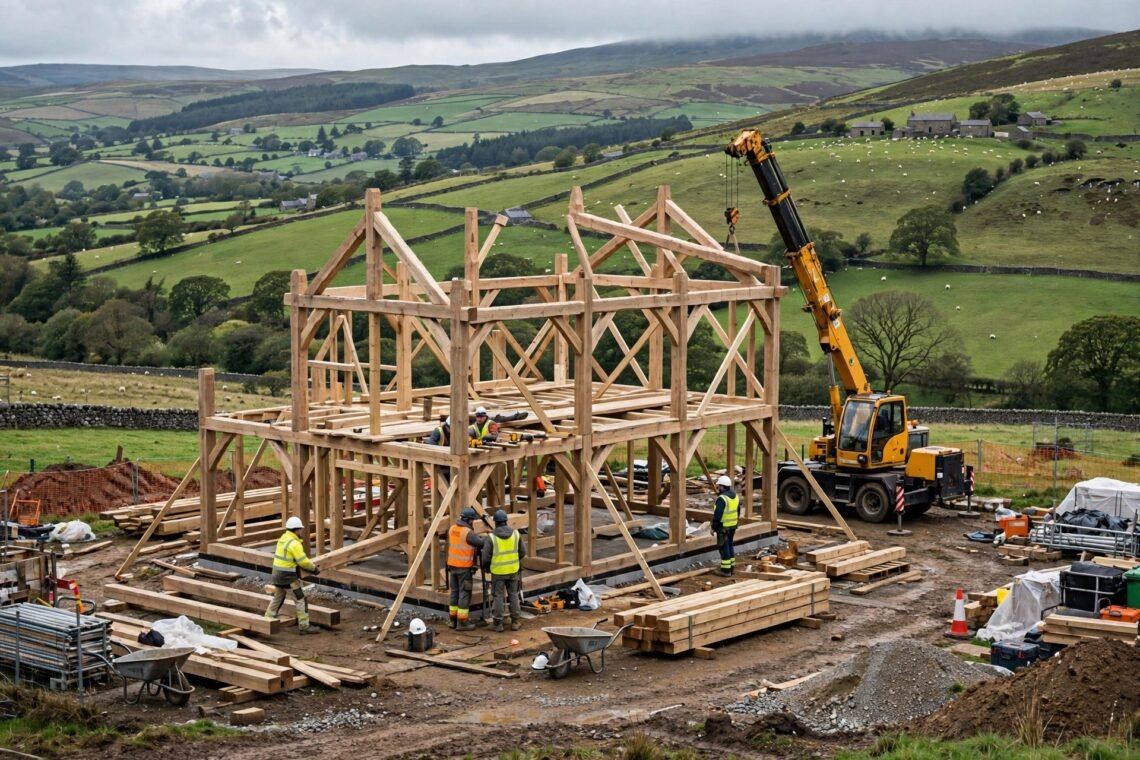
Forget everything developers offer: imagine choosing the plot, designing the layout, and watching your own home rise exactly as you envisioned. Buying land and building a custom home in Cardiff is the ultimate property project — and more achievable than most people think. Wales has a strong self-build tradition, Cardiff’s outskirts and the Vale offer opportunities, and the financial case can be compelling: self-builders often create homes worth 20-30 per cent more than total costs. But it is also complex, and beginners need a clear map.
This guide covers the easiest route through: finding land, navigating planning, budgeting honestly, and managing the build as a complete beginner.
Finding land in and around Cardiff
Land is the hardest part. Unlike houses, plots do not appear on Rightmove in volume — you must hunt. Specialist sites (Plotfinder, Plotbrowser) list development plots; local estate agents with land departments know about opportunities before they reach portals; and Cardiff Council maintains a self-build register you should join, which also signals demand that can unlock sites. Auctions occasionally offer plots, and networking — telling everyone you know — surfaces the off-market opportunities that never get advertised.
Consider the geography: Cardiff proper has limited affordable plots, but the Vale of Glamorgan, Caerphilly and Newport fringes offer more options within commuting distance. Evaluate plots ruthlessly: access (can construction traffic reach it?), services (water, electricity, drainage connections — or the five-figure cost of bringing them in), ground conditions (former industrial land in South Wales can hide contamination), flood risk, and planning context (is the area allocated for development, or will you fight for permission?). A cheap plot with impossible servicing is no bargain. Budget £80,000-£200,000+ for plots depending on location and size — land typically represents 25-35 per cent of total project cost.
Planning permission: the gatekeeper
Planning permission makes or breaks self-build, and beginners should understand the system before buying land. In Wales, planning policy (Planning Policy Wales and local development plans) governs decisions; Cardiff’s Local Development Plan identifies where development is acceptable. Buying land with existing planning permission (or better, detailed permission for a dwelling) de-risks enormously — but costs more, since the permission itself has value.
Buying without permission is cheaper but riskier: apply for outline permission first to establish the principle of development before committing fully. Engage a local planning consultant early — their knowledge of Cardiff planners’ preferences is worth every penny. Design matters: schemes respecting local character, scale and materials succeed far more often than those fighting context. And understand the timeline: planning decisions take 8-13 weeks typically, appeals add months, so factor this into your project plan. The Planning Portal’s self-build guidance explains the process, and GOV.UK guidance on buying land and self-build covers the legal essentials.
Budgeting: the honest numbers
Self-build costs in Wales typically run £1,800-£3,000 per square metre for the build itself, depending on specification — so a 150m² family home costs £270,000-£450,000 to construct, plus land, fees and contingency. Professional fees (architect, structural engineer, planning consultant, building control) add 10-15 per cent. Then: VAT (mostly reclaimable on new builds via the DIY housebuilders’ scheme — understand it), site costs (demolition, access, services), landscaping, and finance costs.
The golden rules: get quantity-surveyor costings before committing (not builder’s estimates — proper costings), add 15-20 per cent contingency minimum (self-builds overrun; it is the nature of the beast), and secure finance early — self-build mortgages release funds in stages against completed work, which demands careful cash-flow management. Total project budgets for Cardiff-area self-builds commonly land at £400,000-£700,000 all-in. Compare against buying existing: the premium buys exactly-what-you-want and potential equity uplift, but demands time, stress tolerance and project management. There are no shortcuts around honest maths.
Managing the build as a beginner
You have three main routes. Main contractor: one firm handles everything — simplest for beginners, most expensive, least control. Self-managed with trades: you coordinate subcontractors — cheaper, far more demanding, and the classic beginner trap (managing fifteen trades without experience is brutal). Kit/package homes: manufacturers supply designed systems erected quickly — an excellent beginner compromise, offering design quality with managed complexity.
Whichever route, protect yourself: use proper contracts (JCT for contractors), never pay large sums upfront (stage payments against certified work), insure comprehensively (site insurance, structural warranty — required by mortgage lenders), and visit site constantly — presence prevents problems. Hire an independent project manager if self-managing; their fee pays for itself in avoided disasters. And plan for where you live during the build — renting nearby for 12-18 months is a real cost to budget. The garden deserves early thought too — see the cost of landscaping a small garden and the best plants for a north-facing garden.
The easiest beginner route: a realistic sequence
For a complete beginner, the lowest-risk path looks like this. First, spend three to six months learning: visit self-build shows, read case studies, talk to people who have done it in South Wales. Second, define your budget honestly — total cash available including finance — and work backward to what land plus build that supports. Third, find land with planning permission already granted (pay the premium for de-risking your first project).
Fourth, choose a kit home or design-and-build package from a reputable supplier — managed complexity beats heroic self-management first time. Fifth, assemble your professional team (architect/designer, planning consultant if needed, structural warranty provider, solicitor experienced in self-build) before breaking ground. Sixth, build with generous contingency and constant site presence. This route is not the cheapest, but it is the one most likely to deliver a home rather than a cautionary tale. Ambition is good; calibrated ambition is better.
Conclusion
Buying land and building a custom home in Cardiff as a beginner is absolutely doable — through careful land selection, planning diligence, honest budgeting with contingency, and choosing managed build routes over heroic self-management. It demands 12-24 months, significant capital and real commitment, but delivers what no developer can: your home, exactly as you want it, often worth more than it cost. Start learning now; the plot will follow.
Frequently Asked Questions
How much does it cost to build your own home in Cardiff?
Typically £400,000-£700,000 all-in including land: £1,800-£3,000/m² build costs, plus land (£80,000-£200,000+), fees (10-15%) and 15-20% contingency. Self-builds often complete worth 20-30% more than total costs.
How do I find land to build on?
Specialist plot sites, local agents’ land departments, council self-build registers, auctions and networking. Evaluate access, services, ground conditions and planning context ruthlessly before committing.
Do I need planning permission before buying land?
Not necessarily, but land with permission is far less risky (and priced accordingly). Without permission, seek outline consent to establish development principle before full commitment.
Can beginners manage a self-build project?
Yes, via managed routes: main contractors or kit/package homes rather than self-managing trades. Consider an independent project manager, use proper contracts, and maintain constant site presence.
How long does a self-build take?
Typically 12-18 months on site, plus 6-12 months for land finding, planning and design. Budget temporary accommodation costs for the full period.
Can I get a mortgage for a self-build?
Yes — self-build mortgages release funds in stages against completed work, which demands careful cash-flow planning. Specialist brokers understand the products best.