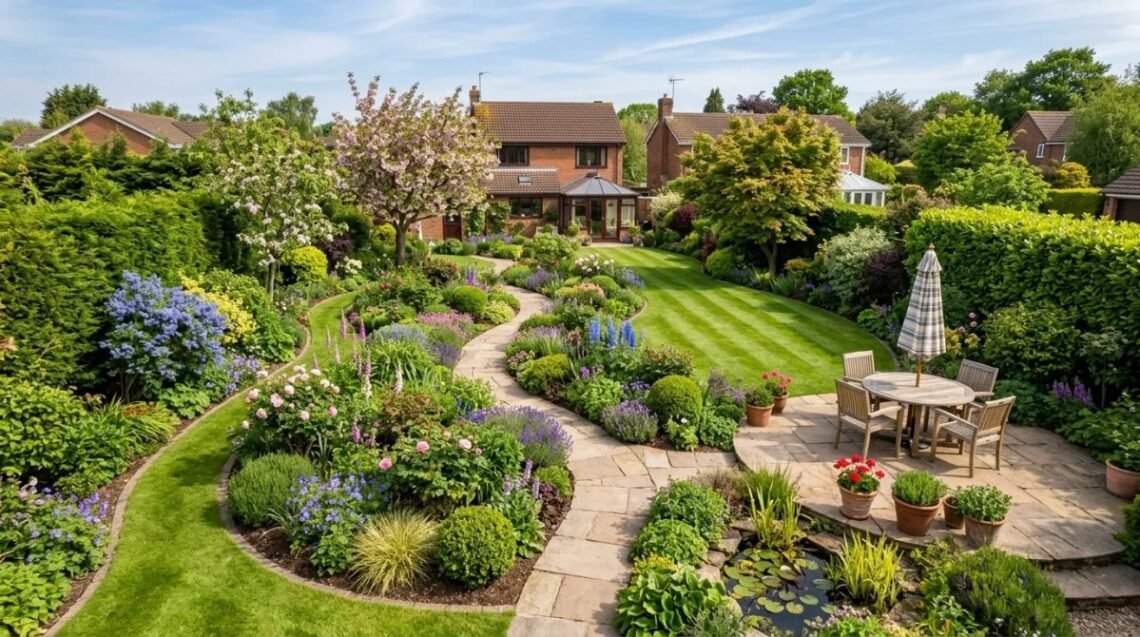
How much does it cost to landscape a small garden in the UK? For a typical small garden (say 50–100m²), budget £5,000–£15,000 for a professional job — design, materials, plants and labour. A simple tidy-up with new turf and a few beds can be £2,000–£4,000; a full redesign with patio, fencing, lighting and planting pushes £15,000–£25,000. Gardens are like kitchens: the range is enormous because “landscaping” covers everything from mowing the lawn to building an outdoor room.
I’ve landscaped one garden professionally and one DIY, and the cost difference was stark — but so was the time investment. Here’s an honest breakdown to help you decide.
Landscaping cost breakdown for a small garden
Typical costs for a 50–100m² garden, professionally done:
- Design fees: £500–£1,500 for a professional garden designer. Worth it for complex gardens; overkill for a simple tidy-up.
- Clearance: £300–£800 to clear an overgrown garden, including waste removal.
- Patio (20m²): £2,000–£4,500 laid — natural stone at the top end, porcelain or concrete slabs cheaper.
- New lawn/turf: £500–£1,200 for supply and lay, depending on size and ground prep.
- Fencing (per panel, supplied and fitted): £100–£200. A small garden might need 8–12 panels.
- Raised beds: £200–£500 each built, or £50–£150 DIY.
- Planting: £500–£2,000+ — the most variable line. Young plants in 9cm pots are cheap; instant-impact mature specimens are not.
- Lighting: £500–£1,500 for a proper low-voltage system.
- Labour: landscapers charge £200–£350 per day per person; a small garden redesign takes 1–3 weeks.
Checkatrade’s landscaping cost guide puts the average UK garden project at around £10,000, which feels right for a proper job on a small-to-medium garden.
What drives the cost up (and down)
Access. A garden accessible only through the house costs more — every bag of soil and slab goes through your hallway. Terraced houses with no rear access pay a premium.
Levels and drainage. A flat garden is cheap to landscape. A sloping one needing retaining walls, steps or drainage work adds thousands. If your garden floods, fix drainage first — it’s unglamorous but foundational.
Materials. Natural Yorkstone vs concrete slabs is a 3x price difference for a similar look at ten paces. Porcelain paving looks premium and costs mid-range. Reclaimed materials can be cheaper and more characterful — check local reclamation yards.
Plant maturity. The single biggest lever on the planting budget. A 2-litre shrub at £12 becomes a 10-litre specimen at £60. Plant small and wait two years, and you’ll save a fortune — gardens are one area where patience literally pays.
DIY vs professional: the honest maths
DIY landscaping saves the labour cost — typically 40–50% of the total. A £10,000 professional job might cost £5,000 in materials DIY. But it’s heavy, skilled work: levelling, laying patios, building walls. My rule: DIY the planting, turfing, painting and simple beds; pay professionals for patios, walls, drainage and anything structural. A badly laid patio is depressing to look at for a decade.
Get three quotes for professional work, check previous jobs (not just photos — ask to see one in person), and never pay more than 25–30% upfront. Landscapers should be busy — a good one quoting for next month is a red flag; a good one quoting for three months’ time is normal.
Budget landscaping: the £2,000 transformation
If £10,000 makes you wince, here’s what £2,000–£3,000 buys: a thorough clear-up, new turf or lawn repair, fresh fence paint (transformative for about £100), a few well-chosen shrubs and perennials, new mulch on the beds, solar lighting (£50–£100), and a lick of paint on the shed. It won’t make the magazines, but it’ll make you want to sit out there — which is the actual point.
For planting choices on a budget, see the best plants for a north-facing garden — many of the toughest, cheapest plants are shade-tolerant. And if privacy is the goal rather than prettiness, read how to make your garden more private without high fences before spending on tall fencing.
Timing and planning tips
Book landscapers in winter for spring work — the good ones are booked months ahead. Plant in autumn — plants establish roots over winter and romp away in spring, and nurseries discount stock. Phase the project if budget is tight: hard landscaping (patio, paths, walls) first, planting later. A garden with good bones and cheap plants beats a garden with expensive plants and no structure.
Check the RHS website for planting advice suited to your soil and aspect — their plant finder is the best free tool in British gardening.
Garden lighting: the budget transformation
However much you spend on landscaping, lighting is the highest-impact finishing touch — and it doesn’t need to cost much. Solar spike lights (£2–£4 each) along paths and in beds transform a garden after dark with zero wiring. A £30 set of festoon lights strung across a patio creates instant atmosphere. For a more designed look, low-voltage LED kits (£80–£150) with a transformer let you uplight trees and wash walls with light.
Think in layers: path lights for safety and guidance, accent lights on specimen plants or trees (uplighting a single beautiful tree is the most dramatic £15 you’ll spend), and ambient lights (festoons, lanterns) over seating areas. Warm white (2700–3000K) always — cool white makes gardens look like car parks. And be considerate: aim lights downward, avoid light pollution into neighbours’ bedrooms, and use timers or dusk-to-dawn sensors rather than leaving everything blazing all night.
Phasing the project across seasons
You don’t have to do it all at once. Autumn/winter: hard landscaping — patios, paths, walls, fences. The ground is workable, landscapers are available, and plants are dormant. Late autumn: planting — bare-root hedging and trees are cheapest November to March, and autumn-planted specimens establish over winter. Spring: turfing and sowing — soil warming, rain still falling. Summer: enjoy it, and note what works and what doesn’t for next year’s phase two.
Phasing spreads the cost and lets the garden teach you — you’ll use the space for a season and discover you want the seating area there, not where the plan said. The only rule: do hard landscaping before planting in each phase. There’s nothing sadder than a beautiful new border trampled by patio layers. And get the bones right first time — moving a patio costs ten times more than moving a plant.
The takeaway
Budget £5,000–£15,000 for a professional landscaping job on a small UK garden, or £2,000–£5,000 DIY for a serious transformation. Spend the money on hard landscaping and soil preparation — the unsexy foundations — and save on plants by buying young and being patient. Get three quotes, check real previous work, and phase the project if needed. A well-planned small garden beats a neglected big one every time.