
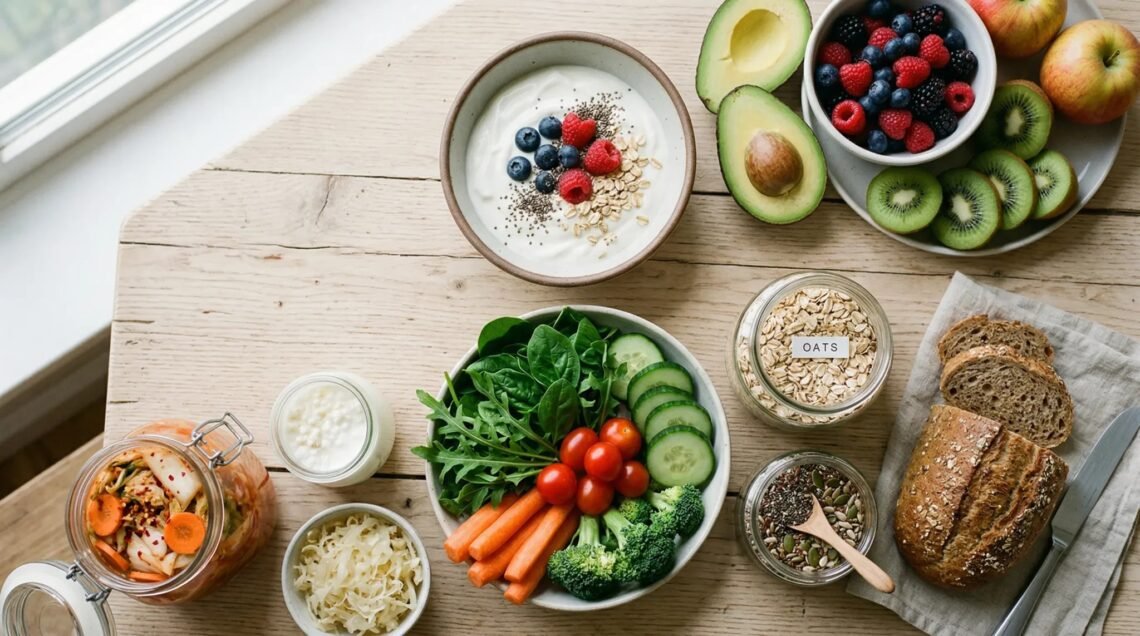
Gut health has become one of those phrases that means everything and nothing — splashed across supplement ads and wellness blogs, usually right before someone tries to sell you an expensive powder. Strip away the marketing and the science is genuinely fascinating: your gut hosts trillions of microbes that influence digestion, immunity, and even mood. The good news? You can improve gut health with everyday foods — no exotic purchases required.
Your gut microbiome thrives on one thing above all: diversity. A diverse diet feeds a diverse microbiome, and a diverse microbiome is a resilient one. The landmark research suggests aiming for 30 different plant foods a week — which sounds intimidating until you realise herbs, spices, nuts, seeds, legumes and whole grains all count, not just vegetables.
How to improve gut health with everyday foods
The short answer is fibre diversity: 30 different plant foods a week, plus fermented foods most days. No expensive supplements required. Here’s what to eat, what to limit, and how to build it into normal meals.
The everyday foods that feed your gut
Fibre — the foundation: Fibre is essentially food for your gut bacteria; they ferment it into short-chain fatty acids that nourish the gut lining and calm inflammation. Most UK adults eat around 20g daily against a recommended 30g. The fix is deliciously cheap: oats, lentils, beans, chickpeas, wholemeal bread, brown rice, vegetables, fruit with skins on. Add fibre gradually (a sudden jump causes bloating) and drink water with it.
Fermented foods — the live reinforcements: Live yoghurt, kefir, kimchi, sauerkraut, miso, kombucha and sourdough contain beneficial live bacteria. You don’t need all of them — a daily serving of one or two is plenty. Supermarket kefir (£2–£3 a bottle) drunk as a morning shot, or a forkful of sauerkraut with lunch, is an easy entry point. Check labels for “live cultures” — pasteurised versions are dead on arrival, microbiologically speaking.
Prebiotic foods — the fertiliser: These contain fibres that specifically feed good bacteria: onions, garlic, leeks, bananas (slightly green ones especially), oats, asparagus, Jerusalem artichokes, apples. You’re probably eating several already — just eat more of them.
Polyphenol-rich foods: Berries, dark chocolate (70%+), olive oil, green tea, coffee, colourful veg — polyphenols act as fuel for beneficial bacteria while you’re enjoying the taste.
Notice what’s absent: anything expensive or exotic. Lentils, oats, onions, yoghurt and bananas are gut-health royalty. For budget-friendly ways to eat more of all this, see eating healthier on a tight budget.
Habits that harm your gut (and easy fixes)
Food is half the story; habits are the other half:
- Ultra-processed food overload: Emulsifiers and low fibre in heavily processed food are associated with less diverse microbiomes. You don’t need to be pure — just shift the balance toward whole foods.
- Unnecessary antibiotics: Life-saving when needed, but they carpet-bomb gut bacteria. Never demand them for viral illnesses, and eat plenty of fibre and fermented foods after a course.
- Chronic stress: The gut-brain axis is real — stress measurably alters gut function (hence “nervous stomach”). Managing stress is gut care; our mindfulness guide covers evidence-based approaches.
- Poor sleep: Disrupted sleep disrupts the microbiome’s daily rhythms. Another reason to protect your nights — see building a bedtime routine.
- Artificial sweeteners (in excess): Emerging evidence suggests some sweeteners alter gut bacteria in some people. Moderation, as ever.
What about probiotic supplements?
The honest answer: for generally healthy people eating a decent diet, expensive probiotic supplements show limited benefit — the bacteria often don’t colonise long-term. They’re more justified after antibiotics, for specific IBS symptoms (certain strains have decent evidence — ask a pharmacist), or on medical advice. Fermented foods deliver similar benefits for a fraction of the price, with the bonus of actual nutrition. Save your money unless you have a specific reason.
A gut-friendly day (no effort required)
Breakfast: porridge with banana, berries and a spoonful of live yoghurt. Lunch: lentil soup with wholemeal bread, or a bean chilli. Snacks: apple, handful of mixed nuts. Dinner: stir-fry with loads of veg, garlic and ginger over brown rice, or a curry with chickpeas. Drink: water, tea, coffee as normal. That’s roughly 15+ plant foods before you’ve even tried — do that most days, add a daily fermented food, and your microbiome is dining very well indeed.
The takeaway is refreshingly uncommercial: eat 30 plants a week, include something fermented daily, get your 30g of fibre, manage stress and sleep. No powders, no protocols, no £50 “gut reset” kits. Your trillions of gut tenants ask only for variety — and they’re remarkably easy to please.
The 30-plants-a-week challenge: a worked example
Thirty plants sounds daunting until you count properly — here’s a normal week. Monday: porridge with banana, blueberries, walnuts, flaxseed (5) + lentil soup with carrots, onions, celery, cumin (5 more = 10). Tuesday: add apple, almonds (12), stir-fry with peppers, broccoli, garlic, ginger, soy, rice (18). Wednesday: toast with peanut butter (19), chilli with kidney beans, tomatoes, onion, paprika, dark chocolate square (24).
Thursday: yoghurt with raspberries, oats, honey (27), roasted veg tray — sweet potato, courgette, red onion, rosemary, olive oil (32). Friday onwards: you’re already past 30 without trying — weekend meals just add variety (herbs on everything count: basil, coriander, parsley, mint — fresh herbs are the cheat code, each one counts). The trick is variety within normal meals, not exotic shopping: mixed frozen veg contains 4–5 plants per bag, mixed nuts 3–4, a seeded loaf 3–4.
Track it simply: a notes app list, ticking off each new plant weekly. Most people hit 30 by Thursday once they’re counting — the challenge isn’t difficulty, it’s awareness. After a month, the habit is automatic: you’ll find yourself throwing an extra vegetable into dishes without thinking, choosing mixed salads over single leaves, and keeping frozen berries as a staple. Your microbiome doesn’t need perfection — it needs variety, consistently. Thirty plants is the target; the real win is never eating the same five vegetables on rotation again.
Foods and habits that harm gut health
Ultra-processed foods: the biggest dietary threat — not because of any single ingredient, but the overall pattern: low fibre, high emulsifiers, high sugar, low diversity. You don’t need to eliminate them (unrealistic), but shifting the balance toward whole foods matters more than any single “bad” food. Excessive alcohol: disrupts the gut barrier and alters bacterial balance — the “beer gut” is partly a microbiome story. Moderate, don’t moralise.
Artificial sweeteners: emerging evidence links some (saccharin, sucralose) to altered glucose responses via microbiome changes — the effect varies by individual. If you consume a lot, consider cutting back and seeing how you feel. Unnecessary antibiotics: mentioned before, worth repeating — they save lives when needed but devastate gut diversity. Never pressure a GP for antibiotics for viral illnesses; when prescribed, take the full course and rebuild afterwards with fibre and fermented foods.
Chronic stress and poor sleep: the gut-brain axis runs both ways — stress alters gut function, and gut dysfunction affects mood. Managing one helps the other. The “gut reset” industry: expensive cleanses, detox teas and extreme elimination diets — mostly marketing, occasionally harmful. Your gut doesn’t need “resetting”; it needs consistent, varied, fibre-rich feeding. Anyone selling you a £50 gut cleanse is selling you expensive laxatives. The realistic approach: crowd out the harmful with the helpful — more plants, more fermented foods, more fibre — rather than obsessing over elimination. Addition beats subtraction for gut health, as for most of nutrition. Feed the good, and the good crowds out the bad.
The British Dietetic Association’s guide to fibre explains why most of us need more of it — and lists the best food sources, many of which cost pennies.



One comment on “How to Improve Gut Health With Everyday Foods”