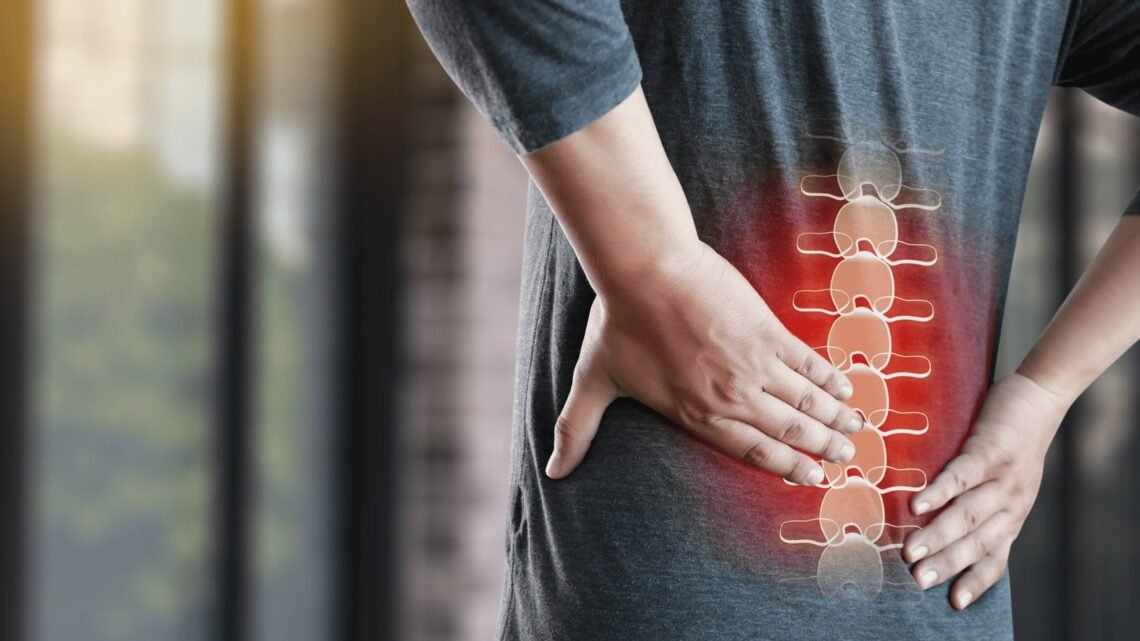
Back pain is so common it’s almost a British pastime — four in five of us get it at some point. Most episodes resolve on their own within a few weeks. But some back pain signals something serious, and knowing the signs you need to see a GP about back pain can genuinely change outcomes. This isn’t about worrying over every twinge; it’s about knowing the red flags that mean “don’t wait and see.”
First, the Reassuring Context
The vast majority of back pain is non-specific — meaning no serious underlying cause, just muscles, ligaments or joints complaining. It typically improves within days to weeks, and staying active (not bed rest) speeds recovery. If your pain started after gardening, a long drive, sleeping awkwardly or lifting something heavy, and it’s gradually improving, you’re almost certainly in the common, benign category. Our guide to stretches for lower back pain relief can help with exactly this kind.
That said, “common” doesn’t mean “ignore everything.” Here’s when to get professional input.
See Your GP Soon (Within Days) If:
- The pain isn’t improving after 2–3 weeks of self-care, or it’s getting worse rather than better.
- It’s severely limiting daily life — you can’t work, sleep or do normal activities.
- You have numbness, tingling or weakness in one or both legs, suggesting nerve involvement (sciatica).
- The pain follows a significant trauma — a fall, car accident or heavy blow, even if you felt okay initially.
- You have a history of cancer and develop new back pain — always worth checking promptly.
- You’re over 50 with new, persistent pain — the threshold for investigation is lower.
- You have osteoporosis or take long-term steroids — higher fracture risk from minor incidents.
- The pain is worse at night and doesn’t ease with rest or position changes — most mechanical back pain improves when you lie down; pain that doesn’t can signal something else.
Seek Urgent Care (A&E or Same-Day GP) If:
These are the red flags every back-pain guide emphasises, because they can indicate cauda equina syndrome, infection or fracture — all needing urgent treatment:
- Loss of bladder or bowel control, or numbness around the saddle area (inner thighs, buttocks, genitals). This can indicate cauda equina syndrome — a surgical emergency. Don’t wait; go to A&E.
- Fever alongside back pain — possible spinal infection, especially with recent illness, surgery or IV drug use.
- Unexplained weight loss with back pain — needs prompt investigation.
- Severe, sudden pain unlike anything before, particularly with a “tearing” quality — possible aortic emergency (rare, but critical).
- Progressive leg weakness — foot dropping, leg giving way, rapidly worsening.
- Back pain with chest pain, breathing difficulty or abdominal pain — the pain may be referred from elsewhere.
These are uncommon, but knowing them matters: cauda equina outcomes depend heavily on how fast it’s treated. When in doubt about red flags, call NHS 111 — that’s exactly what it’s for.
What Your GP Will Actually Do
Manage expectations: for most back pain, the GP won’t order scans. This surprises people, but it’s evidence-based — routine X-rays and MRIs for non-specific back pain don’t improve outcomes and often reveal incidental “abnormalities” (bulging discs are present in many pain-free adults) that cause unnecessary worry. Instead, expect:
- A history and physical examination, including red-flag screening.
- Advice on staying active, pain relief options and realistic timelines.
- Possible referral to physiotherapy — the most effective treatment for persistent mechanical back pain.
- Referral for imaging or specialists only if red flags exist or pain persists beyond ~6 weeks.
- Discussion of risk factors: weight, smoking (yes, smoking worsens back pain), stress, and deconditioning.
What Helps While You Wait
- Keep moving. Gentle activity beats bed rest for almost all back pain. Walk, do normal activities, avoid only what sharply worsens pain.
- Heat or cold. Heat packs relax muscle spasm; cold helps acute inflammation. Try both; use what helps.
- Over-the-counter pain relief as directed — paracetamol, ibuprofen (if suitable for you), used regularly for a few days rather than sporadically.
- Check your setup. Prolonged sitting, especially with poor posture, is a major contributor — our guide to improving desk posture addresses the office worker’s curse.
- Mind the mind-body link. Stress and low mood amplify pain perception significantly. Addressing stress isn’t “all in your head” dismissal — it’s legitimate pain management.
The Takeaway
Most back pain is benign and self-limiting — but see a GP about back pain if it’s not improving after a few weeks, involves leg numbness or weakness, follows trauma, or comes with any red flags (bladder/bowel changes, saddle numbness, fever, unexplained weight loss). For red flags, don’t wait — seek urgent care. Knowing the difference between “uncomfortable” and “concerning” is the most useful back-pain skill there is.
When to See a GP About Back Pain: FAQs
Should I get a scan for my back pain?
Probably not, unless red flags exist. It feels counterintuitive, but routine scans for ordinary back pain don’t improve outcomes — and they often reveal age-normal “abnormalities” (disc bulges appear in most pain-free adults over 40) that cause anxiety without explaining the pain. GPs follow evidence-based guidelines: scan when the result would change treatment, not for reassurance.
Is bed rest good for back pain?
No — this is one of medicine’s biggest reversals. Prolonged bed rest weakens muscles and prolongs pain. The current guidance: stay as active as you can, avoid only movements that sharply worsen pain, and return to normal activities as soon as possible. Gentle walking from day one beats lying still.
Can stress cause back pain?
Yes — significantly. Muscle tension from stress concentrates in the back and neck, and stress amplifies pain perception through well-understood neurological pathways. This doesn’t mean the pain is “all in your head” — it’s real pain with a stress component. Addressing stress (exercise, sleep, workload) is legitimate back-pain treatment, not dismissal.
When is back surgery needed?
Rarely — for the vast majority, including most sciatica and slipped discs, conservative treatment (physiotherapy, exercise, time) works as well or better than surgery. Surgery is reserved for specific situations: cauda equina (emergency), progressive neurological loss, or persistent severe pain with a clear structural cause after conservative treatment has failed. A surgeon who recommends operating without trying physio first deserves a second opinion.