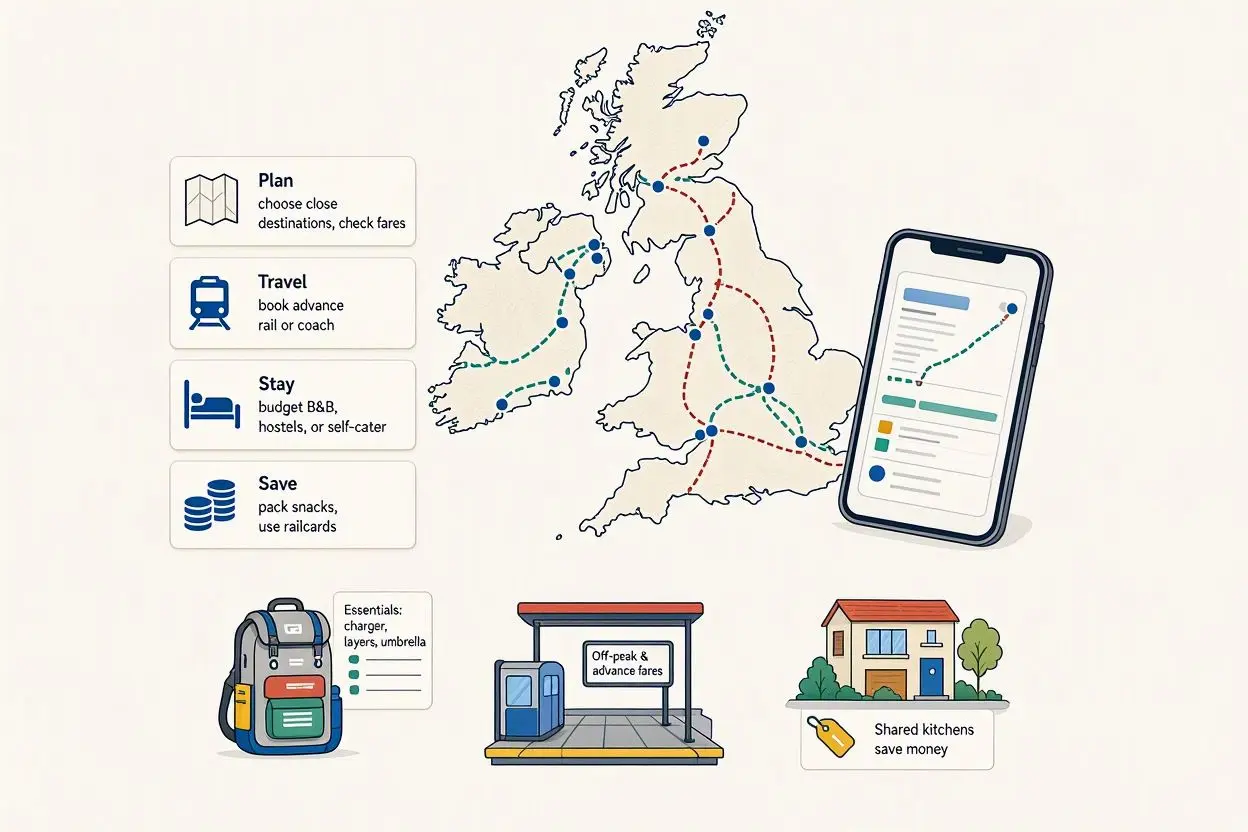
A weekend away in the UK does not have to mean hiring a car, spending money on fuel, or worrying about parking. In fact, travelling without a car can make a short break simpler and, in many cases, much cheaper.
If you know how to plan a cheap UK weekend break without a car, you can enjoy charming towns, coastal escapes, historic cities and countryside destinations using trains, buses and local public transport.
The key is to choose the right destination, book transport at the right time and stay somewhere that makes it easy to explore on foot.
Why Take a UK Weekend Break Without a Car?
Going car-free can save you money before your trip even begins.
You do not have to pay for petrol, parking, car hire or unexpected road expenses. You also avoid the stress of driving in unfamiliar places.
For a two-day or three-day trip, public transport can be particularly convenient because many popular UK destinations have good train or bus connections.
Another benefit is that you can relax during the journey. Instead of concentrating on the road, you can read, listen to music or simply enjoy the scenery.
1. Choose a Destination With Good Public Transport
The first step in planning a cheap weekend break without a car is choosing a destination that is easy to reach.
Look for places with:
- Direct or simple train connections
- Local buses
- Walkable town centres
- Attractions close to the accommodation
- Affordable places to eat
- Plenty of free or low-cost things to do
Cities such as York, Bath, Liverpool, Manchester and Brighton can work well for car-free weekend trips because many attractions are relatively easy to reach by public transport or on foot.
Smaller destinations can also be excellent choices. Before booking, check how far your accommodation is from the train or bus station.
A cheap room that requires several expensive taxi journeys may not actually save you money.
2. Travel During Off-Peak Times
Transport can be one of the biggest expenses of a UK weekend break, so choosing your travel time carefully can make a noticeable difference.
If your schedule allows it, consider travelling outside the busiest periods.
For example, a Friday evening train can be more expensive than travelling earlier in the day, while Sunday afternoon services may also be busy.
Compare different departure times before booking. Sometimes moving your journey by an hour or two can make the ticket considerably cheaper.
Travelling midweek or outside popular holiday periods can also reduce the overall cost.
3. Book Train Tickets in Advance
Train fares in the UK can vary significantly depending on when and how you book.
If you already know your travel dates, check prices as early as possible. Compare different departure times and look at whether split-ticket options could reduce the total fare.
It is also worth checking whether a railcard could save you money if you travel regularly.
However, do not automatically assume that the cheapest-looking ticket is the best option. Check the restrictions, journey times and whether you can use the ticket on your preferred service.
4. Pick Accommodation Near the Centre
When travelling without a car, location matters more than it might seem.
A slightly more expensive hotel or guesthouse in the centre can sometimes be cheaper overall than budget accommodation outside town.
Think about the total cost of your trip rather than just the room price.
For example, staying close to the main attractions could mean that you can walk almost everywhere. That can save money on buses, taxis and other local transport.
When comparing accommodation, check:
- Distance from the station
- Walking distance to attractions
- Nearby supermarkets
- Affordable restaurants and cafés
- Public transport connections
A central location can also give you more time to enjoy your weekend because you spend less time travelling between places.
5. Build Your Weekend Around Free Activities
You do not need to spend a lot of money to have a memorable weekend.
Many UK destinations have free attractions, parks, walking routes, historic streets and public spaces that are perfect for exploring.
Depending on where you go, you might be able to visit:
- Free museums
- Public parks
- Historic neighbourhoods
- Beaches
- Markets
- Scenic walking routes
- Cathedrals and churches
- Free galleries
- Viewpoints
Before travelling, make a simple list of free things to do at your destination.
Then choose one or two paid attractions that you genuinely want to visit rather than filling your entire itinerary with expensive activities.
6. Save Money on Food
Eating out three times a day can quickly turn an affordable weekend into an expensive one.
One simple solution is to combine supermarket food with one or two meals out.
For example, you could buy breakfast supplies from a supermarket and have a picnic lunch during the day. Then you can use your budget for a nice dinner.
If your accommodation has a kitchen, preparing some meals yourself can reduce costs even further.
Local cafés, bakeries and smaller restaurants can also offer better value than restaurants in the busiest tourist areas.
7. Pack Light
Travelling without a car becomes much easier when you do not have to carry lots of luggage.
For a two-night weekend, a small backpack or cabin-sized bag is often enough.
Pack clothes that can be worn in different combinations, comfortable shoes and a weatherproof layer.
The UK weather can change quickly, so checking the forecast before leaving can help you avoid buying an umbrella or extra clothing during your trip.
Travelling light also makes train and bus journeys much easier.
8. Use Walking as Your Main Transport
One of the easiest ways to keep a weekend break cheap is to walk whenever possible.
Before booking your accommodation, open a map and check the distance between the station, hotel and attractions.
A destination with a compact centre can be ideal for a car-free weekend.
Walking also gives you an opportunity to discover places that you might otherwise miss, such as independent shops, quiet streets, parks and local cafés.
Just remember to wear comfortable footwear, particularly if you are planning a full day of sightseeing.
9. Compare the Full Cost Before Booking
It is easy to focus on the cheapest train ticket or the cheapest hotel without considering the complete cost of the trip.
Instead, create a simple weekend budget.
Include:
- Return transport
- Accommodation
- Local buses or trains
- Food
- Attractions
- Drinks and snacks
- Emergency spending
For example, a £40 hotel outside the centre may look like a bargain. But if you spend another £20–£30 on local transport and taxis, a £60 central room could have been the better choice.
Looking at the complete cost helps you make smarter decisions.
10. Consider Less Popular UK Destinations
The UK’s most famous tourist destinations can become expensive, particularly during weekends and school holidays.
If your main goal is to have a relaxing break rather than visit a specific landmark, consider less touristy destinations.
Smaller towns can offer beautiful architecture, independent cafés, countryside walks and local attractions without the same prices as major tourist hotspots.
Search for destinations that are within a reasonable train journey from where you live.
Sometimes the best cheap weekend break is somewhere you have never considered before.
Sample Cheap Car-Free Weekend Plan
Here is an example of how you could structure a low-cost weekend.
Friday
Travel after work or during an affordable off-peak period.
Check into your accommodation and explore the town centre on foot.
Instead of booking an expensive restaurant, look for a reasonably priced local café or casual restaurant.
Saturday
Start with breakfast from a supermarket or bakery.
Spend the morning exploring free attractions and walking around the town.
Have a picnic lunch if the weather is suitable.
Choose one paid attraction in the afternoon.
Finish the day with dinner at a local restaurant.
Sunday
Have a simple breakfast and check out.
Visit a park, market, museum or scenic area before your return journey.
Head to the station with enough time to catch your train or bus without rushing.
This type of itinerary gives you a full weekend experience without requiring a car or a large travel budget.
How Much Should a Cheap UK Weekend Break Cost?
There is no single price because the cost depends heavily on your starting location, destination, accommodation and travel dates.
However, you can keep costs under control by focusing on the biggest expenses first.
Transport and accommodation will usually have the biggest impact on your budget. Once those are under control, food and activities become much easier to manage.
A useful approach is to decide your maximum budget before searching.
For example:
Transport: £30–£70
Accommodation: £50–£100 per night
Food: £25–£50 per day
Activities: £0–£30
Extra spending: £10–£20
These are only example ranges rather than fixed prices, but they can help you create an initial budget.
Common Mistakes to Avoid
Planning a cheap UK weekend break without a car is relatively easy, but a few mistakes can increase the cost.
Booking the cheapest accommodation regardless of location
Always check transport costs and walking distances before booking.
Travelling at the busiest times
Peak travel can be significantly more expensive, so compare different departure times.
Planning too many activities
Trying to visit everything can increase transport and entrance costs. Leave some time for free activities.
Eating every meal in tourist areas
Supermarkets, bakeries and local cafés can help keep your food budget under control.
Forgetting the return journey
Before leaving, make sure you know your return train or bus options. Last-minute travel can be expensive.
Final Tips for a Cheap UK Weekend Break Without a Car
A great UK weekend away does not have to be expensive.
The simplest approach is to choose a destination that is easy to reach by public transport, book your accommodation near the centre and plan your activities around free or inexpensive attractions.
Book transport early when possible, travel outside the busiest periods and avoid paying for convenience when walking or public transport will work just as well.
Most importantly, do not feel that you need a car to explore the UK. With a little planning, a train, a comfortable pair of shoes and a sensible budget can be enough for a memorable weekend.
FAQs
Can you have a cheap weekend break in the UK without a car?
Yes. Many UK destinations are easy to explore by train, bus and on foot. Choosing a walkable destination and booking accommodation near the centre can help keep costs low.
What are the best UK destinations for a car-free weekend?
Popular options include cities and towns with good rail connections and compact centres, such as York, Bath, Brighton, Liverpool and Manchester. Smaller towns can also be good choices depending on where you are travelling from.
How can I save money on a UK weekend trip?
Book transport early, compare different travel times, choose affordable accommodation near the centre, use free attractions and avoid eating every meal at expensive tourist restaurants.
Is travelling by train cheaper than driving in the UK?
It depends on the journey, number of travellers and booking time. For solo travellers, train travel can be competitive, particularly when tickets are booked in advance. Driving can become more expensive when fuel, parking and other costs are included.
How can I travel around the UK without a car?
You can use trains, local buses, coaches, trams and walking. Some destinations also have cycling options or local transport passes.
What should I look for when booking a car-free weekend break?
Check the destination’s train or bus connections, the distance between your accommodation and the station, nearby attractions, local transport and the availability of affordable food.
How many days are enough for a UK weekend break?
Two nights are usually enough for a short city or town break. If the destination is further away or you want a slower trip, three nights can give you more time to explore.
What is the best way to plan a cheap UK weekend break without a car?
Start by choosing an accessible destination, then compare transport and accommodation together. Once those costs are under control, plan free activities and affordable meals around your itinerary.