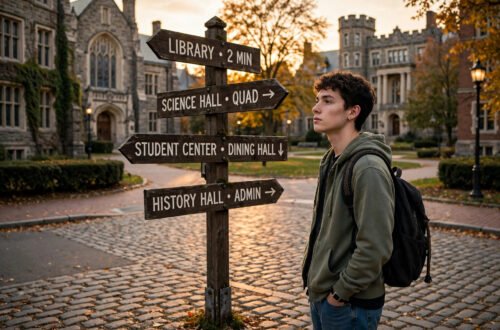
You want to learn something new — a professional qualification, a degree module, a language, a creative skill — and you face the modern learner’s dilemma: the online course promising flexibility and low cost, or the in-person class promising structure and human contact? For learners in the Lake District, where the nearest campus might be an hour’s drive over a mountain pass, the question has extra bite. But “how much does it cost” turns out to be the wrong first question — because the true costs of each route go far beyond the fee.
This guide compares the real costs of online versus in-person learning, the hidden extras nobody mentions, and how to decide which suits your goals, budget and life.
The headline fees: what you will actually pay
Online courses span an enormous range. Free options — OpenLearn, BBC Bitesize, YouTube educators, MOOCs from major universities — cost nothing and are genuinely excellent for many subjects. Paid platforms typically charge £10 to £60 per course for one-off purchases, or £20 to £50 monthly for subscriptions, while accredited online qualifications (professional certificates, online degrees) run from a few hundred to several thousand pounds. The Open University, the UK’s largest online-leaning provider, charges around £3,500 to £4,000 per 60-credit module for English students.
In-person provision varies similarly: evening classes at adult education centres often cost £100 to £300 per term, private courses more, and full-time campus degrees carry the standard £9,250 annual fee. But headline fees mislead in both directions — the real comparison lies in everything around them.
The hidden costs of each route
Online learning’s hidden costs are mostly about setup and self-discipline infrastructure. You need a reliable computer and broadband — fine if you have them, a real barrier if you do not (see the student Chromebook versus laptop question for budget options). Some courses require specific software subscriptions. The biggest hidden cost is invisible: the hours lost to procrastination without external structure, which is why completion rates for self-paced online courses are notoriously low, often under 10 per cent.
In-person learning’s hidden costs are concrete and relentless: travel (fuel or fares, parking, and the sheer time — a real factor from rural Cumbria), food and childcare during class hours, printed materials, and the opportunity cost of fixed scheduling. A “£200 evening class” that requires a 40-mile round trip weekly for ten weeks easily costs double once travel is counted. For Lake District learners, distance is often the decisive variable: online study eliminates a commute that in-person makes unavoidable.
Learning effectiveness: what the evidence says
Cost aside, which teaches better? The research consensus is refreshingly undramatic: well-designed online and in-person learning produce similar outcomes on average. What matters far more is instructional quality, active engagement and learner effort. A superb online course with interactive exercises, feedback and community beats a dull lecture series — and vice versa.
The differences emerge at the margins. In-person learning generally wins on motivation and accountability (showing up is half the battle), networking and serendipitous conversation, hands-on practical skills, and support for struggling learners who benefit from immediate human help. Online wins on flexibility for workers and parents, pacing control (revisit difficult material endlessly), accessibility for rural or disabled learners, and often on price. Students learning a new skill as a busy adult often find blended options — mostly online with periodic in-person intensives — capture the best of both.
Deciding: a practical framework
Choose in-person when: the skill is hands-on (welding, lab work, clinical practice, performance), you struggle with self-motivation and need external structure, networking is a primary goal, or you learn best through discussion and immediate feedback. Choose online when: your schedule is irregular, travel is impractical or expensive, you want to learn at your own pace, or budget is the binding constraint.
Whichever you choose, interrogate quality before paying. For online courses: check instructor credentials, look for genuine student reviews (not testimonials on the sales page), confirm what the certificate actually signifies, and test the refund policy. For in-person: visit the venue, meet the tutor if possible, ask about class sizes and completion rates. GOV.UK guidance on adult skills and training lists accredited options, and UCAS advice on choosing how to study covers the decision from the university angle.
Making either choice work
If you go online, manufacture the structure in-person provides: fixed study hours in your calendar, a dedicated study space, an accountability partner, and active participation in course forums. Treat deadlines as real even when they are flexible — self-imposed milestones rescue completion rates. If you go in-person, protect the investment: arrange travel and childcare reliably before enrolling, do the between-session work (the class is the tip of the learning iceberg), and build relationships with tutors and classmates — the network is part of what you are paying for.
And remember the hybrid middle ground is growing: many providers now offer live online classes with real-time interaction, local study groups for online learners, and intensive weekend residentials. For a Lake District learner, a mostly-online course with occasional trips to Lancaster, Carlisle or Manchester for practical sessions can be the sweet spot — minimal regular travel, maximum flexibility, with human contact where it counts most.
Conclusion
The cheapest option is rarely the one with the lowest fee — it is the one you will actually complete. For some learners that means the accountability of a classroom; for others, especially those juggling work, family or Cumbrian distances, it means the flexibility of online study. Price the full picture, be honest about how you learn, choose quality over convenience marketing, and commit fully to whichever route you pick. The right choice is the one that gets you to the finish line with skills you can use.
Frequently Asked Questions
Are online qualifications respected by employers?
Accredited qualifications from recognised providers are widely respected. What matters is the awarding body’s reputation and the skills you can demonstrate — not whether you studied online or on campus. Many employers now actively value the self-discipline that successful online study demonstrates.
Why do so few people finish online courses?
Lack of structure, accountability and immediate support. Choosing courses with deadlines, cohorts and tutor interaction — rather than purely self-paced content — dramatically improves completion.
Is in-person learning better for languages?
Conversation practice benefits greatly from in-person or live interaction, but online platforms with live tutors and conversation exchanges work well too. Purely self-study apps are the weakest option for speaking skills — you need real humans to develop fluency and confidence.
Can I get funding for adult courses?
Possibly — options include Advanced Learner Loans for level 3+ courses, employer sponsorship, and free provision for basic skills in many areas. Check GOV.UK’s adult skills pages for current entitlements near you.
How do I stay motivated studying online?
Fixed schedule, dedicated space, study buddy or online cohort, visible progress tracking, and treating it like a job rather than a hobby. Motivation follows action — start, and momentum builds.
Can I switch from online to in-person mid-course?
Sometimes. Many providers allow transfers between study modes, though fees and timetabling may differ. Ask about flexibility before enrolling — life changes, and a provider that accommodates that is worth choosing.