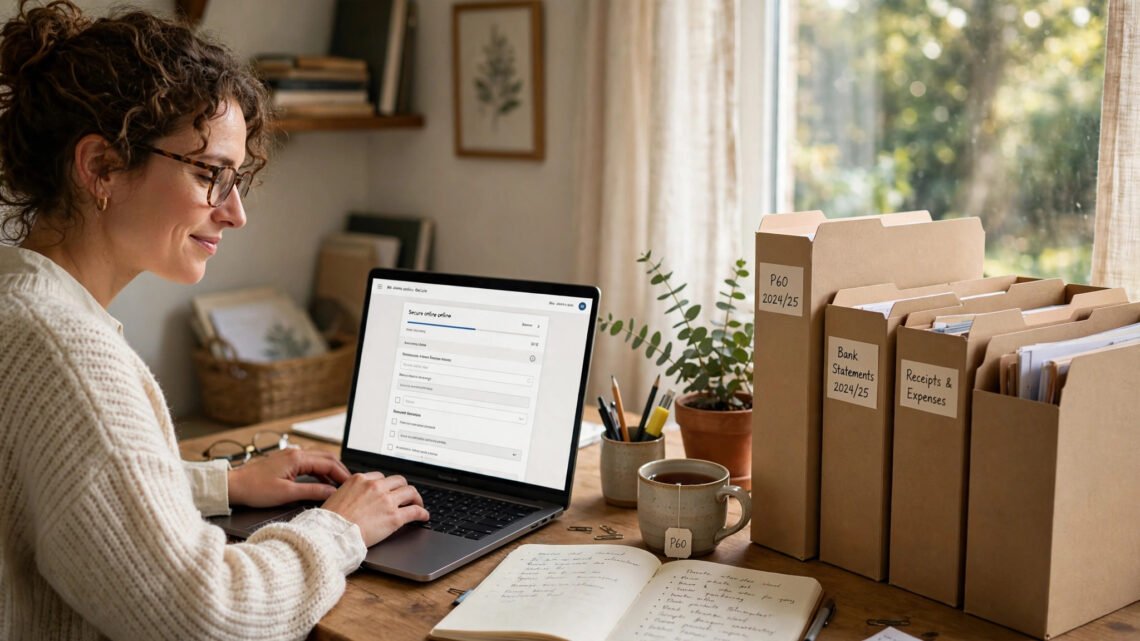
The brown envelope season is coming, and the accountant’s quote was £250 plus VAT for what looks like an hour’s work. Here is the open secret of the British tax system: for most people with straightforward affairs, filing your own Self Assessment tax return is entirely doable — HMRC designed the online system for exactly this, and millions file without professional help every year. This guide shows you how to file your tax return without hiring an accountant: who must file, what it costs (nothing), the step-by-step process, and the mistakes that trigger penalties.
Do you actually need to file?
First, check — many people file unnecessarily, and some who must file do not realise. You must file Self Assessment if: you are self-employed with profits over £1,000, you earned over £150,000, you have untaxed income (rental, dividends above the allowance, savings interest above the allowance), you claimed Child Benefit with income over £60,000, or HMRC has sent you a notice to file. You do not need to file if you are purely employed with no extra income — PAYE handles it. The £1,000 trading and property allowances mean small side earnings often need no return at all. GOV.UK’s Self Assessment pages include a “check if you need to send a tax return” tool — run it before doing anything else, because the best tax return is the one you do not need to file. If HMRC thinks you should file and you disagree, tell them — fines accrue to the unfiled, not the exempt.
Register and prepare: the unglamorous 80%
Filing is 20% form-filling and 80% preparation. Register for Self Assessment by 5 October in your second tax year (do it the day you start — it takes ten minutes online and HMRC posts your Unique Taxpayer Reference within weeks). Then gather: your P60/P45 if employed, records of all self-employment income and expenses, bank interest statements, dividend vouchers, rental income and expense records, pension contribution details, Gift Aid donations, and student loan information. The record-keeping standard is simple: every pound in, every pound out, with evidence. Photograph receipts (thermal paper fades within months), keep a spreadsheet or free app updated monthly — not in a January panic. Freelancers’ tax obligations follow the same framework; the return is just the annual reckoning. Good records make the actual filing a 60–90 minute job; bad records make it a weekend of archaeology.
The deadlines (memorise these)
31 January: online filing deadline AND payment deadline for the previous tax year — the big one. Miss it: automatic £100 penalty, then interest, then escalating penalties. 31 July: second payment on account (if applicable). 5 October: registration deadline. File early — the system opens in April, and filing in May means any refund arrives months sooner and any payment shock has months of planning time. The January rush crashes the helplines; the May filer gets through in minutes.
Filling in the return: walkthrough
Log into your Personal Tax Account via GOV.UK and open the return. The system is genuinely well-designed: it asks plain-English questions and only shows relevant sections. Work through each income source methodically — employment (from P60), self-employment (the SA103S short form suffices for turnover under £85,000), property, dividends, interest. Claim everything you are entitled to: allowable expenses, the trading allowance if simpler, pension contributions (higher-rate relief is not automatic — claim it), Gift Aid (the charity claims basic rate; you claim the higher-rate difference), and losses carried forward if relevant. The built-in calculator shows your bill live — no surprises if you have been reserving 25–30% of untaxed income. Before submitting, use HMRC’s own “view your calculation” to sanity-check: does the bill roughly match your expectation? Wild discrepancies mean a data-entry error — the classic being entering gross income in a net box. Professional invoicing records make the income side trivially easy to total.
When you actually need an accountant
DIY has limits — hire help when: income exceeds ~£100,000 (the personal allowance taper and pension complications multiply), you have complex affairs (multiple properties, overseas income, capital gains events, limited company plus personal), you are under enquiry, or you would rather pay £250 than spend the evening (a legitimate reason — your time has value). What to expect: £150–£350 for a straightforward sole-trader return, more for complexity. A good accountant also advises, not just files — timing of income, allowable expenses you missed, structure questions. But do not hire one from fear alone: fear of HMRC is the accounting industry’s best marketing, and the online system plus MoneyHelper’s free tax guidance covers most straightforward cases completely.
Common expenses the self-employed forget to claim
The return is only as good as the expenses behind it — and beginners routinely under-claim by hundreds of pounds. The commonly missed: the working-from-home flat rate (£10–£26/month depending on hours, no receipts needed); a proportion of phone and broadband bills (the business percentage, honestly estimated); professional subscriptions and memberships; accountancy and software costs (the tools that run the business are deductible); bank charges on a business account; mileage at 45p/mile for the first 10,000 business miles (most beginners wildly underestimate their business driving); training courses that maintain or update existing skills (but not courses for a brand-new trade); and the often-missed “pre-trading expenses” — costs incurred up to seven years before you started, if they would have been allowable after. The discipline that captures them all: a monthly 15-minute expense review, photographing receipts as they happen, and a simple rule — when in doubt, record it and let the return decide. Over-claiming deliberately is tax evasion; under-claiming through disorganisation is just expensive. The organised freelancer pays tax on actual profit; the disorganised one pays tax on profit plus the expenses they forgot.
Frequently Asked Questions
How much does it cost to file online?
Nothing — filing through HMRC’s own online service is free. Third-party “tax return” apps and sites charge for what HMRC provides free; there is rarely a reason to pay.
What if I make a mistake on my return?
You can amend an online return within 12 months of the filing deadline — mistakes are fixable, and honest errors corrected promptly attract no penalty. Deliberate understatement is a different matter entirely.
How long do I need to keep records?
Five years after the 31 January filing deadline for self-employed and landlords (so for 2025/26 filed January 2027, keep until January 2032). Employed-only filers: shorter, but keeping everything five years is the safe habit.
What are payments on account?
If your tax bill exceeds £1,000, HMRC collects next year’s estimated tax in two advance instalments (January and July), each 50% of the bill. Your first January payment can therefore be 150% of the bill — the classic beginner shock. You can reduce payments on account if you know next year’s income will be lower.
Check whether you must file, register early, keep monthly records, file in spring not January, and claim everything you are owed. The £250 accountant’s fee stays in your pocket, the brown envelope loses its terror, and you will wonder why anyone told you this was hard. It is not hard. It is just organised. And next January, while everyone else panics, you will file in an evening — then wonder what all the fuss was about.