
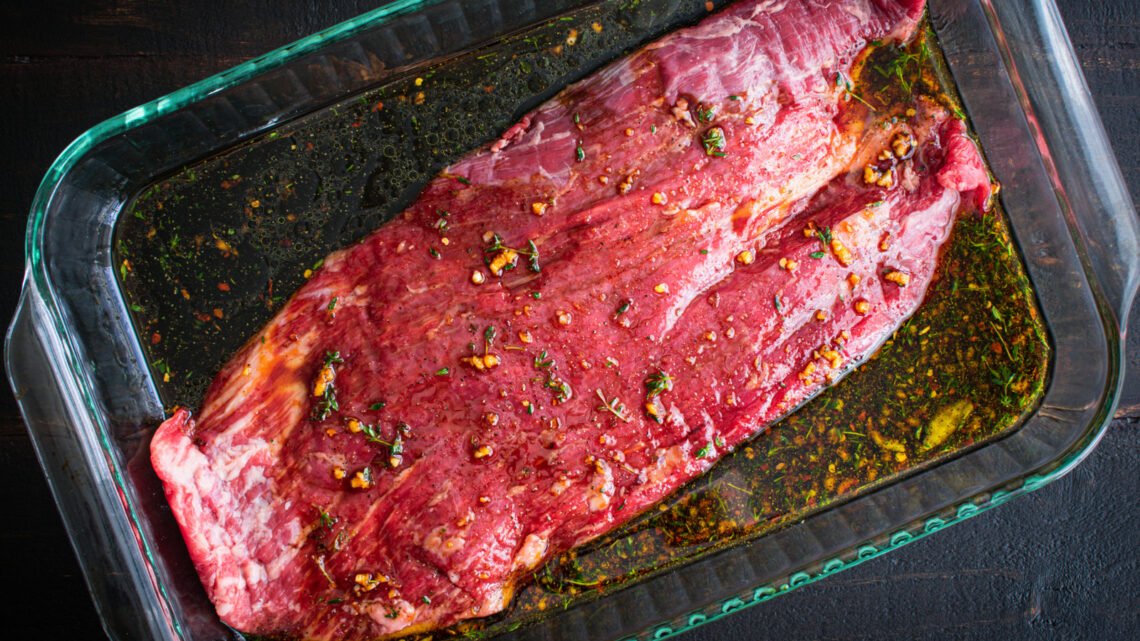
There’s a reason restaurant meat tastes better than yours, and it’s not just the expensive cuts. It’s time. An overnight marinade gives salt, acid, aromatics and spices hours to work their way into the meat, transforming even cheap cuts into something special. Here’s what is the best way to marinate meat overnight — the ratios, the timing, and the food-safety rules that matter.
Marinating does three things: the salt seasons the meat deeply (not just the surface), acids and enzymes tenderise the outer layers, and aromatics — garlic, herbs, spices — infuse flavour. An hour helps; overnight transforms. But there are limits, and over-marinating is a real thing.
What is the best way to marinate meat overnight: the basic formula
Every good marinade has four components. Get the balance right and you can improvise endlessly:
- Salt (or salty liquid): soy sauce, miso, or plain salt. This is the workhorse — salt penetrates deep into meat over hours, seasoning it throughout and helping it retain moisture. Don’t skip it.
- Acid: citrus juice, vinegar, wine, yoghurt, buttermilk. Acid tenderises the surface and brightens flavour. But go easy — too much acid for too long turns the outside mushy.
- Fat: olive oil, sesame oil, coconut milk. Fat carries fat-soluble flavours (spices, herbs) into the meat and helps with browning.
- Aromatics: garlic, ginger, herbs, spices, chilli, mustard. This is where the personality comes from.
A solid starting ratio: 3 parts oil, 1 part acid, salt to taste (about 1 teaspoon per 500g meat), plus aromatics. Whisk it together, coat the meat thoroughly, and refrigerate.
Timing: how long is “overnight”?
Different meats need different times, and this is where people go wrong:
- Chicken pieces: 4–12 hours. Overnight is perfect. Beyond 24 hours in strong acid and the texture suffers.
- Pork: 8–24 hours. Chops, tenderloin and shoulder all love an overnight soak.
- Beef steaks: 4–8 hours. Don’t marinate good steaks overnight — you’ll mask the flavour you’re paying for. Save long marinades for cheaper cuts like flank or skirt.
- Lamb: 8–24 hours. Stands up beautifully to bold marinades — yoghurt, garlic, cumin, lemon.
- Fish: 15–30 minutes only. Fish is delicate; acid “cooks” it (that’s literally what ceviche is). Never overnight.
Five overnight marinades that never fail
- Soy-ginger (for chicken or pork): soy sauce, grated ginger, garlic, sesame oil, honey, rice vinegar. The all-rounder.
- Yoghurt-herb (for chicken or lamb): natural yoghurt, lemon juice, garlic, cumin, paprika, mint. The yoghurt tenderises gently — brilliant for kebabs.
- BBQ (for pork or chicken): tomato ketchup, brown sugar, smoked paprika, garlic powder, Worcestershire sauce, apple cider vinegar. Tastes like summer.
- Mediterranean (for lamb or chicken): olive oil, lemon juice, oregano, garlic, rosemary. Simple, classic, foolproof.
- Miso (for beef or pork): white miso, mirin or honey, soy sauce, grated ginger. Deep umami that caramelises beautifully.
Food safety: the non-negotiable rules
Always marinate in the fridge, never on the counter. Room-temperature marinating is a food-safety gamble — bacteria multiply rapidly between 8°C and 63°C. The fridge slows everything except the flavour. This is the single most important rule.
Never reuse marinade that raw meat has sat in, unless you boil it hard for several minutes first. If you want marinade as a sauce, set some aside before the raw meat goes in. And don’t marinate in reactive metal bowls — acid reacts with aluminium and copper. Use glass, ceramic, or a zip-lock bag (bags are actually ideal: less marinade needed, full contact, no washing up).
The Food Standards Agency has clear guidance on safe meat handling if you want the official line.
Before cooking
Take the meat out of the fridge 20–30 minutes before cooking so it comes to room temperature — cold meat seizes and cooks unevenly. Pat the surface dry with kitchen paper (a dry surface sears; a wet one steams). Then cook as normal — and if you’re pan-searing, my guide on temperature control applies to meat just as much as fish.
Dry brining vs wet marinades: which is better?
Here’s something most marinade guides don’t mention: for many cuts, a dry brine (just salt, applied in advance) outperforms a wet marinade. Salt is the only molecule in a marinade small enough to penetrate deep into meat — oil, garlic, herbs and spices mostly flavour the surface. A dry brine gives you the deep seasoning without the downsides of acid.
When to dry brine
- Steaks, chops and roasts: salt generously 24 hours ahead, refrigerate uncovered. The salt draws out moisture, dissolves, then gets reabsorbed — seasoning the meat throughout and drying the surface for a better sear. This is what steakhouses do.
- Whole chickens and turkeys: the dry-brined roast chicken (salted the day before) is juicier and crisp-skinned than any wet-marinated version.
- When you want pure meat flavour: a great steak doesn’t need masking — it needs salt and time.
When to wet marinate
- Surface flavour is the goal: kebabs, fajitas, satay — dishes where the marinade’s character is the dish.
- Tougher cuts: flank, skirt, chicken thighs benefit from the tenderising effect of yoghurt or acidic marinades.
- Quick flavour: 30–60 minutes in a punchy marinade transforms thin cuts (pork chops, chicken breasts) with minimal planning.
The hybrid: dry brine + flavoured finish
The best of both: dry brine the meat overnight for deep seasoning, then apply a flavourful wet marinade or rub 1–2 hours before cooking for surface character. Salt does the deep work; the marinade does the personality. This is the technique behind the best barbecue and roast meats — and it’s barely more effort than either method alone.
Marinade troubleshooting
- Meat tastes of nothing in the middle? Not enough salt, or not enough time. Salt is the penetrator — up it, or extend the time.
- Mushy surface? Too much acid for too long. Reduce the citrus/vinegar, shorten the time, or switch to a yoghurt-based marinade (gentler).
- Burnt marinade on the grill? Sugary marinades (honey, brown sugar) burn over direct heat. Wipe off excess before cooking, or use indirect heat.
- Flavours taste raw? Dried spices in marinades need heat to bloom. Briefly toast whole spices or warm the marinade before applying.
Overnight marinating is one of the highest-effort-to-reward ratios in cooking: five minutes of prep the night before, and tomorrow’s dinner tastes like you actually tried. Just remember the golden rule — never marinate still-frozen meat; defrost it safely and quickly first, then get the marinade on. That’s not cheating. That’s just smart.


