A van runs a red light and clips your bumper. The driver claims you braked without warning. Without evidence, it is your word against theirs — and your insurer’s headache either way. With a dash cam, it is a thirty-second video and a closed case. Dash cams have gone from taxi-driver gadget to mainstream motoring essential in Britain, but the market is a minefield of inflated specs and misleading “4K” claims. This guide explains what actually matters when choosing a dash cam worth installing: the features that count, the ones that are marketing, UK legalities, and the installation that takes an afternoon.
Why a dash cam is worth it in 2026
The case is simple and financial. Insurers increasingly accept dash-cam footage as decisive evidence, and several UK insurers offer small discounts for dash-cam users — but the real saving is the claim you never lose: the disputed-liability accident that would otherwise split fault 50/50 and cost you your no-claims bonus. Beyond crashes, dash cams capture hit-and-runs in car parks (with parking mode), vandalism, and — for those driving abroad for the first time — the unfamiliar road layouts where incidents are most likely. For business drivers and van operators weighing whether to buy or lease a van for the business, a dash cam is near-mandatory: it protects the asset and the driver in one purchase. One caveat: footage helps only if it is actually recording — the most common dash-cam failure is a dead memory card nobody checked.
The specs that actually matter
Ignore the megapixel arms race and focus on five things. One: true video quality at night — most incidents happen in poor light, so look for a Sony STARVIS or equivalent sensor and check real night-sample footage in reviews, not the box claims. Two: a 140°–170° field of view — wider captures more context but distorts plates at the edges; narrower misses the sides. Three: GPS logging, which stamps speed and location onto footage — invaluable in disputes. Four: a capacitor instead of a battery — capacitors survive hot windscreens and last years; batteries swell and die. Five: reliable loop recording with a high-endurance microSD card (standard cards fail quickly under constant rewriting; buy “high endurance” rated, 128GB minimum). “4K” on a £40 camera is interpolated fiction — a good 1080p sensor beats a fake 4K one every time.
Front-only, dual-channel, or cabin?
Front-only (£60–£120) covers the most common incident — someone hitting you from ahead. Dual-channel front-and-rear (£120–£220) covers rear-end shunts and is the sweet spot for most drivers. Cabin-facing cameras suit taxi and private-hire drivers. For most private motorists, a quality dual-channel unit is the right answer; the rear camera has settled more “he said, she said” rear-end disputes than any other gadget in motoring.
UK law: what you must know
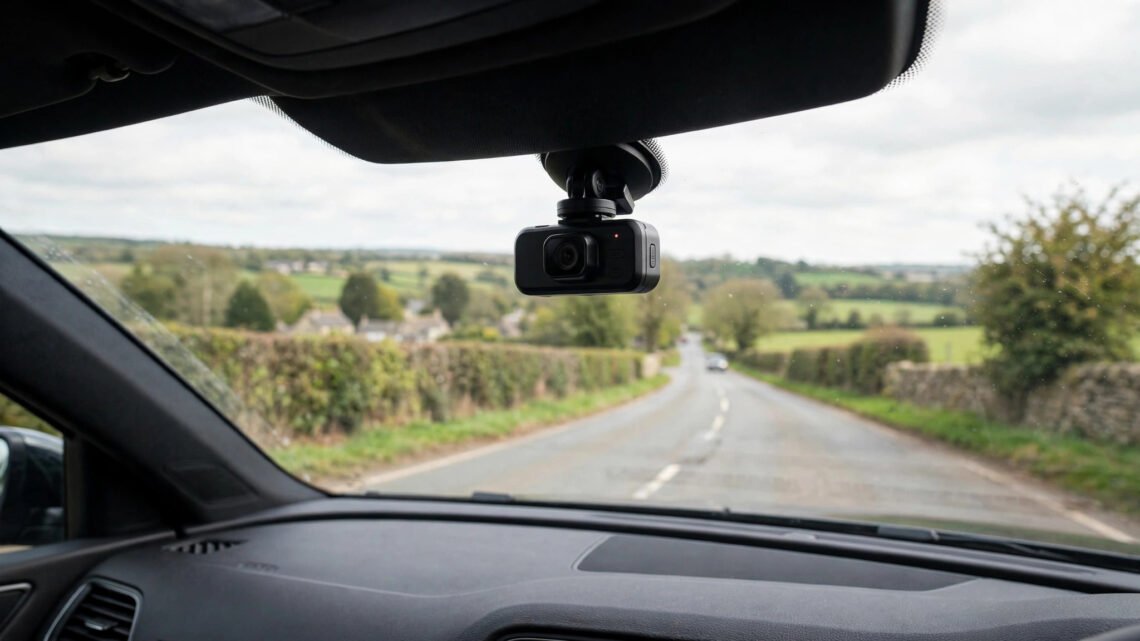
Dash cams are legal in the UK, but with responsibilities. If your camera records audio inside the car, tell passengers — covert audio recording can breach privacy expectations. Footage that captures identifiable people or number plates counts as personal data under UK GDPR if you share it beyond personal use (posting “bad drivers” compilations online has landed people in trouble). For private use and insurance claims, you are fine. One more legal note: the camera must not obstruct your view — mount it behind the rear-view mirror, within the swept wiper area, and never in the driver’s direct sightline; an MOT tester can fail a car for an obstructively mounted camera. If you drive in Europe, rules vary by country — France, for example, restricts publishing footage of identifiable people — so check before driving in France with the camera running.
Installation: easier than you think
Basic installation takes 20 minutes: mount, plug into the 12V socket, tuck the cable along the headlining. The upgrade worth doing is hardwiring (£15 kit, or £50–£80 fitted by an auto electrician), which hides all cables and enables parking mode — the camera monitors the car while parked, recording impacts on a motion/G-sensor trigger. Hardwiring needs a fuse-tap on an ignition-switched circuit (or a battery-drain-prevention module for parking mode); if electrics are not your thing, pay the professional — it is a quick job. Format the memory card in the camera monthly, and after any incident, lock the file immediately via the camera’s protect button so loop recording does not overwrite it. Check your vehicle’s MOT history online while you are at it — a car with advisories on tyres or brakes deserves attention before any gadget.
Maintaining your dash cam: the five-minute monthly check
A dash cam that is not recording is an expensive ornament — and the most common failure mode is silent. The monthly check takes five minutes: remove the memory card and verify recent footage actually plays (corrupted cards are the number one silent failure — high-endurance cards last 2–3 years of continuous use, then degrade), check the timestamp is accurate (wrong dates undermine footage credibility in disputes), confirm the lens is clean (a film of grime destroys night quality), and verify parking mode still triggers if you use it. Format the card in the camera every month or two — in-camera formatting maintains the file system better than a computer does. Replace the card at the first sign of trouble: dropped frames, corrupted files, or the camera rebooting are card-death symptoms, and a £25 replacement beats a missing crucial clip. The RAC’s motoring advice notes that insurers increasingly ask for footage promptly after incidents — so know how to lock and export a clip before you need to, not after. Five minutes monthly, and the camera will be there on the day it matters — which is the entire point of owning one.
Frequently Asked Questions
How much should I spend on a dash cam?
£80–£150 for a reliable front unit from an established brand; £130–£220 for dual-channel. Below £60, night quality and reliability fall off a cliff. The memory card (£20–£30 for high-endurance) is a separate, non-optional purchase.
Will a dash cam lower my insurance?
Some insurers offer 5–10% discounts; most do not discount but will treat your footage as strong evidence. The financial case rests on winning disputes, not the discount — one saved no-claims bonus pays for the camera many times over.
Can dash-cam footage be used in court?
Yes — UK courts routinely accept dash-cam footage as evidence, and police forces accept submissions through their online portals. Ensure the timestamp is accurate (enable GPS sync) so the footage’s credibility is unquestionable.
Do I need to tell my insurer I have one?
Only if you are claiming a dash-cam discount. There is no general duty to declare it, though mentioning it when submitting a claim obviously helps.
The right dash cam is the one with honest night performance, a capacitor, GPS and a high-endurance card — installed properly and actually recording. Spend the afternoon fitting it, spend thirty seconds a month checking it, and drive knowing that the next dispute will not be your word against theirs. It will be your footage against their story. One last piece of advice: tell your insurer you have a dash cam when you renew — some offer a small discount, and all of them take your evidence more seriously when a claim lands.